Design of Lattice-Matched InAs1−xSbx/Al1−yInySb Type-I Quantum Wells with Tunable Near-To Mid-Infrared Emission (2–5 μm): A Strain-Optimized Approach for Optoelectronic Applications
Gerardo Villa-Martínez, Julio Gregorio Mendoza-Álvarez

TL;DR
This paper proposes a strain-optimized design for quantum wells that can emit light in the near-to mid-infrared range (2–5 µm), useful for optoelectronic applications.
Contribution
The novel contribution is a strain-optimized design strategy for InAs1−xSbx/Al1−yInySb quantum wells with tunable emission in the 2–5 µm range.
Findings
Type-I alignment is achieved for Sb contents x ≤ 0.40 and In contents 0.10 < y ≤ 1.
Emission tuning between 2–5 µm is possible with <5% strain-induced energy deviation.
The design enables high-efficiency infrared optoelectronic devices for sensing and communications.
Abstract
We propose a strain-optimized design strategy for lattice-matched InAs1−xSbx/Al1−yInySb Type-I quantum wells (QWs) that emit across the near-to mid-infrared spectrum (2–5 µm). By combining elastic strain energy minimization with band offset calculations, we identify Type-I alignment for Sb contents (x ≤ 0.40) and In contents (0.10 < y ≤ 1). At the same time, Type-II dominates at higher Sb compositions (x ≥ 0.50). Using the transfer matrix method under the effective mass approximation, we demonstrate precise emission tuning via QW thickness (LW) and compositional control, achieving a wavelength coverage of 2–5 µm with <5% strain-induced energy deviation. Our results provide a roadmap for high-efficiency infrared optoelectronic devices, addressing applications in sensing and communications technologies.
Genes, proteins, chemicals, diseases, species, mutations and cell lines named across the full text — each resolved to its canonical identifier and authoritative record.
Click any figure to enlarge with its caption.
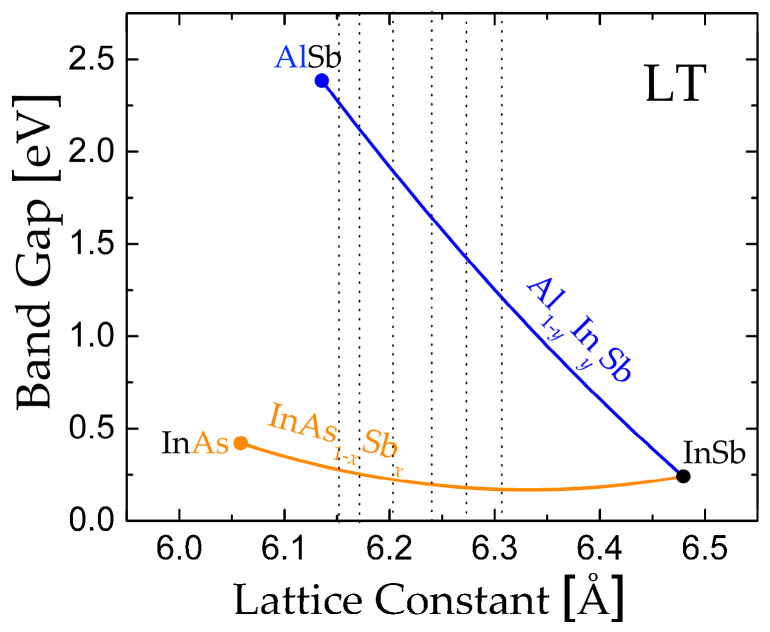 Figure 1
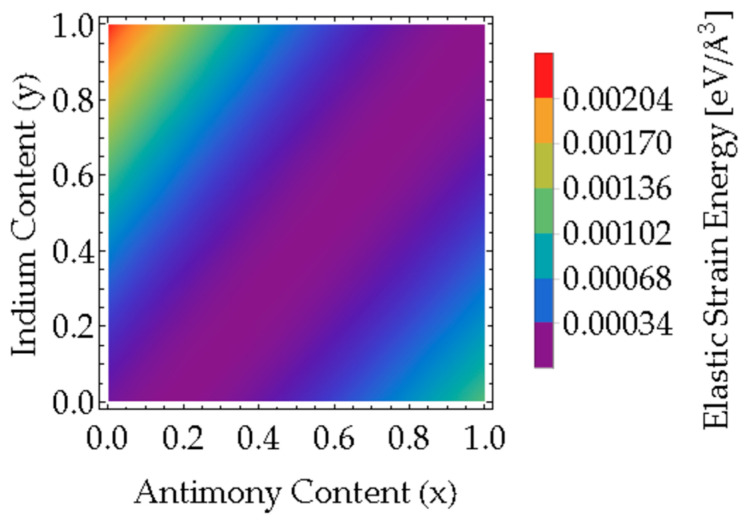 Figure 2
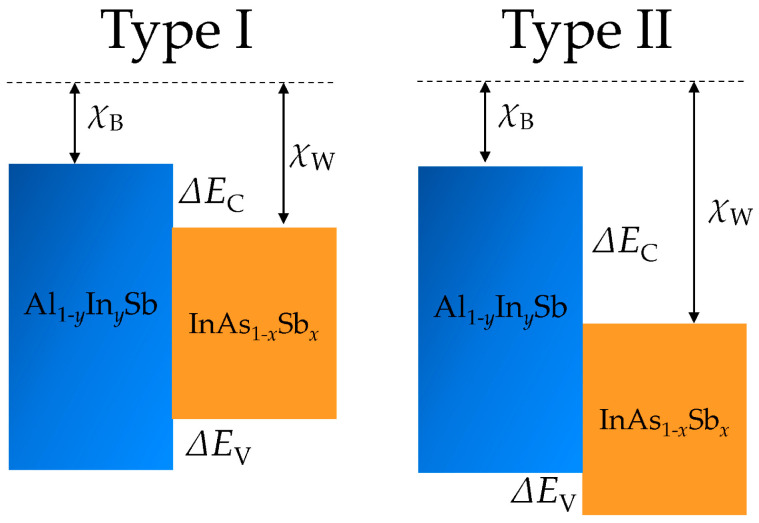 Figure 3
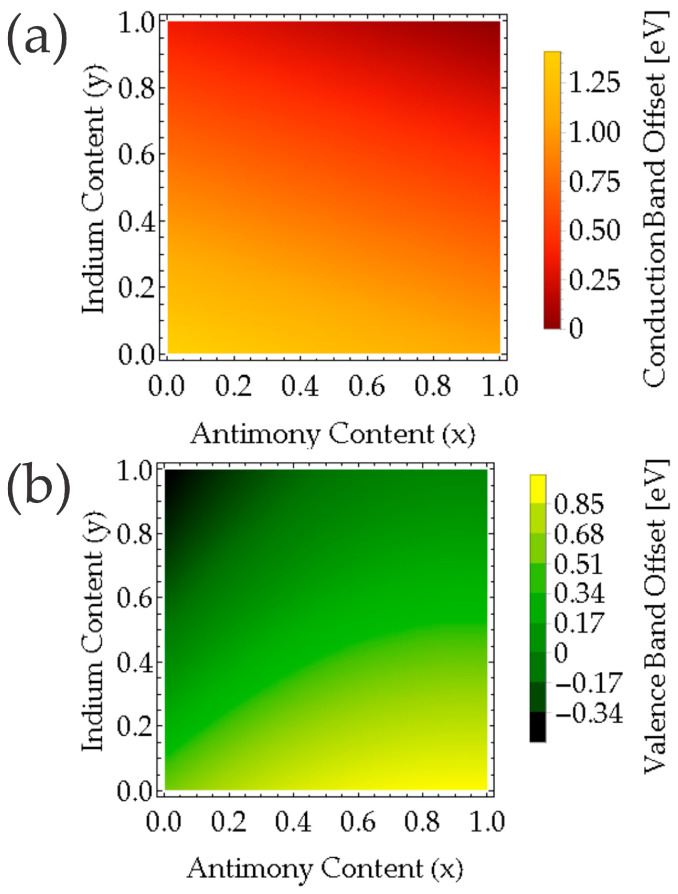 Figure 4
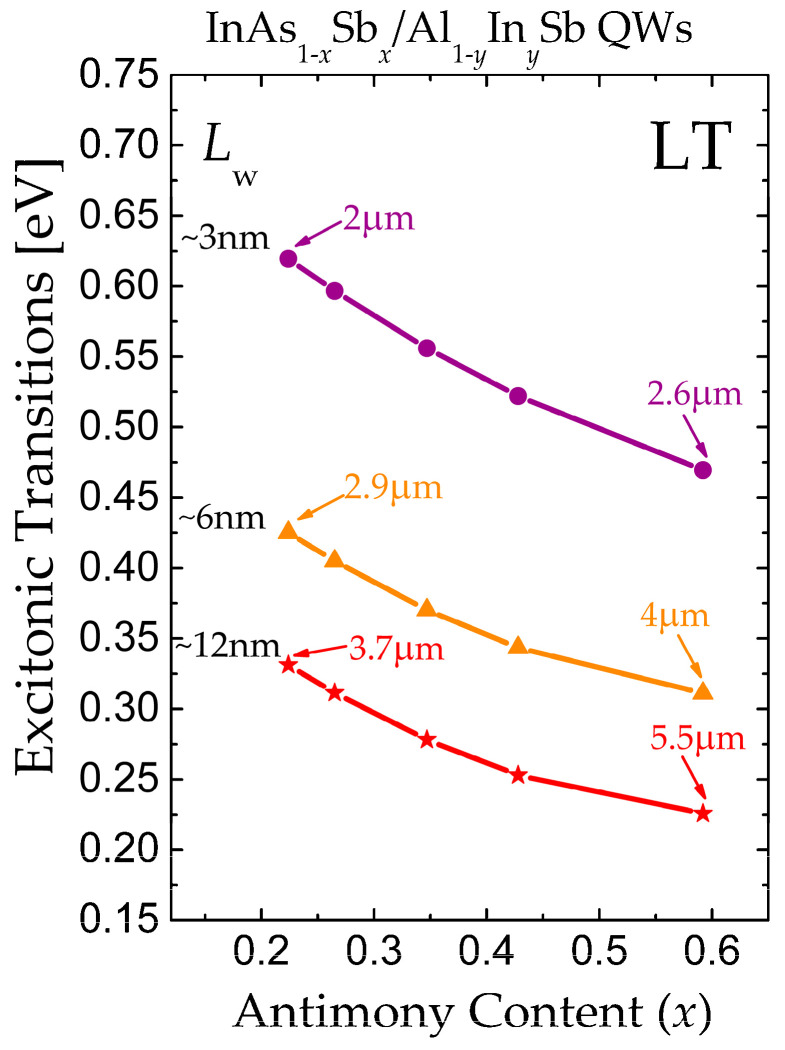 Figure 5
Peer Reviews
No public reviews on file for this paper yet. If you reviewed it on a platform where reviews are public (OpenReview, ICLR, NeurIPS, ICML), you can paste yours below so the community can read it here.
Videos
No videos yet. Explain this paper in a talk, walkthrough, or lecture? Add one.
Taxonomy
TopicsAdvanced Semiconductor Detectors and Materials · Semiconductor Quantum Structures and Devices · Nanowire Synthesis and Applications