Comparison of Effectiveness Between Cysticidal and Surgical Treatments in Patients with Intraventricular Neurocysticercosis: A Single-Center Experience
Alex Aarón Agallo-Martínez, Rebeca Ramírez-Bustamante, Polet Juárez-Ortíz, Ximena Gutiérrez-Bonilla, Sergio Moreno Jiménez, Roger Carrillo-Mezo, Agnès Fleury

TL;DR
This study compares cysticidal and surgical treatments for intraventricular neurocysticercosis and finds both approaches equally effective in the long term.
Contribution
The study provides evidence supporting cysticidal treatment as a valid option for intraventricular neurocysticercosis.
Findings
After six months, more patients in the surgical group had inactive disease, but no significant difference was observed after one year.
Both treatment groups showed significant improvement in patient functionality as measured by the Karnofsky Index.
Cysticidal treatment is a valid option for IVNCC when medical infrastructure and personnel specialization are limited.
Abstract
Neurocysticercosis (NCC) remains a major public health problem in endemic countries. Clinical manifestations and therapeutic strategies vary depending on the location of the parasite. While the benefits of cysticidal treatment are well established for parenchymal and subarachnoid NCC, the optimal management of intraventricular NCC (IVNCC) remains controversial. We conducted a retrospective study of 51 patients: 37 (72.54%) received cysticidal treatment as initial therapy and 14 (27.45%) underwent neurosurgical intervention. Although six months after treatment, the proportion of patients with inactive disease was higher in the surgical group, no significant difference was observed after one year. Patients in both groups showed significant improvement in functionality as measured by the Karnofsky Index (KI), with no significant difference between groups. These results are consistent with…
Genes, proteins, chemicals, diseases, species, mutations and cell lines named across the full text — each resolved to its canonical identifier and authoritative record.
Click any figure to enlarge with its caption.
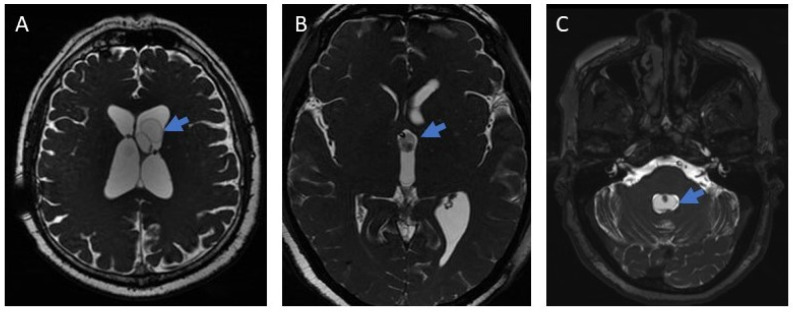 Figure 1
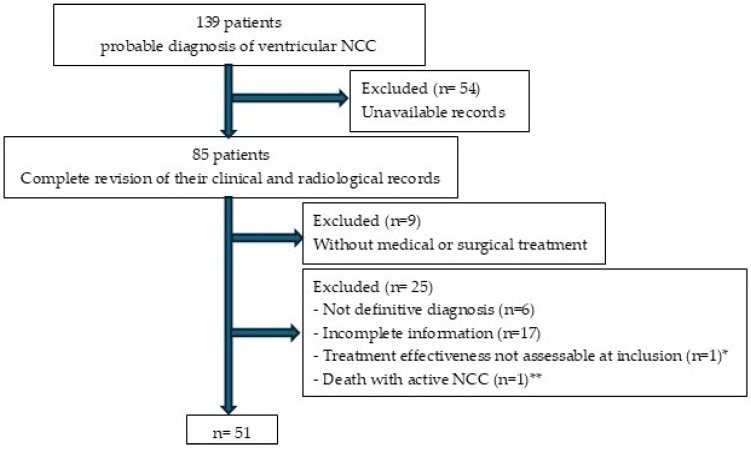 Figure 2
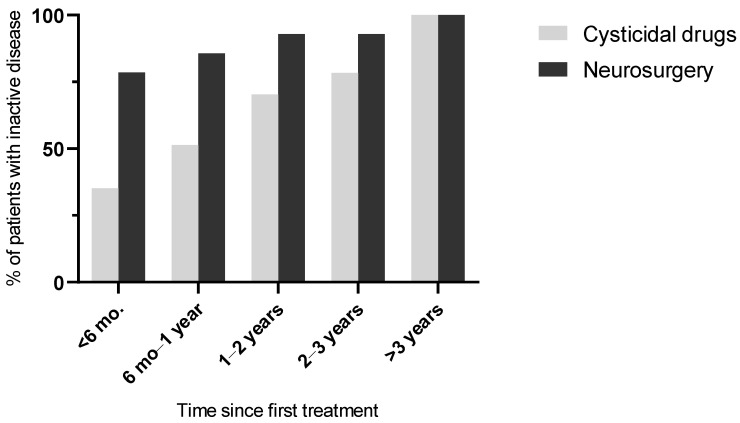 Figure 3
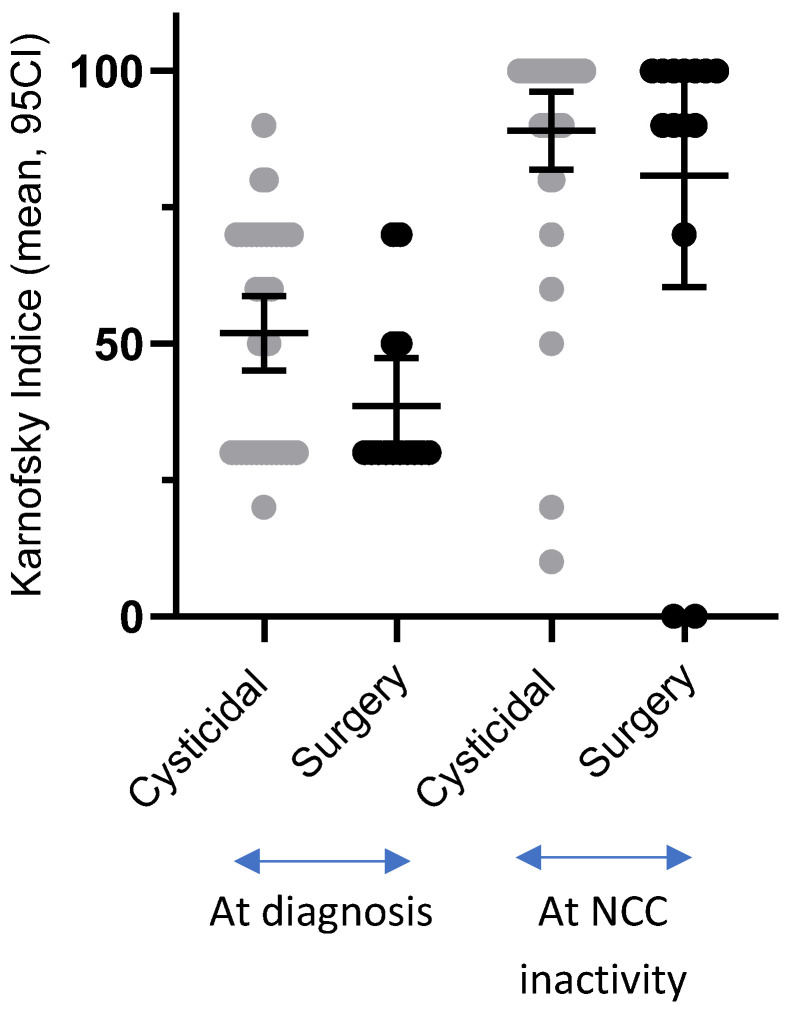 Figure 4
Peer Reviews
No public reviews on file for this paper yet. If you reviewed it on a platform where reviews are public (OpenReview, ICLR, NeurIPS, ICML), you can paste yours below so the community can read it here.
Videos
No videos yet. Explain this paper in a talk, walkthrough, or lecture? Add one.
Taxonomy
TopicsParasitic infections in humans and animals · Cerebrospinal fluid and hydrocephalus · Parasitic Diseases Research and Treatment