Genotyping-by-Sequencing Reveals Marker-Based Genome Stability in Tetraploid Clementines for Triploid Breeding
Pablo Aleza, Andres Garcia-Lor, Pierre Mournet, Luis Navarro, Patrick Ollitrault

TL;DR
This study uses genotyping-by-sequencing to assess genome stability in tetraploid clementines, finding that three tetraploidization methods preserve chromosome structure, making them suitable for triploid breeding.
Contribution
The study provides genome-wide evidence that three tetraploidization methods maintain genomic stability in citrus, supporting their use in triploid breeding.
Findings
No major genomic gains or losses were detected in tetraploid clementine plants using GBS.
Three tetraploidization methods preserved chromosome structure at the resolution of GBS markers.
GBS-based analysis confirmed the suitability of these methods for citrus triploid breeding.
Abstract
Tetraploid non-apomictic citrus genotypes are key female parents for 4x × 2x hybridizations aimed at producing seedless triploid hybrids. However, the extent to which different tetraploidization methods affect genome integrity remains insufficiently characterized at a genome-wide scale. In this study, genotyping-by-sequencing (GBS) was used to evaluate marker-based genomic stability in ten tetraploid plants of ‘Clemenules’, ‘Fina’, and ‘Marisol’ clementines obtained via colchicine treatment, in vitro adventitious organogenesis, or somatic cybridization. Diploid parental plants, two haploid plants of ‘Clemenules’ and ‘Fina’ clementines, and one doubled haploid plant of ‘Clemenules’ clementine were included, being the haploid and double haploid essential to resolve allelic phases. After quality filtering, 3333 SNP (Single Nucleotide Polymorphism) markers distributed across the nine citrus…
Genes, proteins, chemicals, diseases, species, mutations and cell lines named across the full text — each resolved to its canonical identifier and authoritative record.
Click any figure to enlarge with its caption.
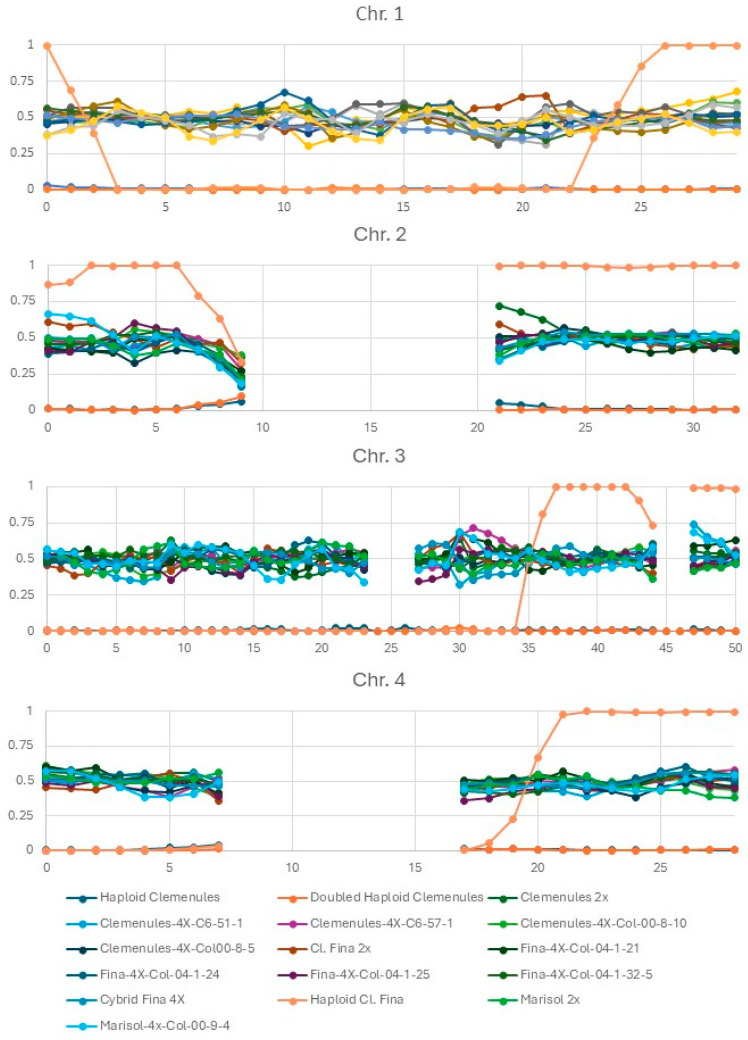 Figure 1
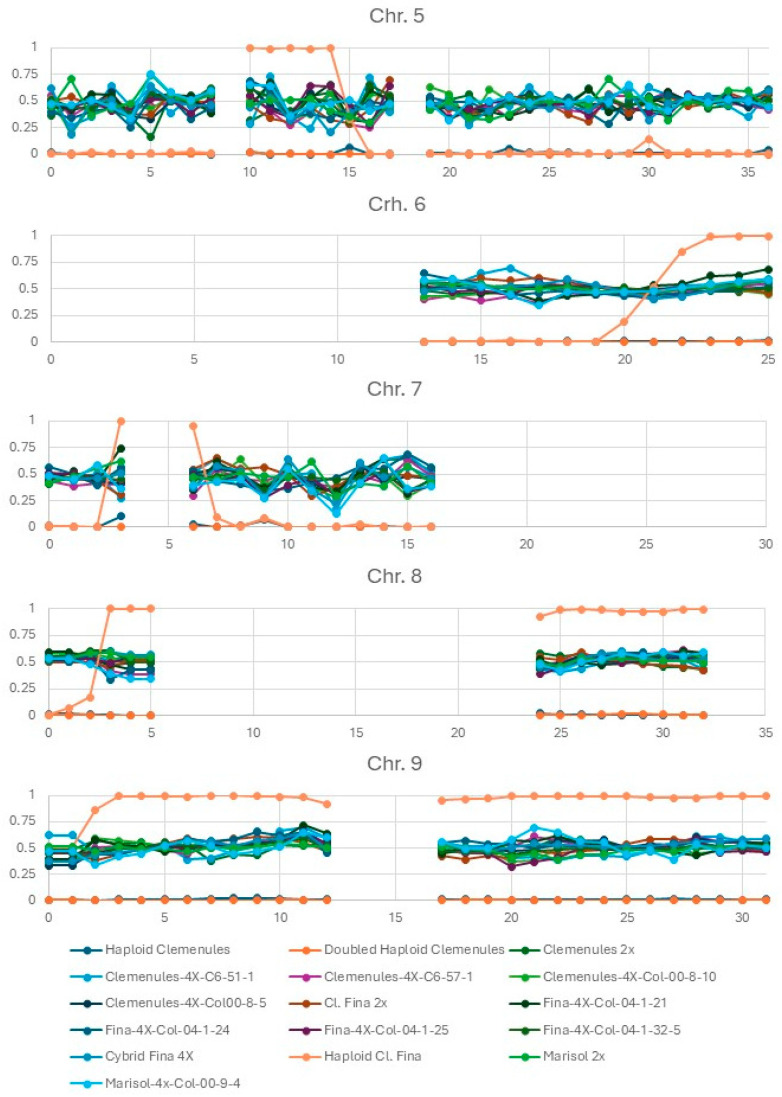 Figure 2
Peer Reviews
No public reviews on file for this paper yet. If you reviewed it on a platform where reviews are public (OpenReview, ICLR, NeurIPS, ICML), you can paste yours below so the community can read it here.
Videos
No videos yet. Explain this paper in a talk, walkthrough, or lecture? Add one.
Taxonomy
TopicsChromosomal and Genetic Variations · Genetic and Clinical Aspects of Sex Determination and Chromosomal Abnormalities · Plant Reproductive Biology