Global Distribution and Dispersal Pathways of Riparian Invasives: Perspectives Using Alligator Weed (Alternanthera philoxeroides (Mart.) Griseb.) as a Model
Jia Tian, Jinxia Huang, Yifei Luo, Maohua Ma, Wanyu Wang

TL;DR
This paper uses alligator weed as a model to develop a multi-scale framework for understanding and managing invasive riparian species globally.
Contribution
The paper introduces a novel multi-scale framework integrating advanced technologies and models for proactive invasive species management.
Findings
Alligator weed's dispersal is driven by both natural and human-related vectors across multiple scales.
The proposed framework combines remote sensing, eDNA, and AI for real-time detection and risk forecasting.
The methodology aims to shift management from reactive to proactive, network-based approaches.
Abstract
In struggling against invasive species ravaging riverscape ecosystems, gaps in dispersal pathway knowledge and fragmented approaches across scales have long stalled effective riparian management worldwide. To reduce these limitations and enhance invasion management strategies, selecting appropriate alien species as models for in-depth pathway analysis is essential. Alternanthera philoxeroides (Mart.) Griseb. (alligator weed) emerges as an exemplary model species, boasting an invasion record of around 120 years spanning five continents worldwide, supported by genetic evidence of repeated introductions. In addition, the clonal reproduction of A. philoxeroides supports swift establishment, while its amphibious versatility allows occupation of varied riparian environments, with spread driven by natural water-mediated dispersal (hydrochory) and human-related vectors at multiple scales. Thus,…
Genes, proteins, chemicals, diseases, species, mutations and cell lines named across the full text — each resolved to its canonical identifier and authoritative record.
Click any figure to enlarge with its caption.
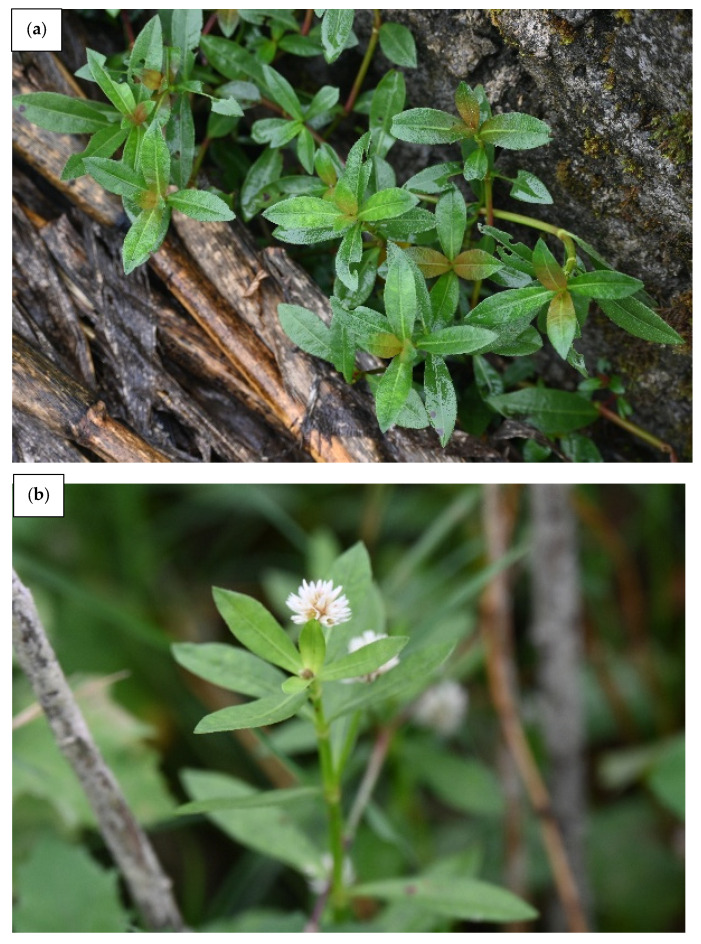 Figure 1
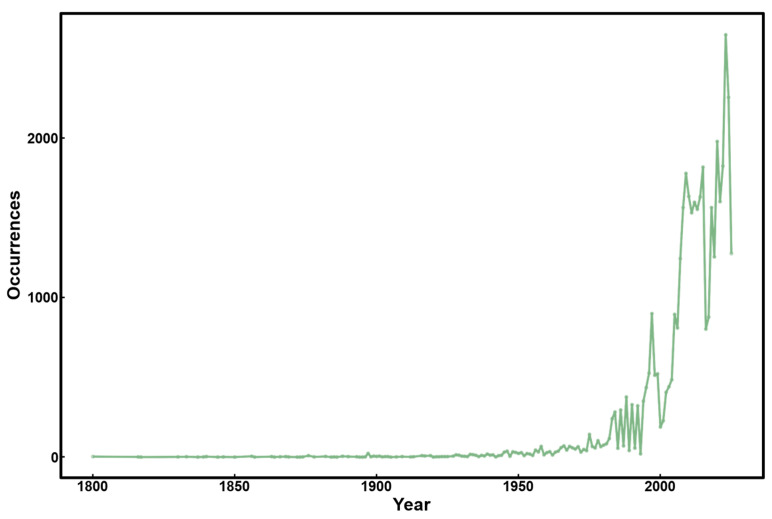 Figure 2
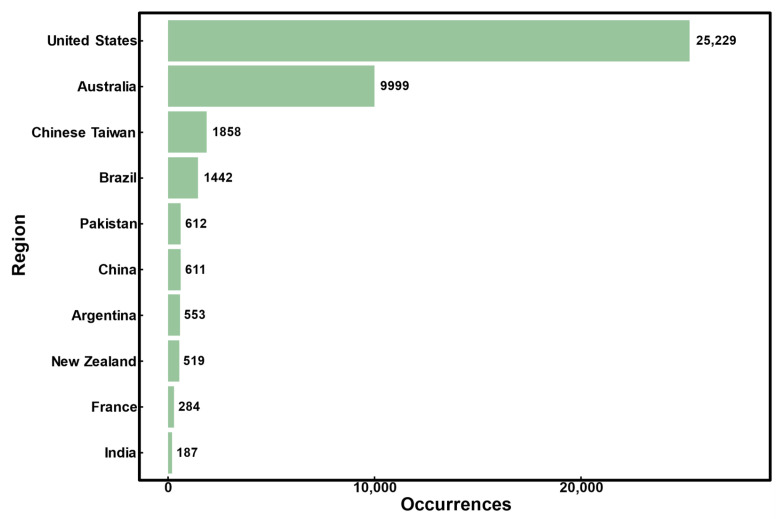 Figure 3
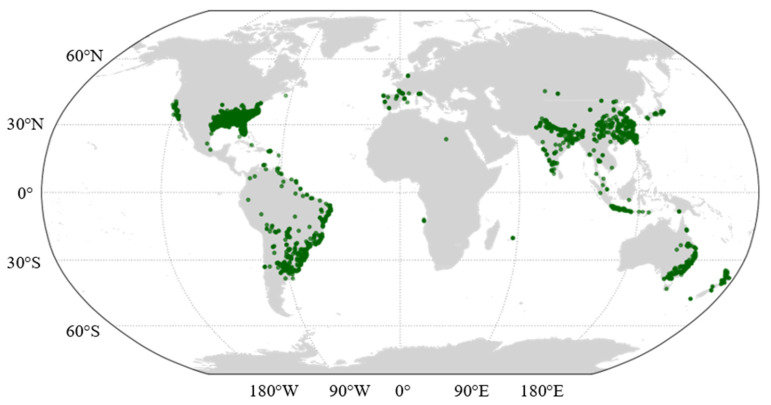 Figure 4
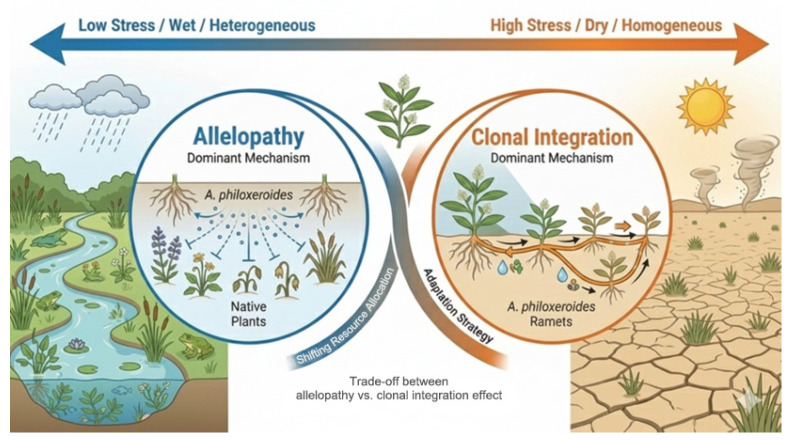 Figure 5
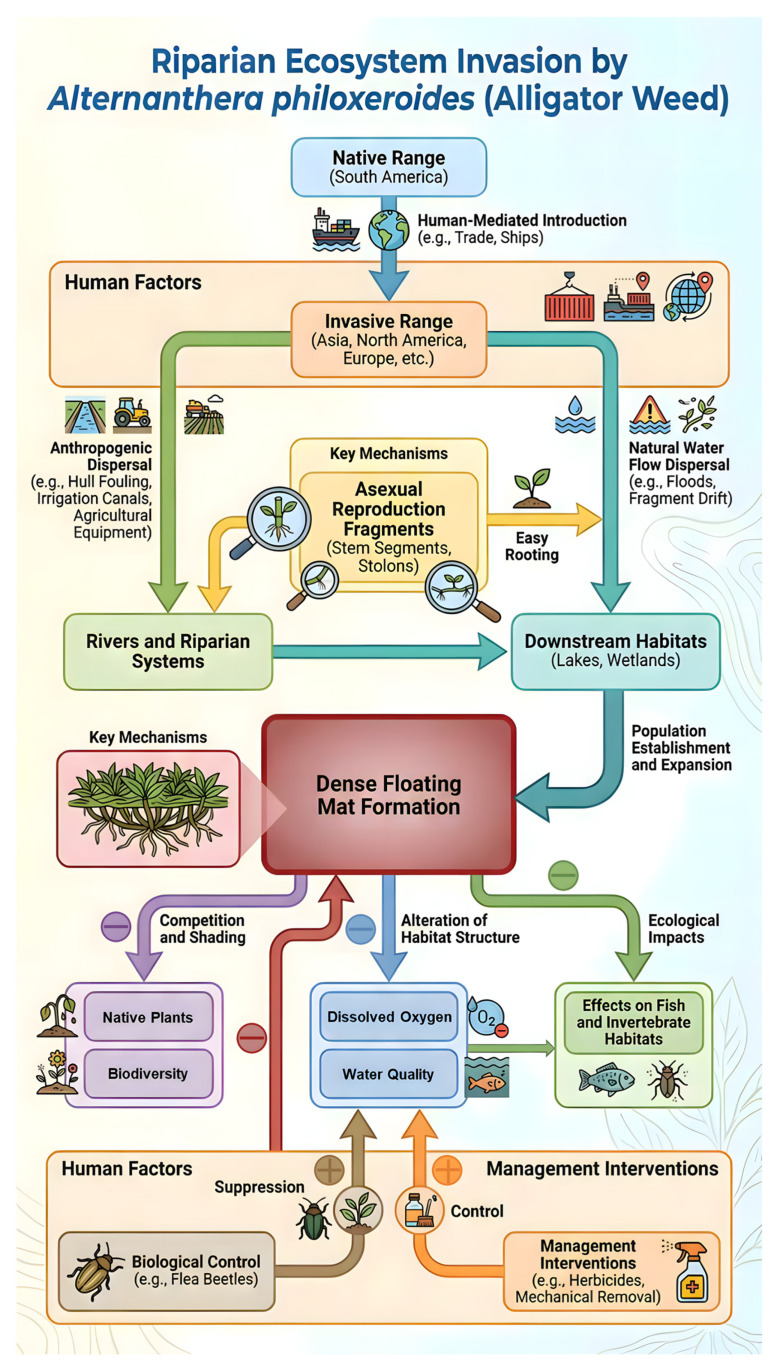 Figure 6
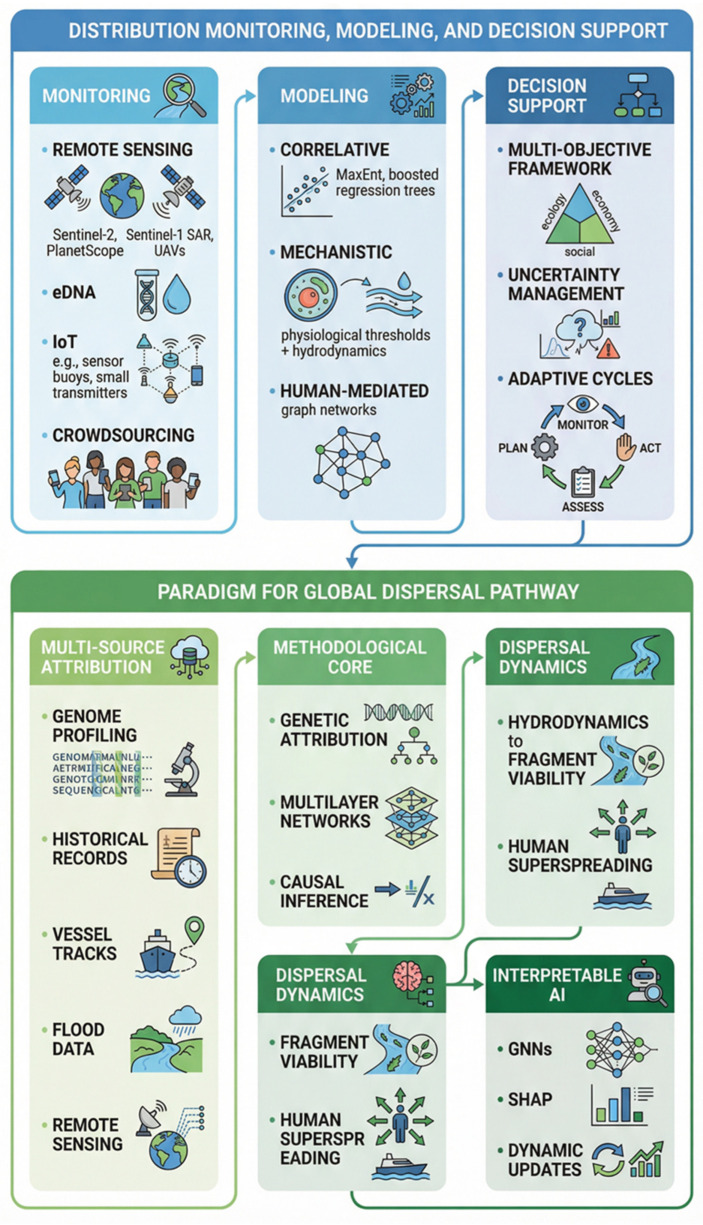 Figure 7
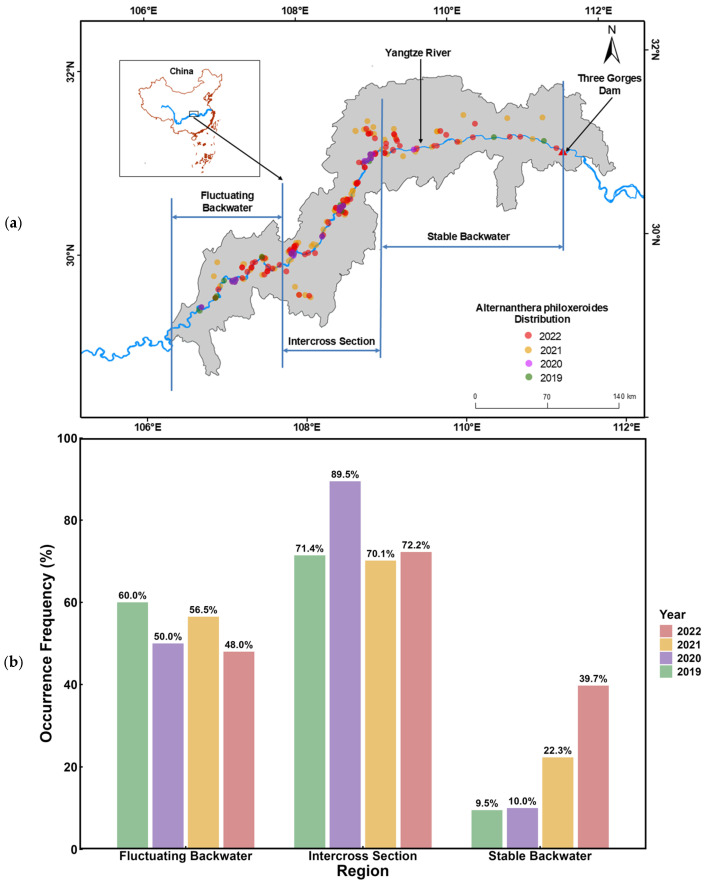 Figure 8
Peer Reviews
No public reviews on file for this paper yet. If you reviewed it on a platform where reviews are public (OpenReview, ICLR, NeurIPS, ICML), you can paste yours below so the community can read it here.
Videos
No videos yet. Explain this paper in a talk, walkthrough, or lecture? Add one.
Taxonomy
TopicsEnvironmental DNA in Biodiversity Studies · Aquatic Invertebrate Ecology and Behavior · Aquatic Ecosystems and Phytoplankton Dynamics