Nrf2 Modulation by Natural Compounds in Aging, Neurodegeneration, and Neuropathic Pain
Jurga Bernatoniene, Dalia M. Kopustinskiene, Roberto Casale, Alessandro Medoro, Sergio Davinelli, Luciano Saso, Kestutis Petrikonis

TL;DR
This review explores how Nrf2, a key regulator of antioxidant responses, is linked to aging, neurodegeneration, and neuropathic pain, and how natural compounds can modulate it.
Contribution
The paper highlights Nrf2 as a unifying target for aging-related conditions and evaluates natural modulators and their translational challenges.
Findings
Reduced Nrf2 activity is associated with oxidative stress and inflammation in aging and neurodegenerative diseases.
Nrf2 modulation by natural compounds shows promise but faces challenges like poor bioavailability and safety concerns.
Future research should focus on improving delivery systems and evaluating Nrf2 modulators in combination with standard therapies.
Abstract
This review summarizes the role of nuclear factor erythroid 2–related factor 2 (Nrf2) as a common link between aging, neurodegeneration, and neuropathic pain. Aging is characterized by oxidative stress and constant inflammation, which coincides with reduced Nrf2 activity and weaker antioxidant responses, increasing vulnerability to diseases. In neurodegenerative disorders—including Alzheimer’s, Parkinson’s, Huntington’s disease, and amyotrophic lateral sclerosis—evidence indicates that impaired Nrf2 signaling contributes to oxidative damage, neuroinflammation, and mitochondrial dysfunction. Furthermore, in neuropathic pain, similar mechanisms are involved, and Nrf2 could play a role as a potential analgesic target because of its role in regulating cellular defense pathways. We also review natural Nrf2 modulators (e.g., flavonoids, other polyphenols, terpenoids, alkaloids), discussing…
Genes, proteins, chemicals, diseases, species, mutations and cell lines named across the full text — each resolved to its canonical identifier and authoritative record.
Click any figure to enlarge with its caption.
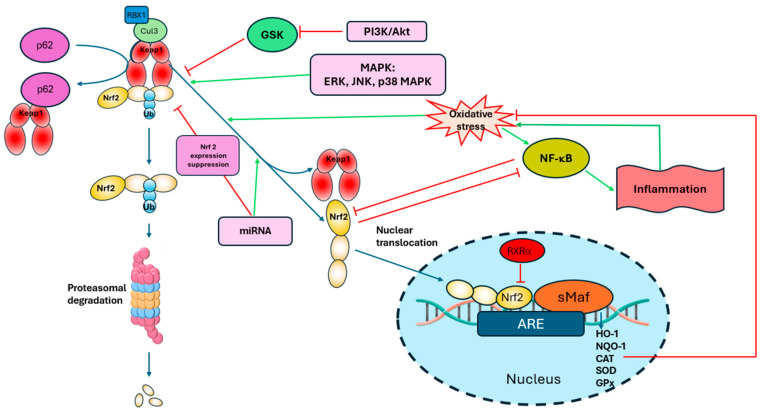 Figure 1
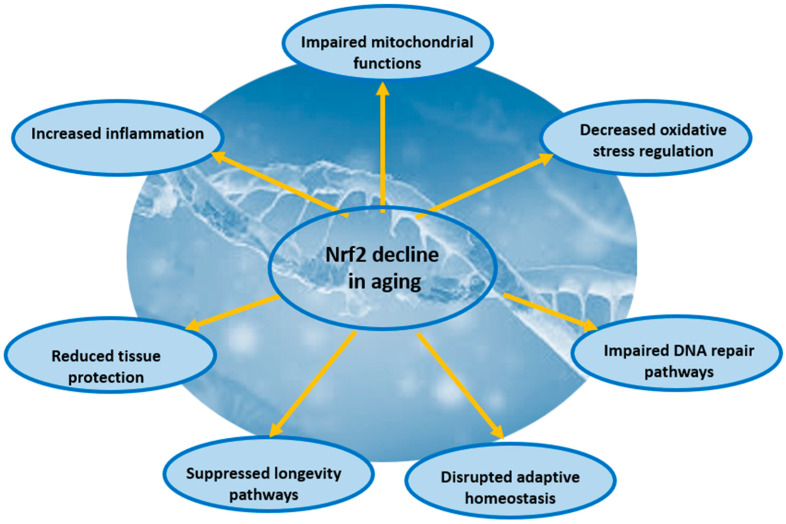 Figure 2
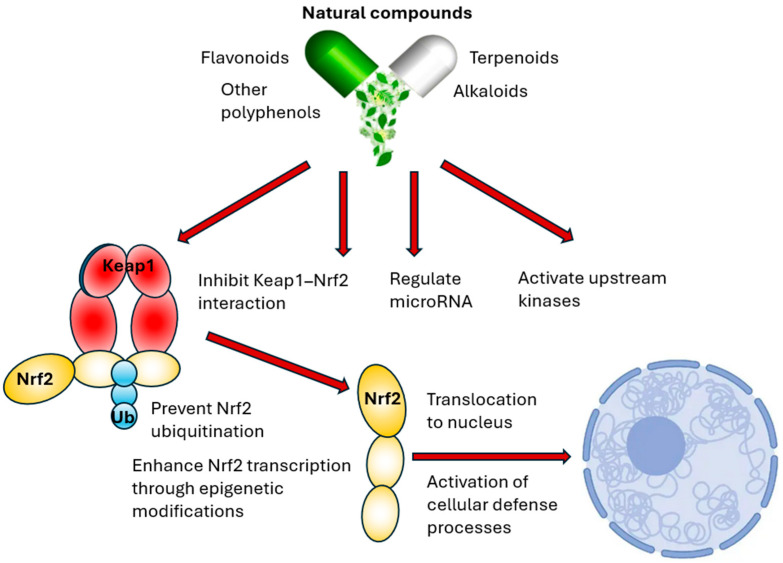 Figure 3
Peer Reviews
No public reviews on file for this paper yet. If you reviewed it on a platform where reviews are public (OpenReview, ICLR, NeurIPS, ICML), you can paste yours below so the community can read it here.
Videos
No videos yet. Explain this paper in a talk, walkthrough, or lecture? Add one.
Taxonomy
TopicsGenomics, phytochemicals, and oxidative stress · Sirtuins and Resveratrol in Medicine · Amyotrophic Lateral Sclerosis Research