Is Taenia crassiceps Cysticercosis a Threat to Dogs? Description of Macro- and Microscopic Lesions in a Dog. Case Report and a Review of the Literature
Małgorzata Kandefer-Gola, Kacper Żebrowski, Rafał Ciaputa, Marta Demkowska-Kutrzepa, Stanisław Dzimira

TL;DR
A dog with a weakened immune system developed a severe and fatal infection from Taenia crassiceps, highlighting the risk in immunosuppressed animals.
Contribution
This case report highlights T. crassiceps as a potential threat to immunosuppressed dogs and emphasizes its zoonotic and epidemiological significance.
Findings
A 4-year-old dog with Addison’s disease and immunosuppression developed fatal disseminated T. crassiceps cysticercosis.
Histological analysis confirmed the presence of T. crassiceps larvae with characteristic morphological features.
The case underscores the importance of considering T. crassiceps in the differential diagnosis of subcutaneous nodules in immunosuppressed dogs.
Abstract
Taenia crassiceps is a cestode capable of causing severe and atypical cysticercosis in accidental intermediate hosts, including domestic dogs. Here we report a fatal disseminated T. crassiceps infection (cystiscercosis) in a 4-year-old castrated male German Shepherd from Poland that had been undergoing long-term prednisone therapy for Addison’s disease. The dog developed multiple soft subcutaneous nodules containing numerous asexually proliferating cysticerci. Necropsy revealed extensive dissemination of larvae throughout the subcutis and the thoracic and abdominal cavities, accompanied by serosanguineous effusions, necrosis, and chronic inflammatory lesions. Histological examination demonstrated cestode larvae with a scolex bearing two rows of hooks, consistent with T. crassiceps. Immunosuppression and endocrine alterations, including chronic glucocorticoid treatment and low levels of…
Genes, proteins, chemicals, diseases, species, mutations and cell lines named across the full text — each resolved to its canonical identifier and authoritative record.
Click any figure to enlarge with its caption.
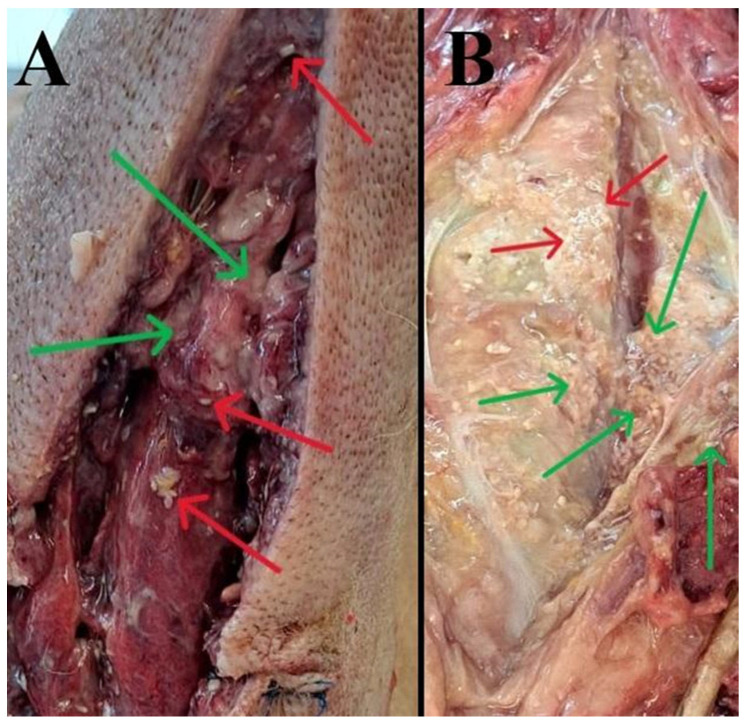 Figure 1
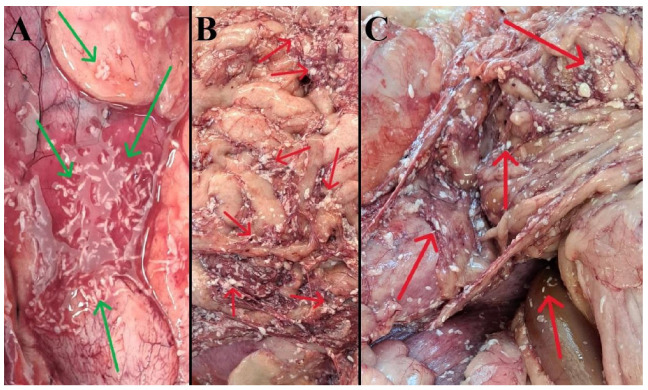 Figure 2
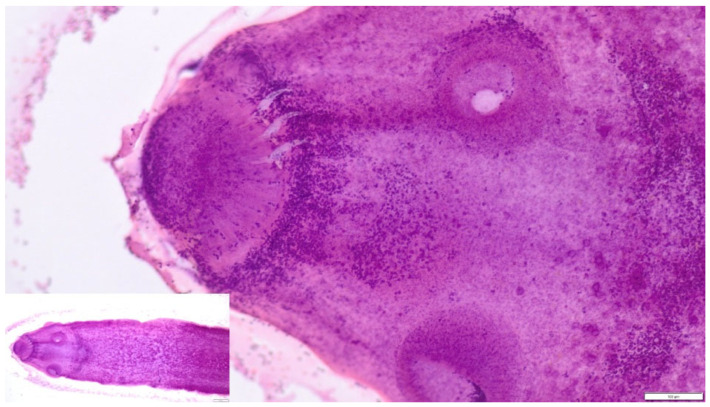 Figure 3
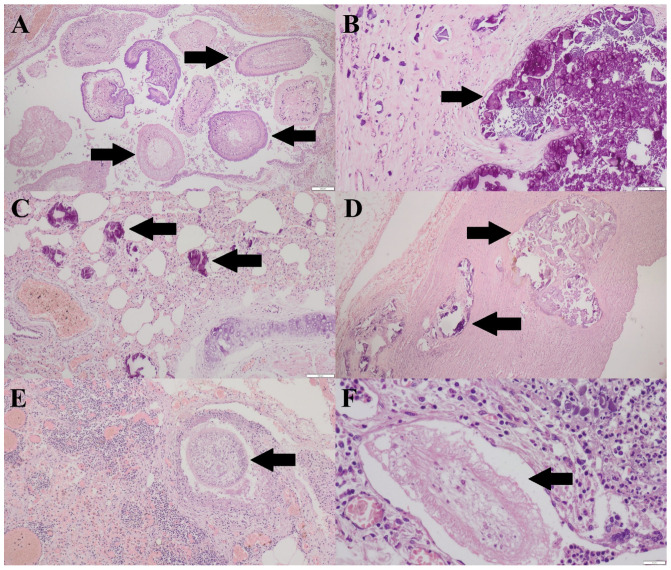 Figure 4
Peer Reviews
No public reviews on file for this paper yet. If you reviewed it on a platform where reviews are public (OpenReview, ICLR, NeurIPS, ICML), you can paste yours below so the community can read it here.
Videos
No videos yet. Explain this paper in a talk, walkthrough, or lecture? Add one.
Taxonomy
TopicsParasitic infections in humans and animals · Veterinary Medicine and Surgery · Parasitic Infections and Diagnostics