Niche, Interspecific Association and Community Stability of Understory Vegetation in Artificial Sand-Fixing Forests of the Mu Us Sandy Land
Huricha Ao, Hongbin Xu, Yuqing Mi, Haibing Wang, Lei Zhang, Shengnan Zhang, Haiyan Gao, Siqi Li

TL;DR
This study examines how understory vegetation in artificial sand-fixing forests in the Mu Us Sandy Land assembles and remains stable, identifying key species and relationships that support desert ecosystem management.
Contribution
The novelty lies in integrating niche characteristics, interspecific associations, and community stability to assess desert vegetation dynamics.
Findings
Leymus chinensis, Euphorbia esula, Grubovia dasyphylla, and Corispermum hyssopifolium are key species with wide ecological niches and high importance values.
S. psammophila, A. ordosica, and C. fruticosum understory communities show positive associations and higher stability compared to A. fruticosa.
Community stability is positively correlated with variance ratio and negatively with mean niche overlap.
Abstract
Understanding the community assembly mechanisms and stability of artificial sand-fixing forests is critical for the management of desert ecosystems. This study investigated the understory vegetation of four artificial sand-fixing shrub forests in the Mu Us Sandy Land to understand community assembly mechanisms and stability by analyzing niche characteristics, interspecific associations, and community stability. The results showed the following: (1) Lc (Leymus chinensis), Ee (Euphorbia esula), Gd (Grubovia dasyphylla), and Ch (Corispermum hyssopifolium) all have wide ecological niches and high importance values, serving as key species for maintaining community function. (2) The understory herbaceous plant communities of S. psammophila, A. ordosica and C. fruticosum exhibited low niche overlap, and the A. fruticosa understory herbaceous plant community showed high niche overlap. (3) The…
Genes, proteins, chemicals, diseases, species, mutations and cell lines named across the full text — each resolved to its canonical identifier and authoritative record.
Click any figure to enlarge with its caption.
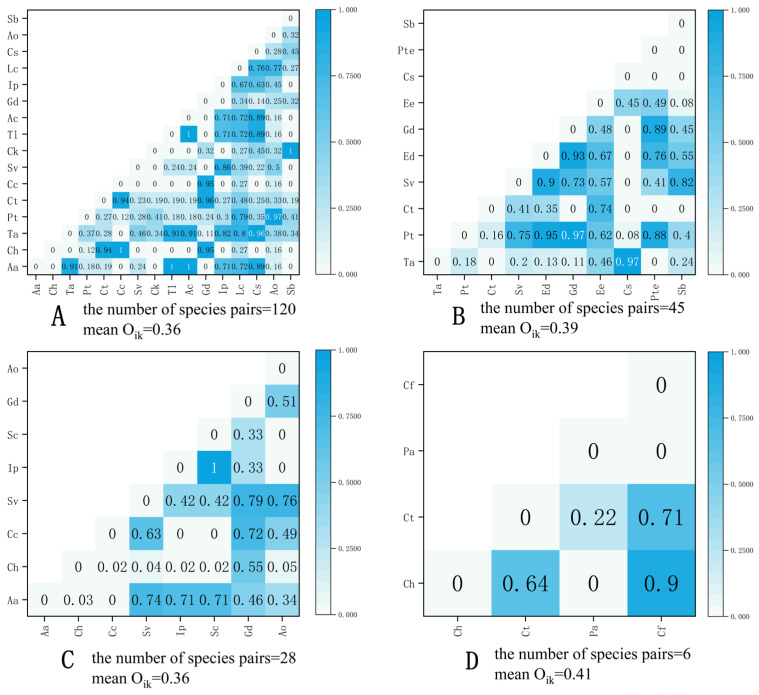 Figure 1
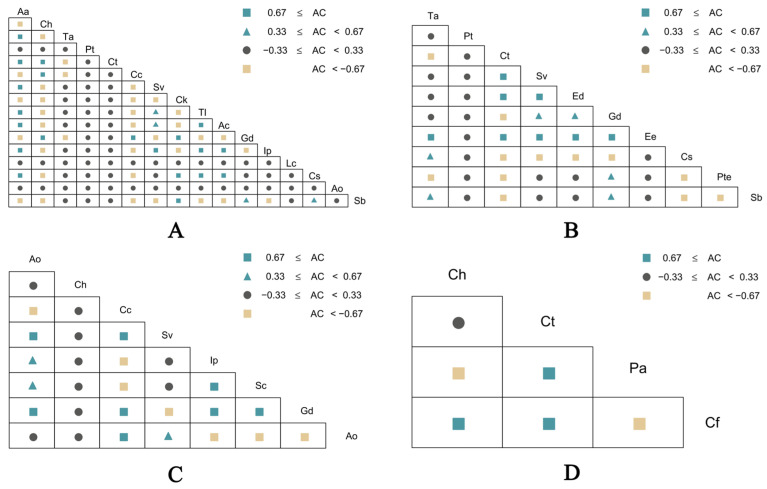 Figure 2
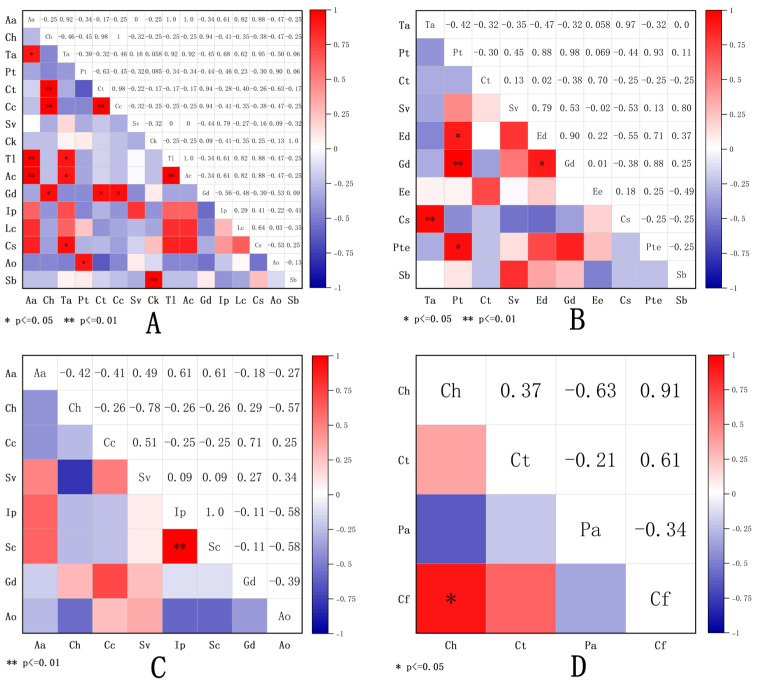 Figure 3
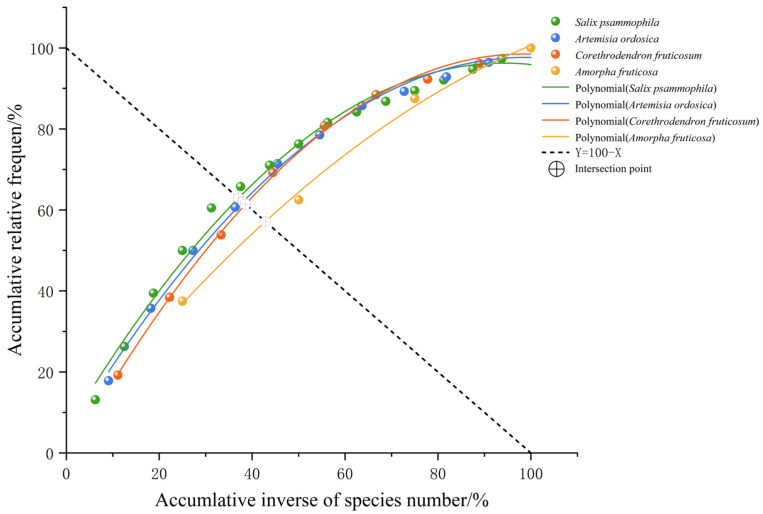 Figure 4
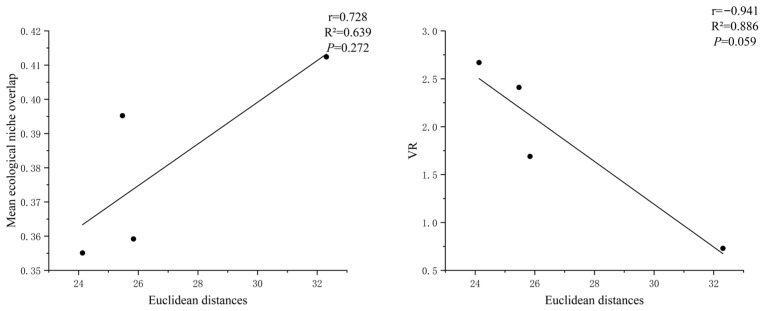 Figure 5
 Figure 6
Peer Reviews
No public reviews on file for this paper yet. If you reviewed it on a platform where reviews are public (OpenReview, ICLR, NeurIPS, ICML), you can paste yours below so the community can read it here.
Videos
No videos yet. Explain this paper in a talk, walkthrough, or lecture? Add one.
Taxonomy
TopicsEcology and Vegetation Dynamics Studies · Forest, Soil, and Plant Ecology in China · Ecosystem dynamics and resilience