Oral Route Infection by Trypanosoma cruzi: From the Beginning to the Present Day
Sebastián Zambrano, Kurt Montoya, Alejandro Avalos, Bessy Gutiérrez, Juan San Francisco, José Luis Vega, Jorge González

TL;DR
This paper reviews the history and current understanding of how Trypanosoma cruzi, the parasite causing Chagas disease, can be transmitted through the oral route, including food and meat consumption.
Contribution
The paper provides a comprehensive analysis of oral transmission of T. cruzi, integrating clinical, epidemiological, and experimental findings.
Findings
Oral transmission of T. cruzi was confirmed in 1968, but was long considered rare.
Experimental studies in mice have clarified the molecular mechanisms of oral infection.
Foodborne outbreaks and consumption of infected meat highlight the significance of oral transmission.
Abstract
Trypanosoma cruzi is the causative agent of Chagas disease, which affects 6–7 million people worldwide. Although the possibility of oral transmission was first scientifically suggested in 1913, it was not until 1968 that the first confirmed cases of human infection via food consumption were reported. This long gap contributed to the widespread perception that oral transmission was a rare or incidental event. Over the past two decades, significant advances have been made in understanding the biological and clinical aspects of oral transmission, including the molecular mechanisms by which metacyclic trypomastigotes establish infection via the digestive route. Experimental studies in murine models have further deepened our knowledge of the biology and pathogenesis of oral infection. Concurrently, multiple outbreaks of T. cruzi infection through contaminated food and beverages have been…
Genes, proteins, chemicals, diseases, species, mutations and cell lines named across the full text — each resolved to its canonical identifier and authoritative record.
Click any figure to enlarge with its caption.
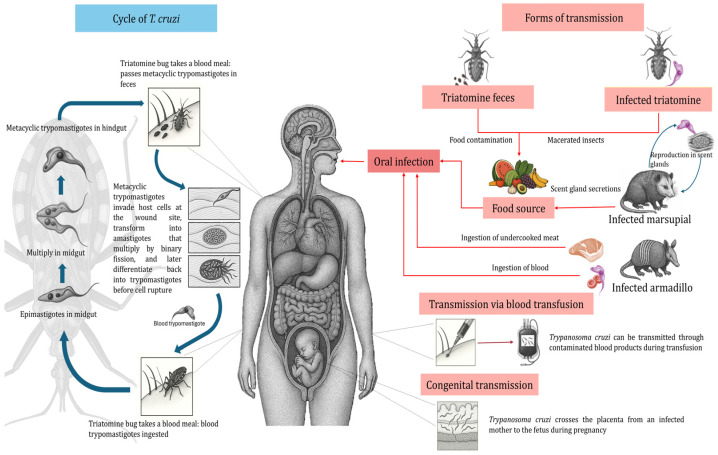 Figure 1
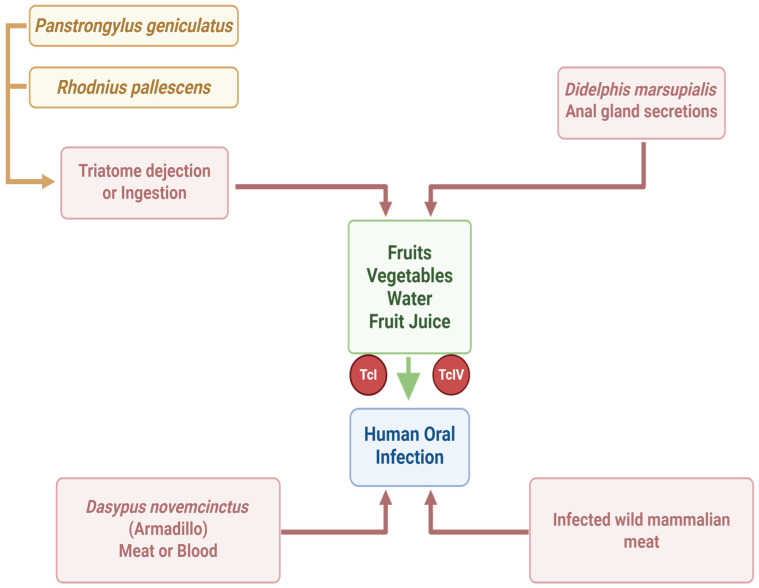 Figure 2
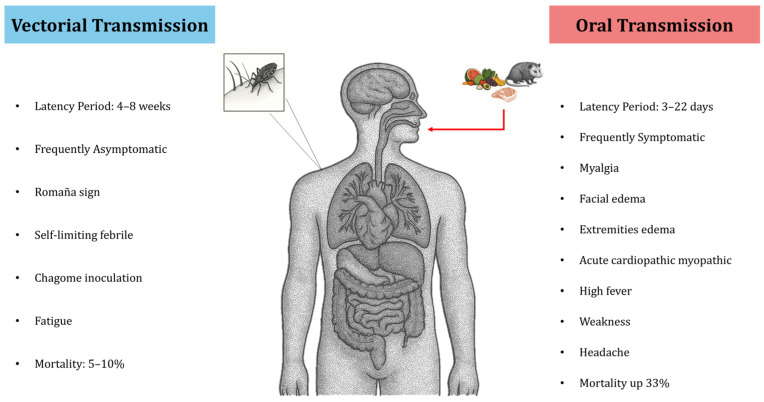 Figure 3
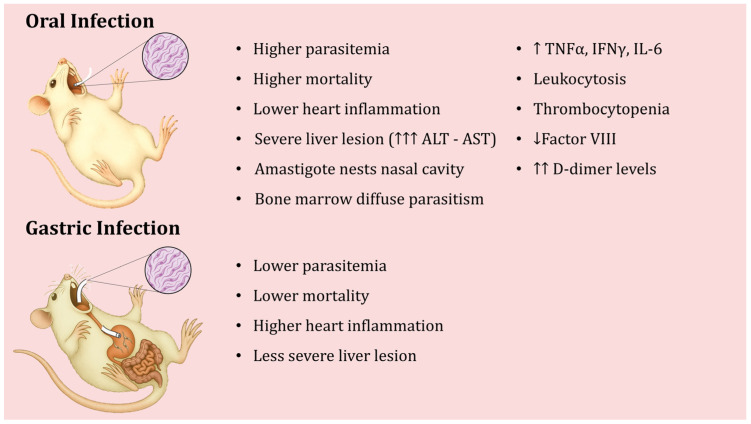 Figure 4
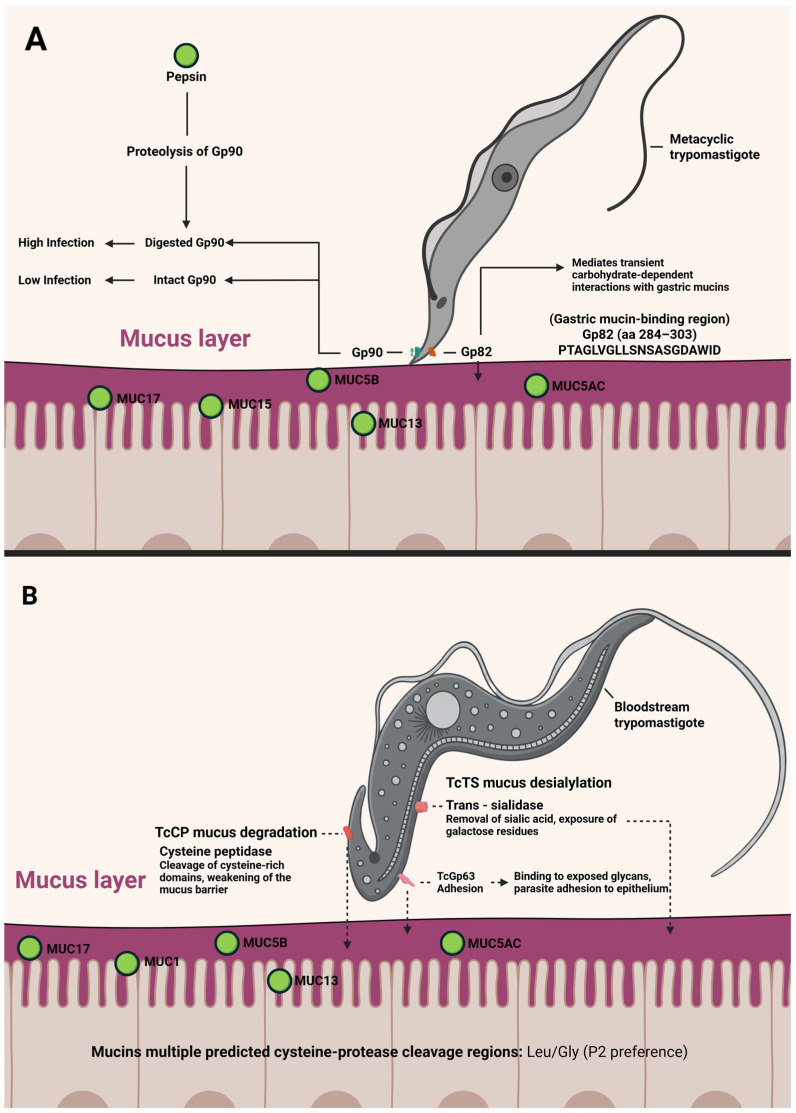 Figure 5
Peer Reviews
No public reviews on file for this paper yet. If you reviewed it on a platform where reviews are public (OpenReview, ICLR, NeurIPS, ICML), you can paste yours below so the community can read it here.
Videos
No videos yet. Explain this paper in a talk, walkthrough, or lecture? Add one.
Taxonomy
TopicsTrypanosoma species research and implications · Parasites and Host Interactions · Research on Leishmaniasis Studies