Multi-Omics Analysis Provides Insights into Developmental Tepal Coloration in Gloriosa superba ‘Passion Flame’
Xinyi Zhou, Kuang Sheng, Tong Wu, Liangsheng Zhang, Yuwei Liang, Xiaojun Chang

TL;DR
This study uses multi-omics to explore how tepal color changes during the development of Gloriosa superba 'Passion Flame', revealing key genes and pigments involved in coloration.
Contribution
The study identifies specific regulatory genes and pigments linked to tepal coloration in a monocot ornamental plant using a multi-omics approach.
Findings
Pelargonidin-3-O-glucoside is the most abundant red pigment in mature tepals.
Seven anthocyanin structural genes correlate strongly with anthocyanin accumulation.
GsMYB75 and GsMYB114 are key regulators of anthocyanin biosynthesis during tepal maturation.
Abstract
Gloriosa superba ‘Passion Flame’ (flame lily) is a distinctive ornamental plant characterized by its striking floral structure and vivid coloration. During flower development, flame lily tepals undergo a pronounced color transition from green at the bud stage to bright red with a yellow base at maturity, providing an excellent system for studying flower pigmentation in monocots. Here, we applied a multi-omics approach to examine metabolite accumulation and gene expression dynamics across four stages of flower development. Metabolomic profiling identified 240 flavonoids and four anthocyanins, among which pelargonidin-3-O-glucoside showed the highest relative abundance among red pigmentation. Transcriptome analysis revealed that seven key anthocyanin structural genes showed strong correlations with anthocyanin accumulation. In parallel, several chlorophyll degradation genes, including…
Genes, proteins, chemicals, diseases, species, mutations and cell lines named across the full text — each resolved to its canonical identifier and authoritative record.
Click any figure to enlarge with its caption.
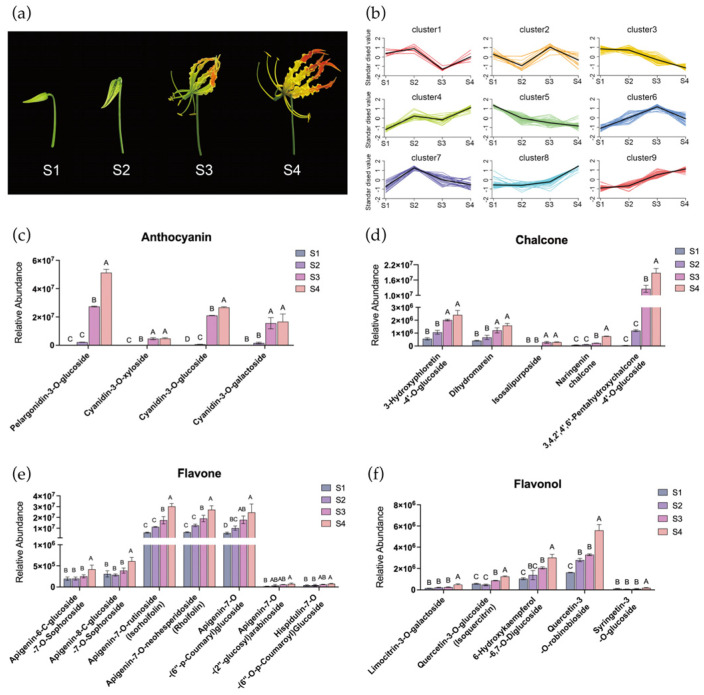 Figure 1
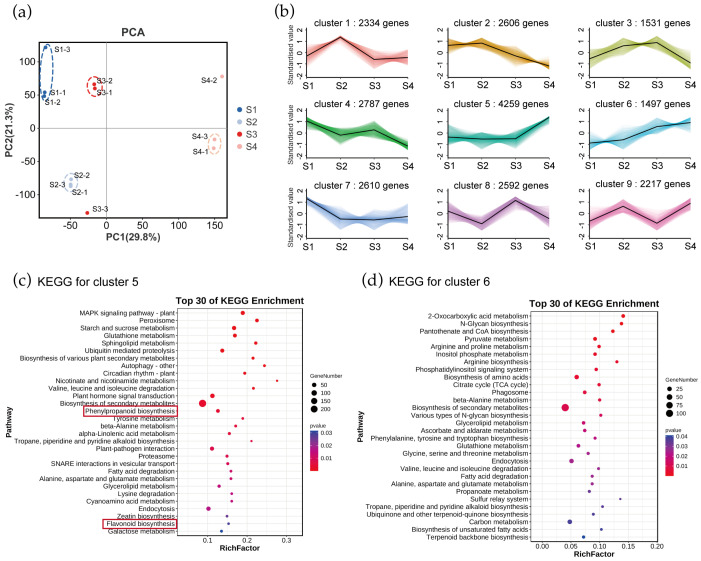 Figure 2
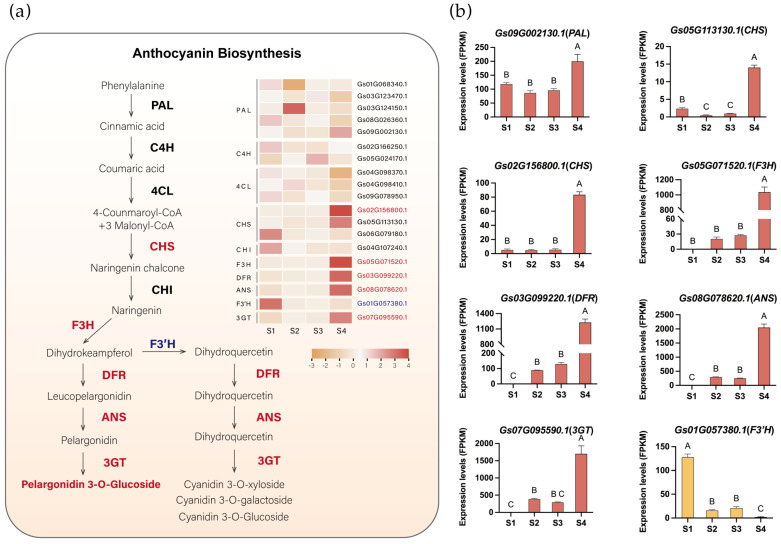 Figure 3
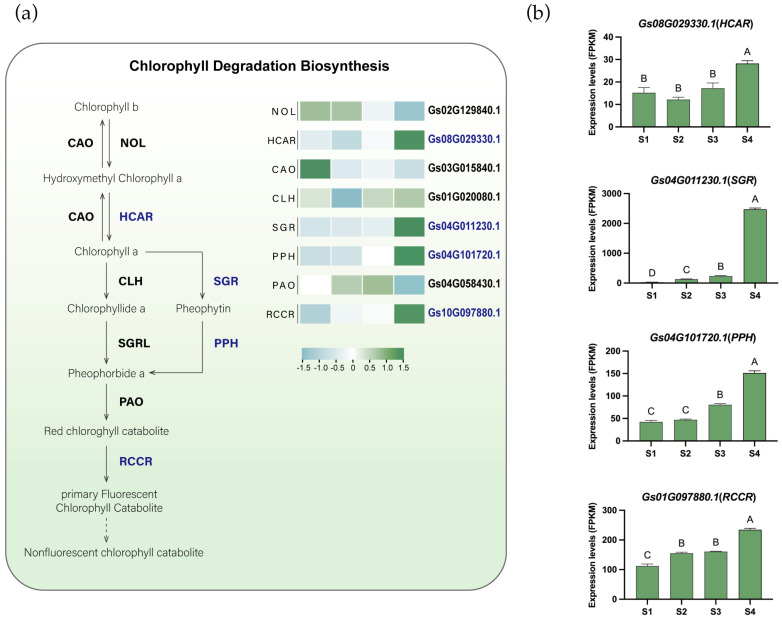 Figure 4
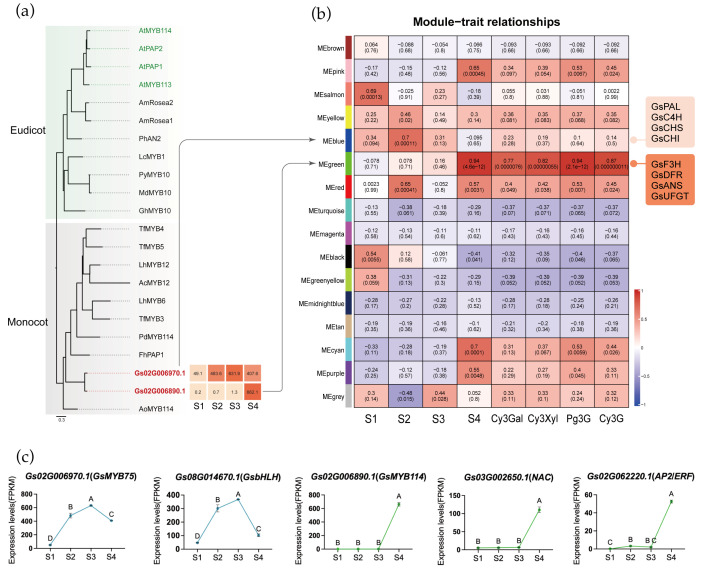 Figure 5
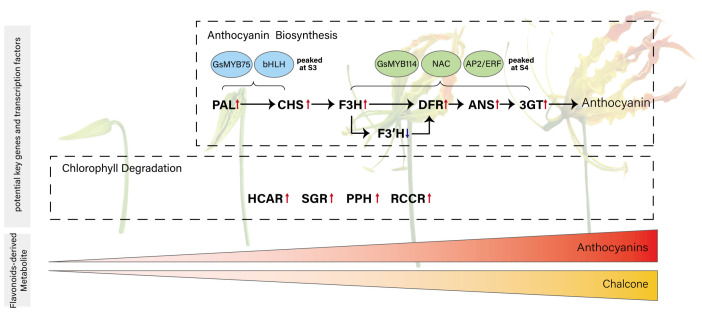 Figure 6
Peer Reviews
No public reviews on file for this paper yet. If you reviewed it on a platform where reviews are public (OpenReview, ICLR, NeurIPS, ICML), you can paste yours below so the community can read it here.
Videos
No videos yet. Explain this paper in a talk, walkthrough, or lecture? Add one.
Taxonomy
TopicsPlant Gene Expression Analysis · Plant Molecular Biology Research · Light effects on plants