Five-Year Slaughterhouse-Based Surveillance of Echinococcus granulosus in Sheep from Yili, Northwest Xinjiang, China
Cairen, Xiaoli Zhang, Li Zhang, Kalibixiati Aimulajiang, Batubayier Daoerji, Daoerji Namuka, Baoping Guo, Rongsheng Mi, Liying Wang

TL;DR
A five-year study in Xinjiang, China, found high infection rates of Echinococcus granulosus in sheep, with a dominant strain posing a public health risk.
Contribution
This study provides the first comprehensive five-year surveillance data on Echinococcus granulosus in sheep in Yili Prefecture, China.
Findings
Echinococcus granulosus prevalence in sheep was 22.0% over five years with no significant county-level differences except between Huocheng and Zhaosu.
The G1 genotype was overwhelmingly dominant (95.2%), indicating a zoonotic public health threat.
Network analysis suggested recent population expansion of the parasite, with 14 haplotypes identified.
Abstract
Background: Cystic echinococcosis (CE) remains a significant zoonotic burden in the pastoral regions of China. Yili Prefecture in Xinjiang is a high-risk area, yet comprehensive data are lacking on the prevalence and molecular characteristics of Echinococcus granulosus in its primary intermediate host, sheep. Methods: From 2020 to 2024, a total of 2700 sheep livers were visually inspected for hydatid cysts infection at one randomly selected slaughterhouse in each of the nine counties of Yili Prefecture. Ninety cyst-positive samples were subjected to morphological examination and molecular genotyping by amplifying and sequencing the nad2 gene. Results: The overall prevalence of E. granulosus was 22.0% (594/2700). County-level prevalence ranged from 18.3% (Zhaosu County) to 25.7% (Huocheng County), with no significant differences observed among the counties (p > 0.05) except between…
Genes, proteins, chemicals, diseases, species, mutations and cell lines named across the full text — each resolved to its canonical identifier and authoritative record.
Click any figure to enlarge with its caption.
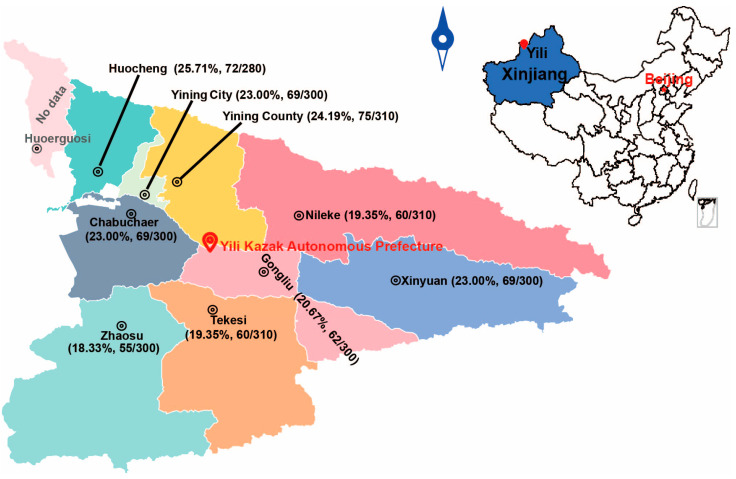 Figure 1
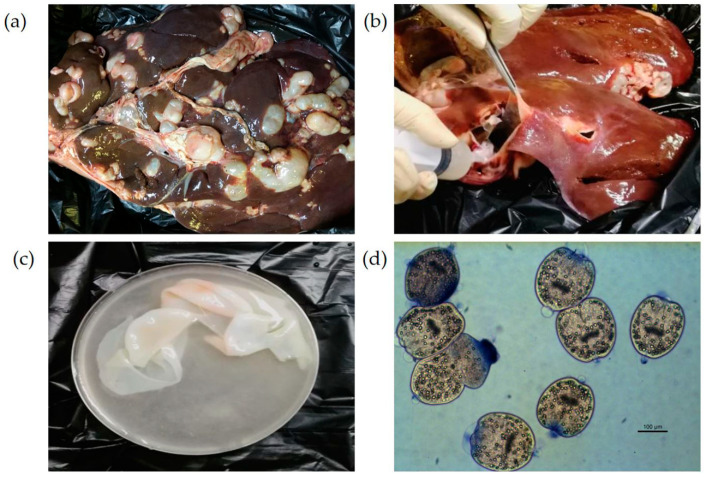 Figure 2
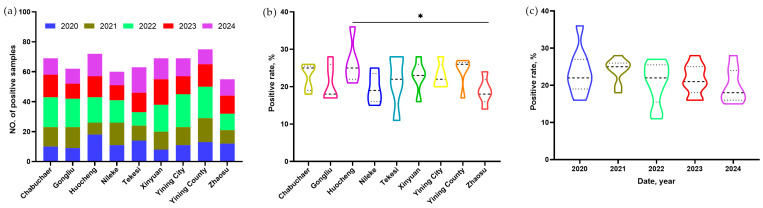 Figure 3
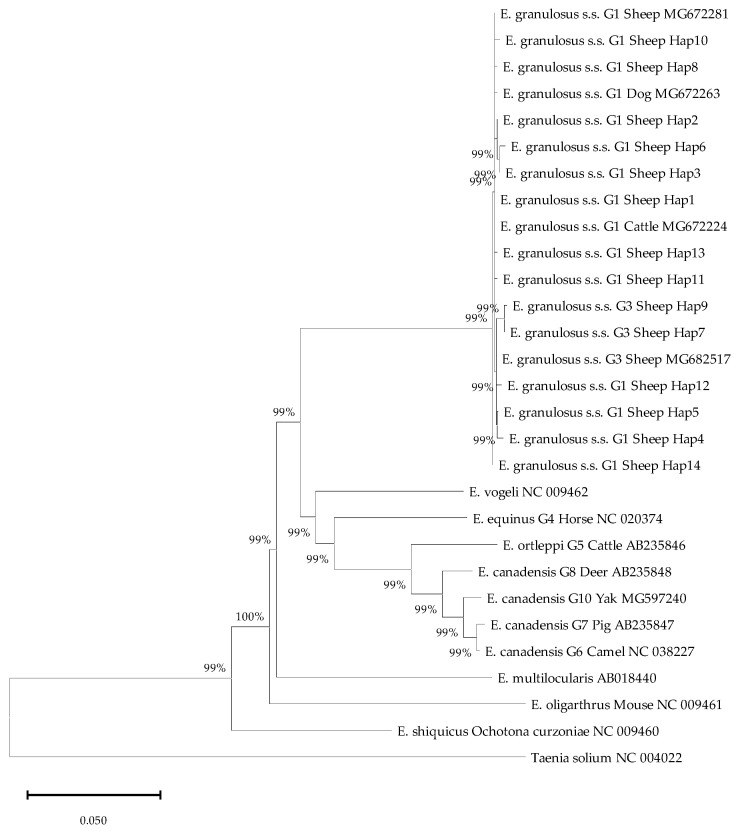 Figure 4
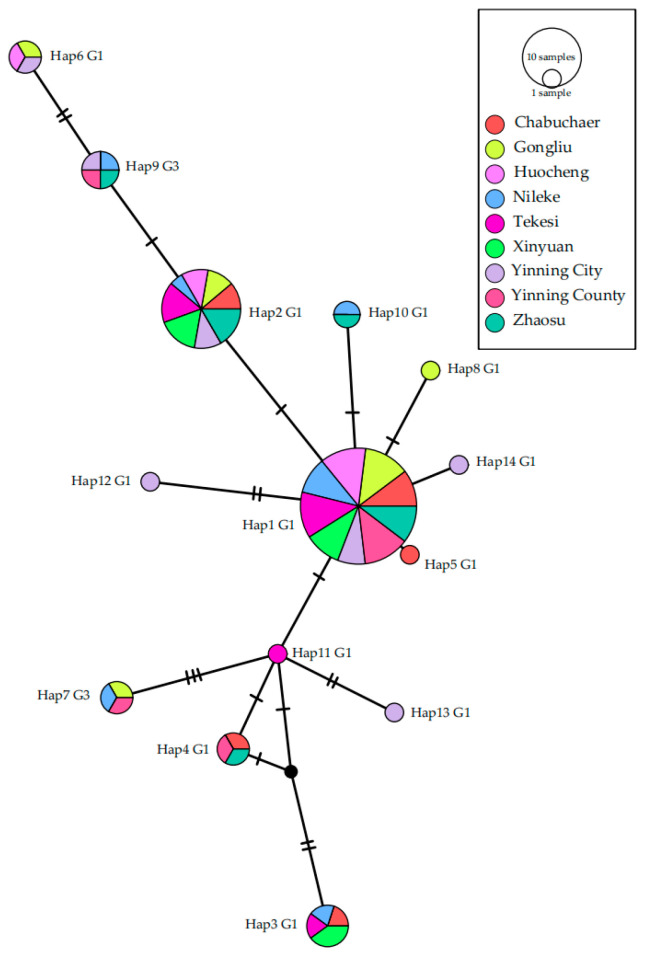 Figure 5
Peer Reviews
No public reviews on file for this paper yet. If you reviewed it on a platform where reviews are public (OpenReview, ICLR, NeurIPS, ICML), you can paste yours below so the community can read it here.
Videos
No videos yet. Explain this paper in a talk, walkthrough, or lecture? Add one.
Taxonomy
TopicsParasitic infections in humans and animals · Parasitic Infections and Diagnostics · Echinoderm biology and ecology