Epidemiological Spectrum of Bovine Tick-Borne Pathogens in Northeast Brazil: Comparative Analysis Across a Tropical Humid and Two Semi-Arid Regions
Felipe Boniedj Ventura Alvares, Jordania Oliveira Silva, Basilio Felizardo Lima Neto, Geraldo Moreira Silva Filho, Samira Pereira Batista, Marcelo Bahia Labruna, Thais Ferreira Feitosa, Vinícius Longo Ribeiro Vilela

TL;DR
This study examines the spread of tick-borne cattle diseases in different regions of Brazil, finding high infection rates and identifying risk factors like fly presence and poor management practices.
Contribution
The study provides a comparative analysis of tick-borne pathogen epidemiology across distinct climatic regions in Brazil, identifying region-specific risk factors and infection patterns.
Findings
Infection rates were highest in the tropical humid region of Paraíba at 94.8%.
Co-infections, especially with A. marginale and B. bigemina, were common, with triple infections occurring in 15.8% of animals.
Risk factors included horn fly presence, needle reuse, and lack of quarantine for newly purchased cattle.
Abstract
Cattle tick fever (CTF), caused by Anaplasma marginale, Babesia bovis and Babesia bigemina, remains a sanitary and economic challenge for cattle farming in Brazil. Thus, this study evaluated the prevalence, regional distribution, co-infection patterns, and risk factors associated with CTF causative agents in cattle the semi-arid region of Paraíba, the semi-arid region of Ceará, and the Tropical Humid region of Paraíba, Northeast Brazil. Blood samples were collected from 336 cattle, from 60 farms, and analyzed by means of conventional PCR and nested-PCR, while epidemiological data were obtained through questionnaires applied to producers. The overall infection prevalence by at least one pathogen was 82.7% (278/336), with higher rates in the tropical humid region of Paraíba at 94.8% (109/115), followed by the semi-arid region of Ceará, with 88.1% (89/101) and the semi-arid region of…
Genes, proteins, chemicals, diseases, species, mutations and cell lines named across the full text — each resolved to its canonical identifier and authoritative record.
Click any figure to enlarge with its caption.
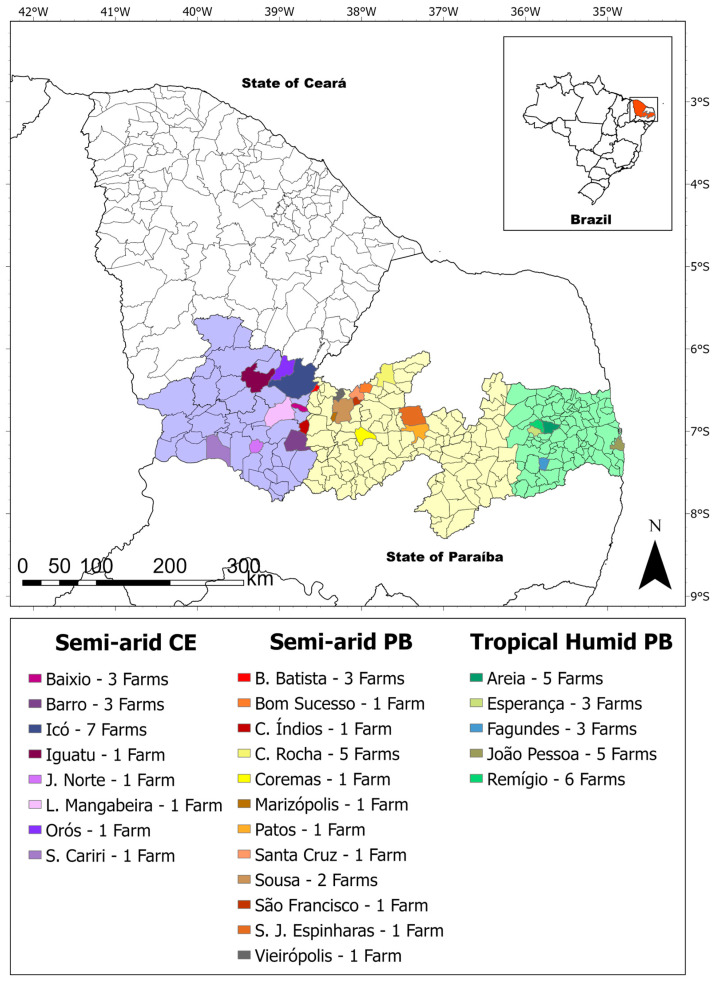 Figure 1
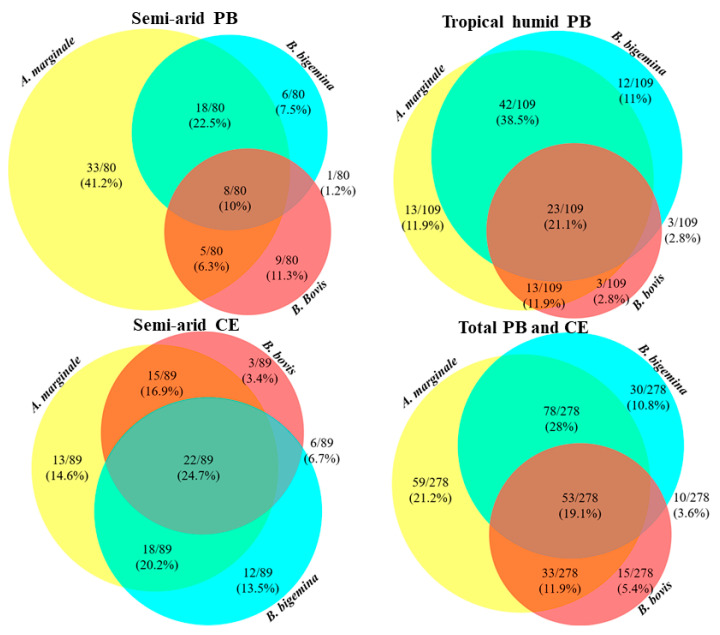 Figure 2
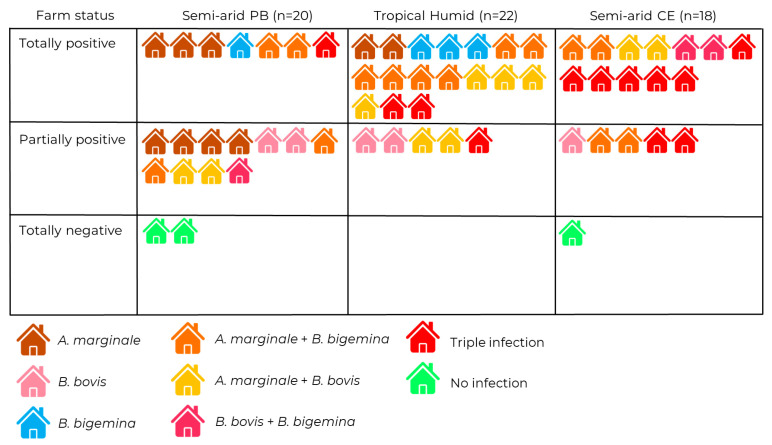 Figure 3
Peer Reviews
No public reviews on file for this paper yet. If you reviewed it on a platform where reviews are public (OpenReview, ICLR, NeurIPS, ICML), you can paste yours below so the community can read it here.
Videos
No videos yet. Explain this paper in a talk, walkthrough, or lecture? Add one.
Taxonomy
TopicsVector-borne infectious diseases · Vector-Borne Animal Diseases · Parasitic Diseases Research and Treatment