From Early Signals to Systemic Decline: Physiological Defense Landscape of Agave tequilana in the Fusarium oxysporum Pathosystem
Diego E. Navarro-López, Julio César López-Velázquez, Antonia Gutiérrez-Mora, Mayra Itzcalotzin Montero-Cortés, Martin Eduardo Avila-Miranda, Norma Alejandra Mancilla-Margalli, Elizabeth Sánchez-Jiménez, Miriam Irene Jiménez-Pérez, Jorge L. Mejía-Méndez

TL;DR
This study explores how blue agave plants defend against Fusarium oxysporum infection, revealing differences in plant responses to pathogenic and non-pathogenic strains.
Contribution
The study identifies specific defense mechanisms in Agave tequilana against Fusarium oxysporum, distinguishing compatible and incompatible plant-pathogen interactions.
Findings
Agave tequilana shows stronger hypersensitive response and cell wall strengthening against pathogenic Fusarium strains.
Non-pathogenic Fusarium strains trigger incompatible interactions with sustained plant defense responses.
Phytoanticipins and phytoalexins play roles in tissue containment and recovery during incompatible interactions.
Abstract
The agave wilt associated with Fusarium oxysporum (Fox) is a major disease of blue agave (Agave tequilana Weber var. azul), used to produce “Tequila” in Mexico. Little is known about the A. tequilana-F. oxysporum interaction yet understanding defense mechanisms against the pathogen is necessary for control strategies. During early Fox infection, plants trigger defense mechanisms to interrupt the compatible interaction, while Fox’s pathogenesis mechanism interacts with plant response. This study evaluated plant defense mechanisms induced by Fox in A. tequilana and their interaction with fungal pathogenesis. For this, an A. tequilana pathogenic strain (FPA), and the non-A. tequilana pathogenic strains FNPA and FOL were utilized. Early defense mechanisms evaluated were hypersensitive response (HR) and cell wall strengthening in agave roots. Resistance mechanisms evaluated included…
Genes, proteins, chemicals, diseases, species, mutations and cell lines named across the full text — each resolved to its canonical identifier and authoritative record.
Click any figure to enlarge with its caption.
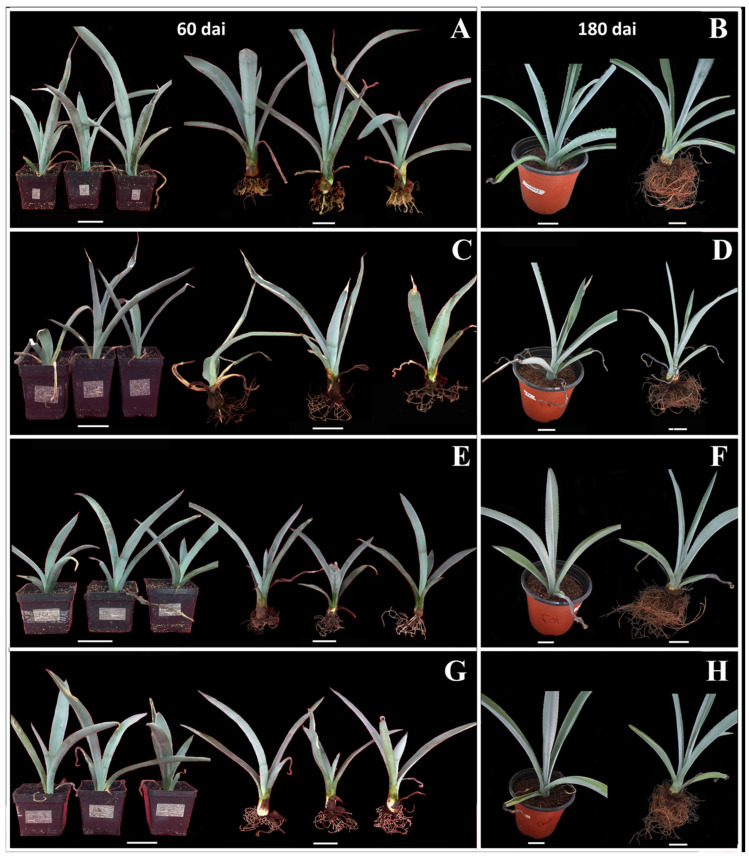 Figure 1
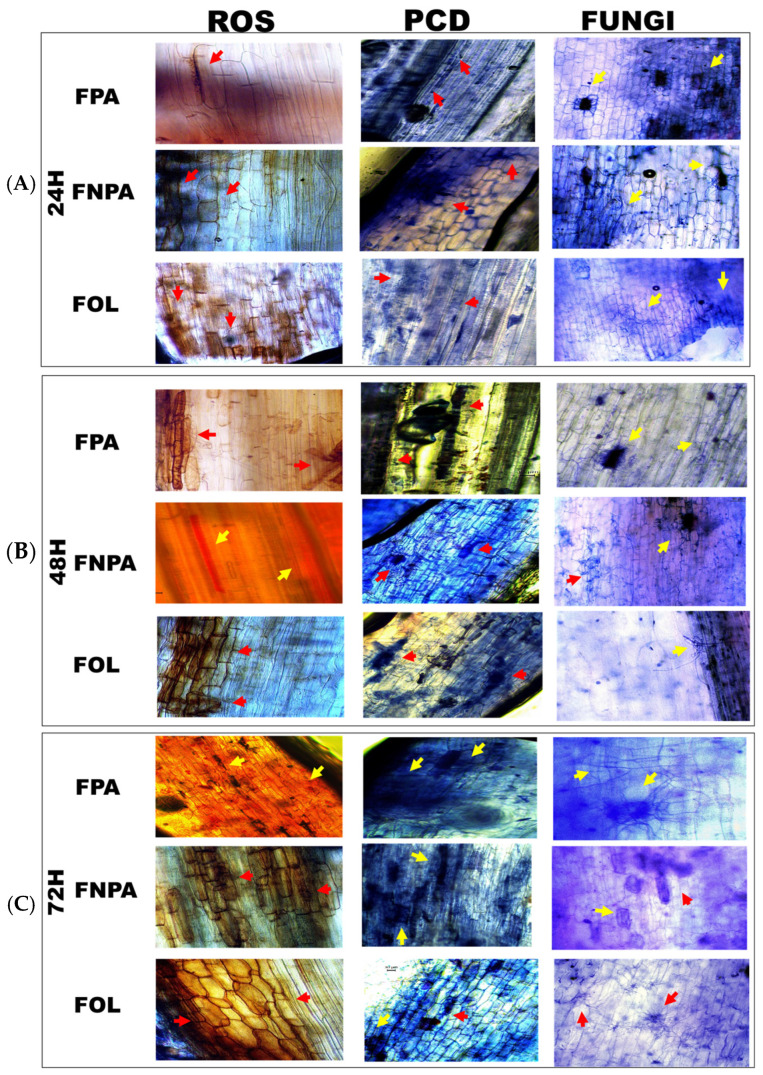 Figure 2
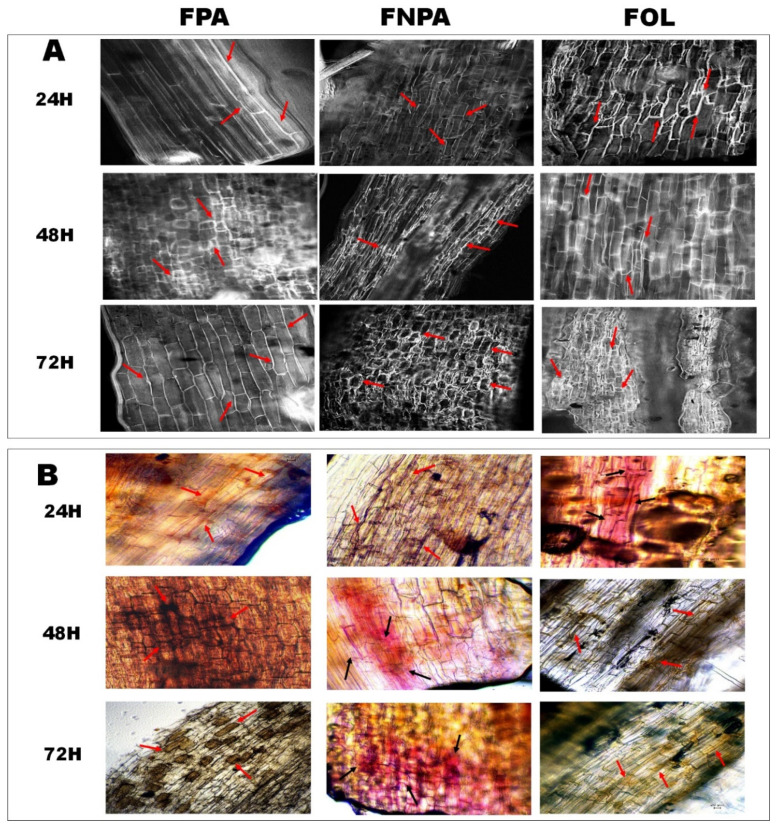 Figure 3
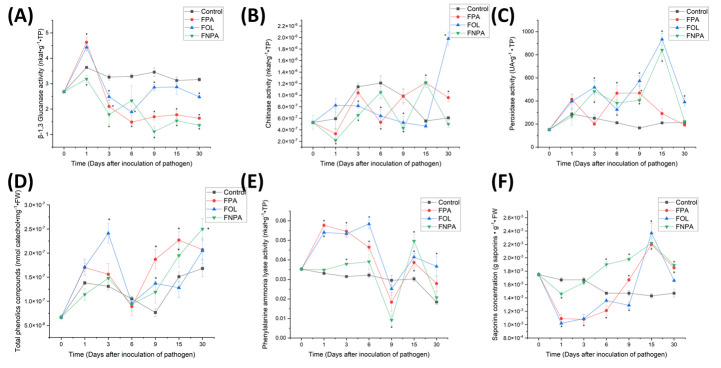 Figure 4
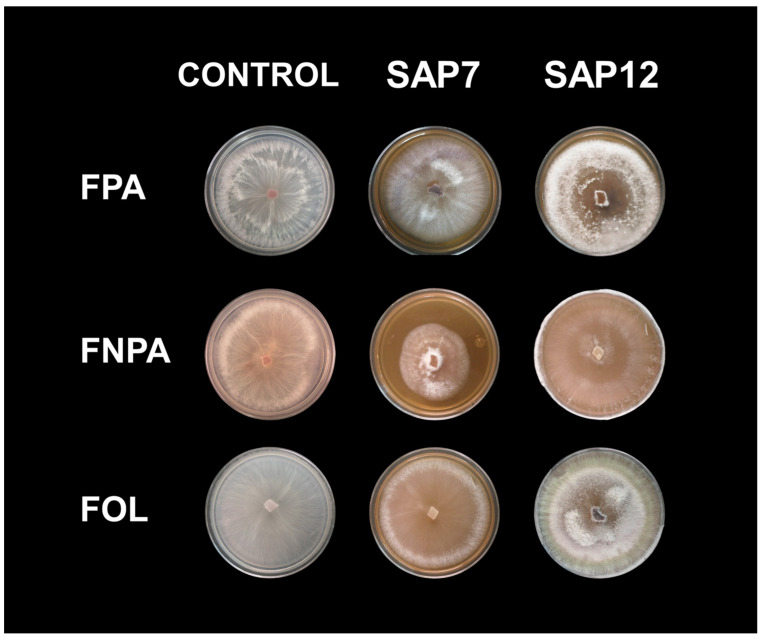 Figure 5
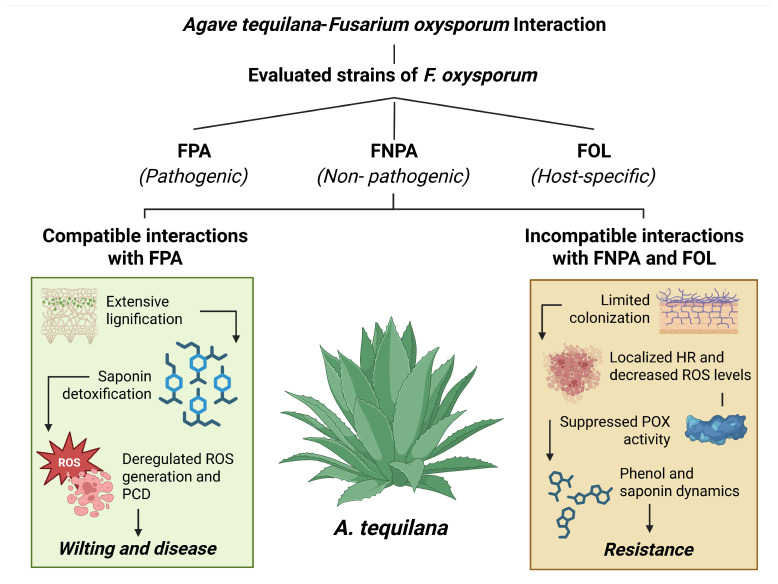 Figure 6
Peer Reviews
No public reviews on file for this paper yet. If you reviewed it on a platform where reviews are public (OpenReview, ICLR, NeurIPS, ICML), you can paste yours below so the community can read it here.
Videos
No videos yet. Explain this paper in a talk, walkthrough, or lecture? Add one.
Taxonomy
TopicsMycorrhizal Fungi and Plant Interactions · Botanical Research and Applications · Plant Pathogens and Fungal Diseases