Association Between Muscle Quality and GNRI in Patients with Type 2 Diabetes
Shinta Yamamoto, Yoshitaka Hashimoto, Fuyuko Takahashi, Moe Murai, Nozomi Yoshioka, Yuto Saijo, Chihiro Munekawa, Hanako Nakajima, Noriyuki Kitagawa, Takafumi Osaka, Ryosuke Sakai, Hiroshi Okada, Naoko Nakanishi, Saori Majima, Emi Ushigome, Masahide Hamaguchi, Michiaki Fukui

TL;DR
This study explores how muscle quality relates to a nutritional risk index in people with type 2 diabetes, finding that better nutrition may support muscle function.
Contribution
The study introduces a novel approach using BMI-adjusted GNRI residuals to evaluate nutritional risk's impact on muscle quality in type 2 diabetes.
Findings
GNRI was inversely associated with muscle quality in the overall population.
Residual GNRI showed a significant positive association with muscle quality after adjusting for BMI.
Associations varied by age, sex, and glycemic control status.
Abstract
Background: Type 2 diabetes (T2D) has been linked to impairments in skeletal muscle performance, encompassing reductions in both muscle strength and muscle quality. While malnutrition is a known modifiable factor contributing to muscle quality deterioration, its specific relationship with the Geriatric Nutritional Risk Index (GNRI) in T2D remains underexplored. Using data from 743 participants in the KAMOGAWA-A cohort, this cross-sectional study evaluated the association between muscle quality and GNRI in individuals with type 2 diabetes. Methods: Muscle quality was defined as handgrip strength divided by arm lean mass. GNRI was calculated using serum albumin and body mass index. Multiple linear regression models were used to assess associations between GNRI and muscle quality. To account for BMI-related dependency in muscle quality measurements, we derived BMI-adjusted GNRI residuals…
Genes, proteins, chemicals, diseases, species, mutations and cell lines named across the full text — each resolved to its canonical identifier and authoritative record.
Click any figure to enlarge with its caption.
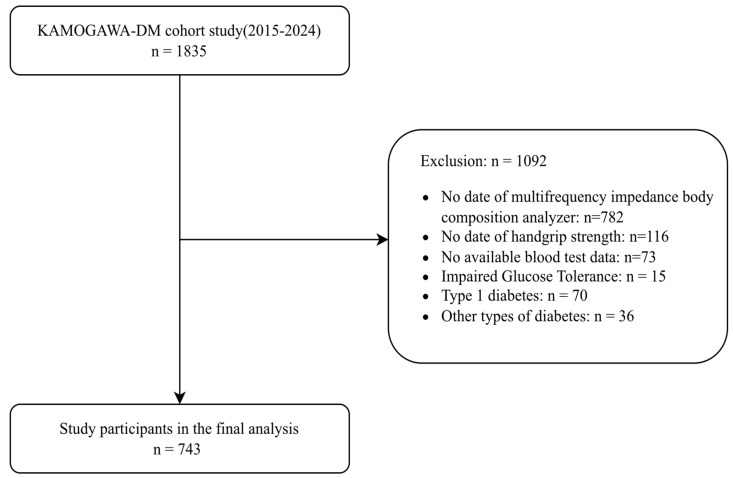 Figure 1
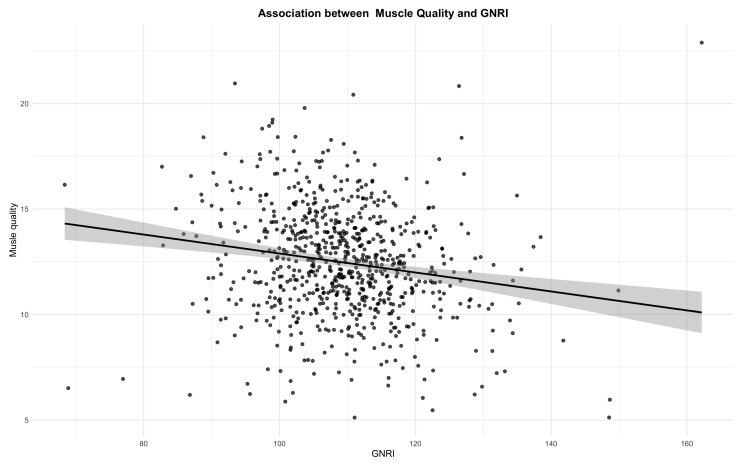 Figure 2
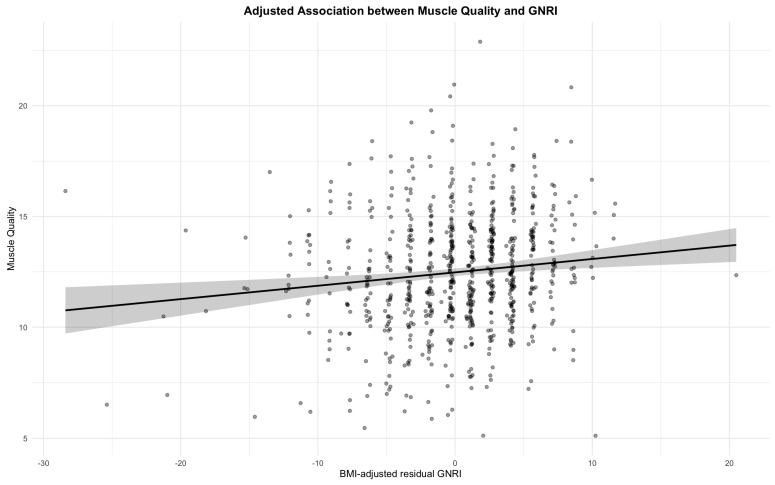 Figure 3
Peer Reviews
No public reviews on file for this paper yet. If you reviewed it on a platform where reviews are public (OpenReview, ICLR, NeurIPS, ICML), you can paste yours below so the community can read it here.
Videos
No videos yet. Explain this paper in a talk, walkthrough, or lecture? Add one.
Taxonomy
TopicsNutrition and Health in Aging · Muscle Physiology and Disorders · Frailty in Older Adults