Stress-Induced Plant Specialized Metabolism: Signaling, Multi-Omics Integration, and Plant-Derived Antimicrobial Metabolites to Combat Antimicrobial Resistance
Luis Enrique Pérez-Sánchez, Luis Mario Ayala-Guerrero, Aarón Mendieta-Moctezuma, Miguel Angel Villalobos-López, Selma Ríos-Meléndez

TL;DR
This review explores how stress-induced plant metabolites can help combat antimicrobial resistance by enhancing the production of bioactive compounds with antimicrobial activity.
Contribution
The paper introduces a conceptual multi-omics pipeline to prioritize antimicrobial plant metabolites and highlights bryophytes and citrus HLB as case studies.
Findings
Stress-induced pathways like ROS, MAPKs, and hormonal signals enhance antimicrobial metabolite production in plants.
Multi-omics integration can accelerate the discovery and validation of plant-derived antimicrobial compounds.
Bryophytes and citrus HLB offer unique opportunities for sustainable antimicrobial applications.
Abstract
Antimicrobial resistance (AMR) is one of the major health threats of the 21st century and demands innovative sources of bioactive compounds. In 2019, infections caused by resistant bacteria directly accounted for 1.27 million deaths and contributed to an additional 4.95 million associated deaths, underscoring the urgency of exploring new strategies. Among emerging alternatives, specialized plant metabolites stand out, as their biosynthesis is enhanced under biotic or abiotic stress. These stimuli increase reactive oxygen species (ROS), activate cascades regulated by mitogen-activated protein kinases (MAPKs), and trigger defense-related hormonal pathways involving salicylic acid (SA), jasmonic acid (JA), ethylene (ET), and abscisic acid (ABA), which in turn regulate transcription factors and biosynthetic modules, promoting the accumulation of compounds with antimicrobial activity. In…
Genes, proteins, chemicals, diseases, species, mutations and cell lines named across the full text — each resolved to its canonical identifier and authoritative record.
Click any figure to enlarge with its caption.
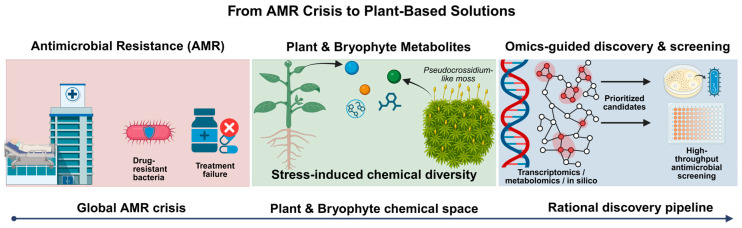 Figure 1
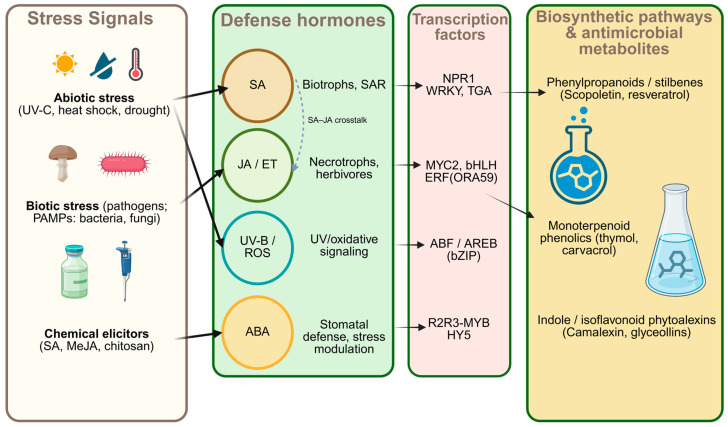 Figure 2
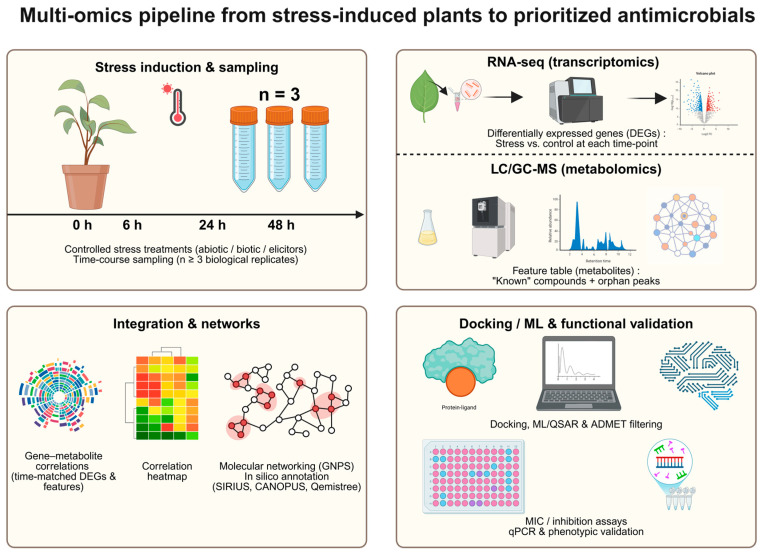 Figure 3
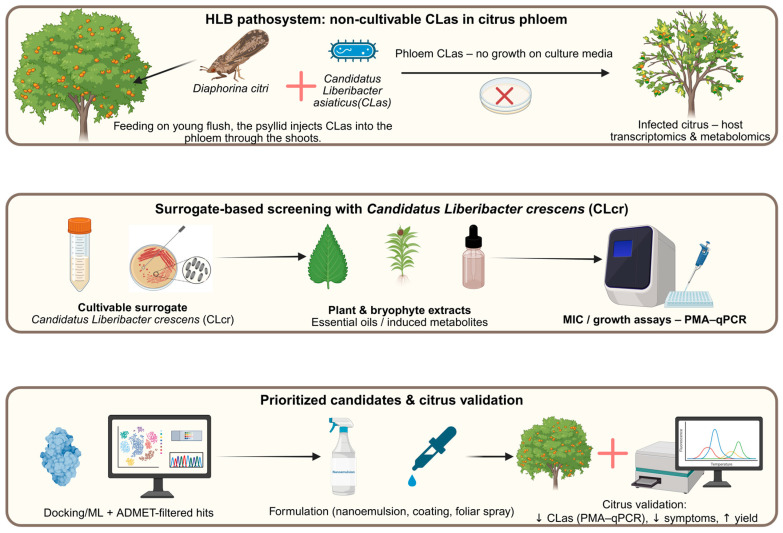 Figure 4
Peer Reviews
No public reviews on file for this paper yet. If you reviewed it on a platform where reviews are public (OpenReview, ICLR, NeurIPS, ICML), you can paste yours below so the community can read it here.
Videos
No videos yet. Explain this paper in a talk, walkthrough, or lecture? Add one.
Taxonomy
TopicsMicrobial Natural Products and Biosynthesis · Plant and Biological Electrophysiology Studies · Polysaccharides and Plant Cell Walls