Altered Plasma Endocannabinoids and Oxylipins in Adolescents with Major Depressive Disorders: A Case–Control Study
Akash Chakravarty, Abinaya Sreetharan, Ester Osuna, Isabelle Herter-Aeberli, Isabelle Häberling, Jeannine Baumgartner, Gregor E. Berger, Martin Hersberger

TL;DR
This study finds that adolescents with major depressive disorder have lower levels of certain brain-regulating lipids compared to healthy peers.
Contribution
The study identifies specific alterations in plasma endocannabinoids and oxylipins in adolescents with pMDD, suggesting their potential role in the disorder's biology.
Findings
Adolescents with pMDD had lower plasma levels of endocannabinoids and DHA- and AA-derived oxylipins compared to controls.
Controls showed higher concentrations of n-6 and n-3 PUFA-derived prostaglandins and thromboxanes.
The findings support a possible role for dysregulated lipid mediators in the pathophysiology of pMDD.
Abstract
Background: Pediatric Major Depressive Disorder (pMDD) is one of the leading causes of disability in adolescents. There is currently no single explanation that fully accounts for the cause of the disorder, but various factors, including dysregulation of the immune and stress responses, have been linked to its onset. Oxylipins and endocannabinoids, derived from metabolization of n-3 and n-6 polyunsaturated fatty acids (PUFAs), regulate inflammation and have been suggested to attenuate inflammation associated with depression. This study aims to understand whether adolescents with pMDD have altered baseline levels of oxylipins and endocannabinoids compared to healthy adolescents. Methods: In this case–control study, we measured 60 oxylipins and endocannabinoids in plasma from 82 adolescents with pMDD and their matching healthy controls. Results: A Principal Component Analysis revealed…
Genes, proteins, chemicals, diseases, species, mutations and cell lines named across the full text — each resolved to its canonical identifier and authoritative record.
Click any figure to enlarge with its caption.
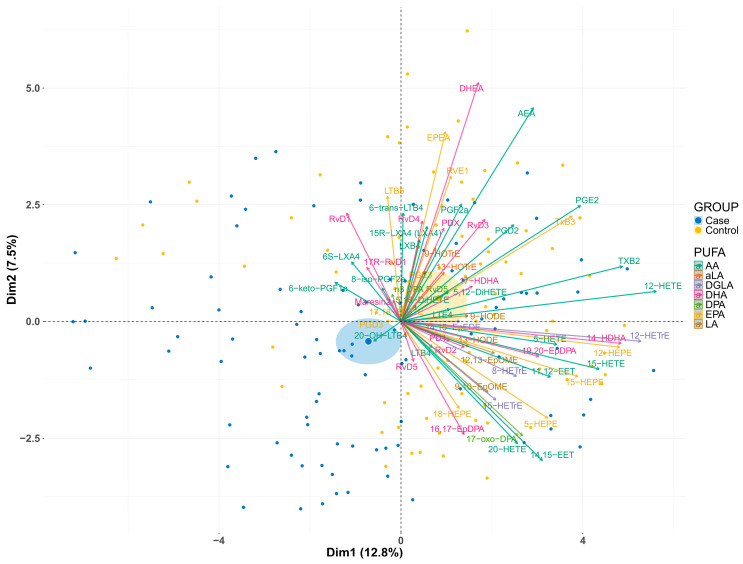 Figure 1
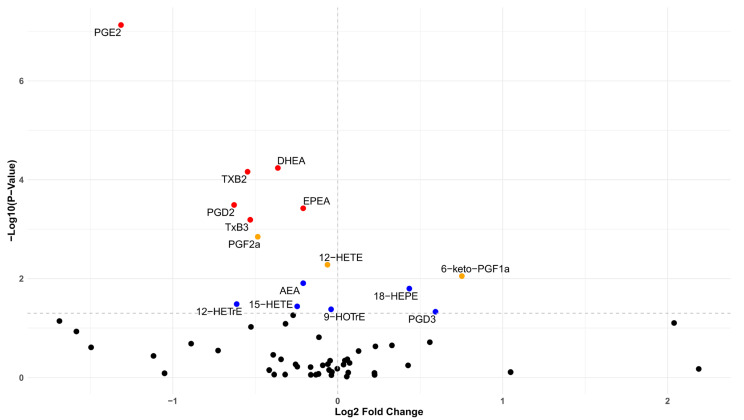 Figure 2
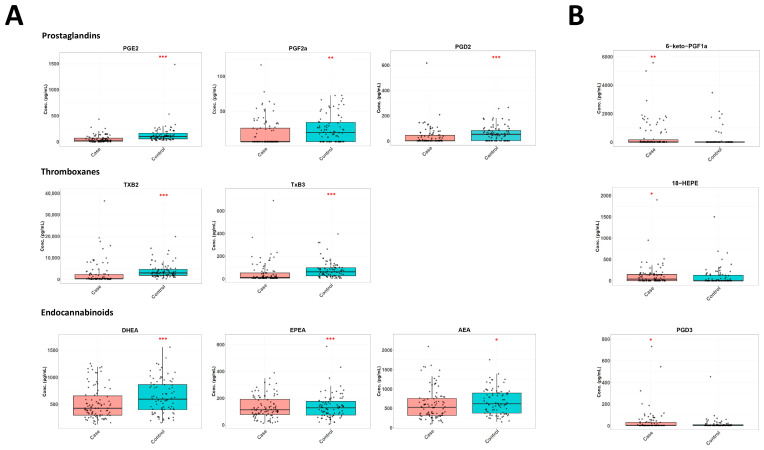 Figure 3
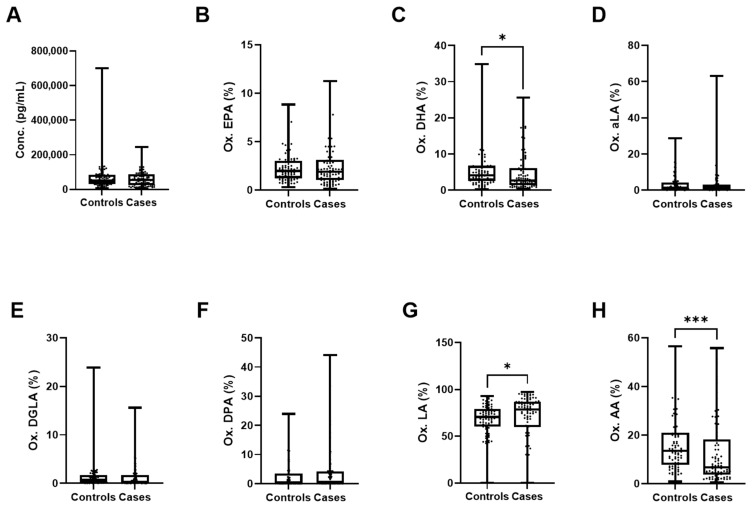 Figure 4
Peer Reviews
No public reviews on file for this paper yet. If you reviewed it on a platform where reviews are public (OpenReview, ICLR, NeurIPS, ICML), you can paste yours below so the community can read it here.
Videos
No videos yet. Explain this paper in a talk, walkthrough, or lecture? Add one.
Taxonomy
TopicsCannabis and Cannabinoid Research · Eicosanoids and Hypertension Pharmacology · Fatty Acid Research and Health