Genetic variation shapes the chromatin accessibility landscape and transcriptional responses in mouse adipose tissue
Juho Mononen, Mari Taipale, Marjo Malinen, Anna-Liisa Levonen, Anna-Kaisa Ruotsalainen, Luke Norton, Sami Heikkinen

TL;DR
This study shows how genetic differences between two mouse strains affect chromatin accessibility and gene regulation in adipose tissue, offering insights into how non-coding genetic variants influence obesity-related diseases.
Contribution
The study reveals that genetic variation directly alters chromatin accessibility and transcription factor binding in mouse adipose tissue, linking non-coding variants to gene regulation.
Findings
Chromatin accessibility differences in adipose tissue are strain-specific and driven by genetic variation.
Genetic variants at transcription factor binding sites correlate with changes in TF occupancy and chromatin accessibility.
Differentially expressed genes are located near regions of altered chromatin accessibility caused by genetic variation.
Abstract
Most of the disease associated genetic variants identified in genome wide association studies have been mapped to the non-coding regions of the genome. One of the leading mechanisms by which these variants are thought to affect disease susceptibility is by altering transcription factor (TF) binding. Even though inbred mouse strains have been commonly used to investigate polygenic diseases, less is known on how their genetic differences translate to the level of gene regulation and chromatin landscape. Here, we investigated how genetic variation affects chromatin accessibility in the epididymal white adipose tissue (eWAT) of C57BL/6J and 129S1/SvImJ mice, which are commonly used to study diet-induced obesity, fed either chow or high-fat diet. We show that differences in chromatin accessibility are almost exclusively strain-specific and driven by genetic variation. In addition, we…
Genes, proteins, chemicals, diseases, species, mutations and cell lines named across the full text — each resolved to its canonical identifier and authoritative record.
Click any figure to enlarge with its caption.
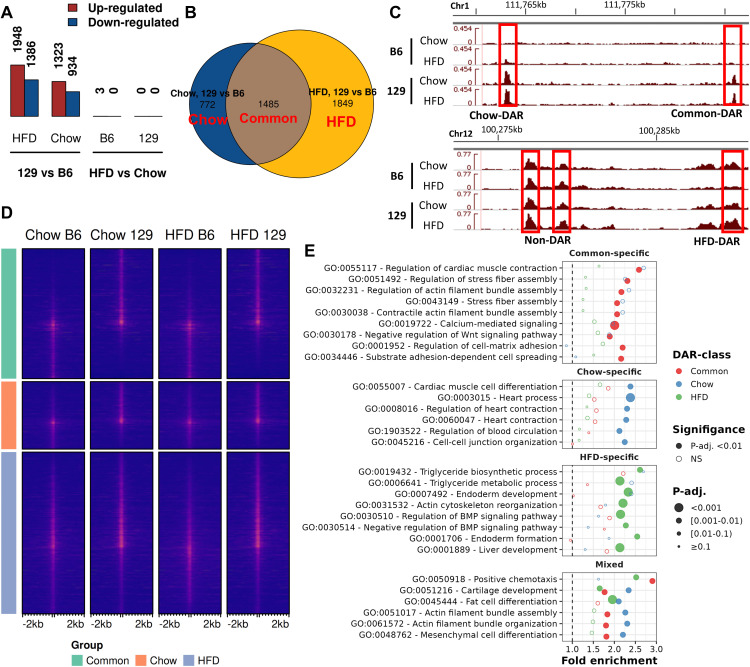 Figure 1
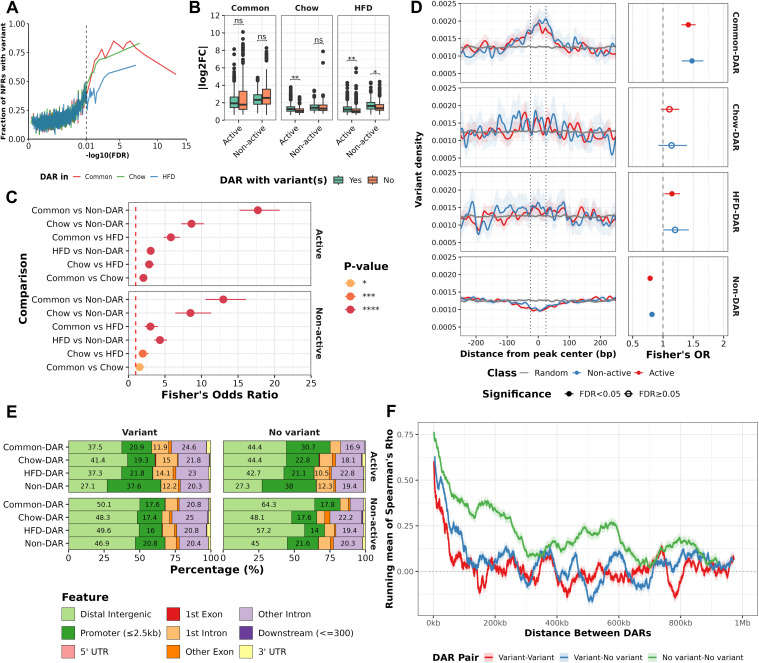 Figure 2
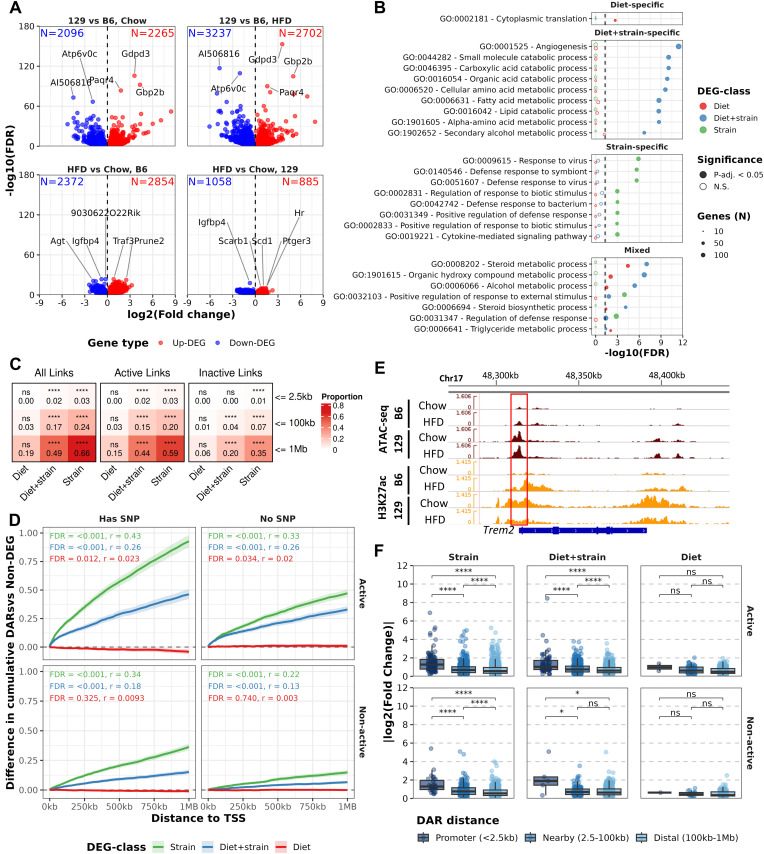 Figure 3
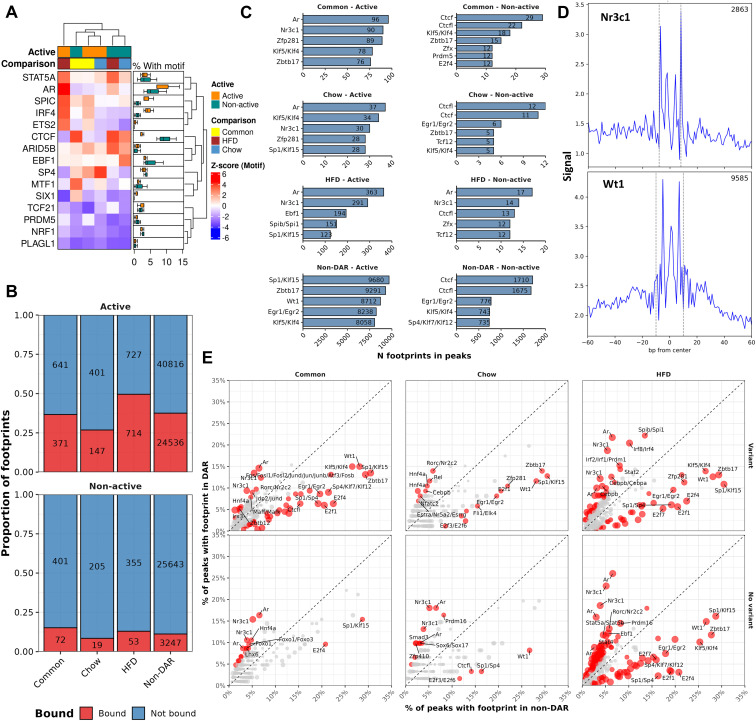 Figure 4
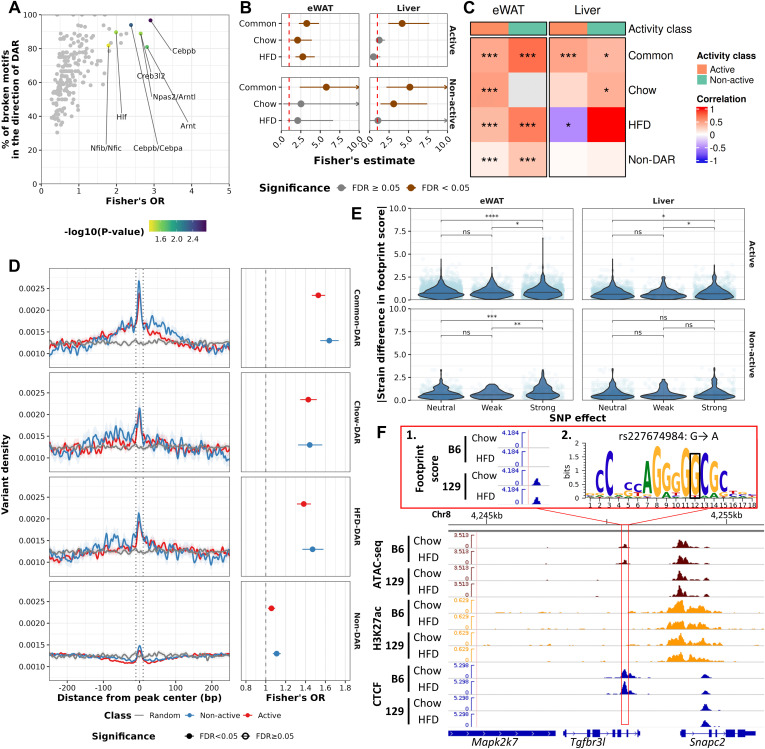 Figure 5
Peer Reviews
No public reviews on file for this paper yet. If you reviewed it on a platform where reviews are public (OpenReview, ICLR, NeurIPS, ICML), you can paste yours below so the community can read it here.
Videos
No videos yet. Explain this paper in a talk, walkthrough, or lecture? Add one.
Taxonomy
TopicsGenetic Associations and Epidemiology · Genetic Mapping and Diversity in Plants and Animals · Genomics and Chromatin Dynamics