The Oxylipin Dependent Quorum Sensing System enhances Pseudomonas aeruginosa dissemination during burn-associated infection
Eriel Martínez, Hansol Im, Mohammed Mohasin, Landon Wilson, Javier Campos-Gomez, Carlos J. Orihuela

TL;DR
Burn injuries release a fatty acid that Pseudomonas aeruginosa uses to boost its virulence, and blocking this process can prevent deadly infections.
Contribution
The discovery that P. aeruginosa uses host-derived oleic acid to activate the ODS system and enhance virulence in burn wounds.
Findings
Burn injuries increase free oleic acid levels, which P. aeruginosa converts into oxylipin autoinducers to activate the ODS regulon.
ODS-deficient mutants show reduced skin colonization and dissemination, confirming ODS's role in hypervirulence.
Inhibiting OdsA with AB012 or immunization with recombinant OdsA improves survival and reduces bacterial spread in burned mice.
Abstract
Pseudomonas aeruginosa is a leading cause of life-threatening infections in burn patients, yet the molecular cues driving its hypervirulence remain poorly understood. Here, we identify the Oxylipin Dependent Quorum Sensing (ODS) system as a key regulator of P. aeruginosa pathogenicity in the burn wound environment. Using a murine burn model, we show that thermal injury significantly increases free oleic acid levels in skin, which P. aeruginosa converts into oxylipin autoinducers (10-HOME and 7,10-DiHOME) via OdsA and OdsB. These molecules activate the ODS regulon, promoting bacterial invasion of burned tissue and dissemination to internal organs. ODS-deficient mutants exhibited markedly reduced skin colonization, impaired translocation across endothelial barriers, and attenuated mortality compared to wild-type strains, confirming the role of ODS in hypervirulence. Importantly,…
Genes, proteins, chemicals, diseases, species, mutations and cell lines named across the full text — each resolved to its canonical identifier and authoritative record.
Click any figure to enlarge with its caption.
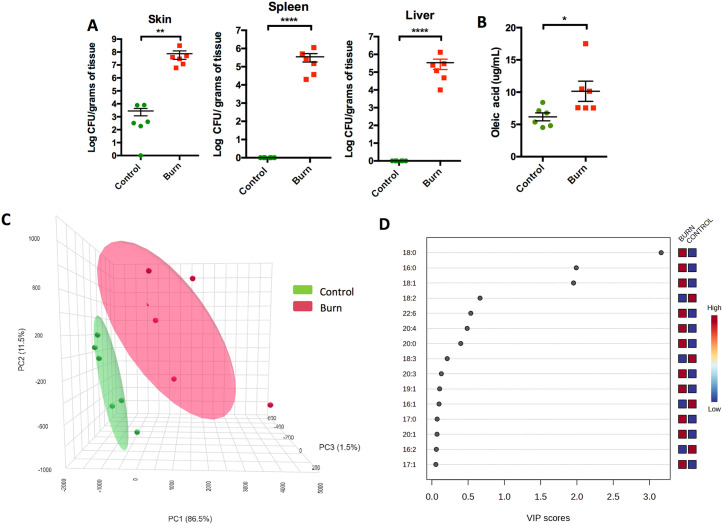 Figure 1
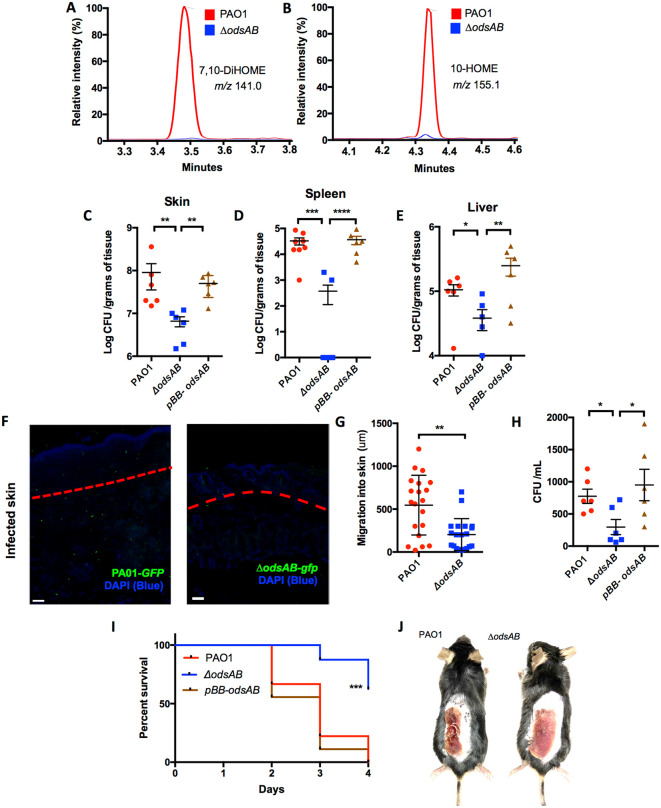 Figure 2
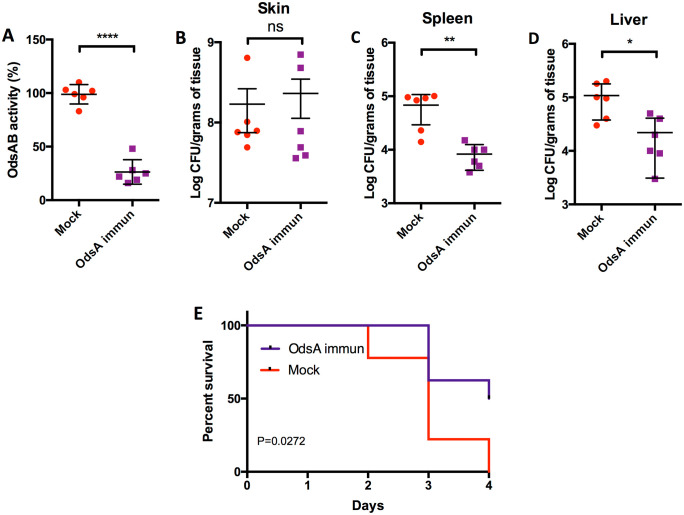 Figure 3
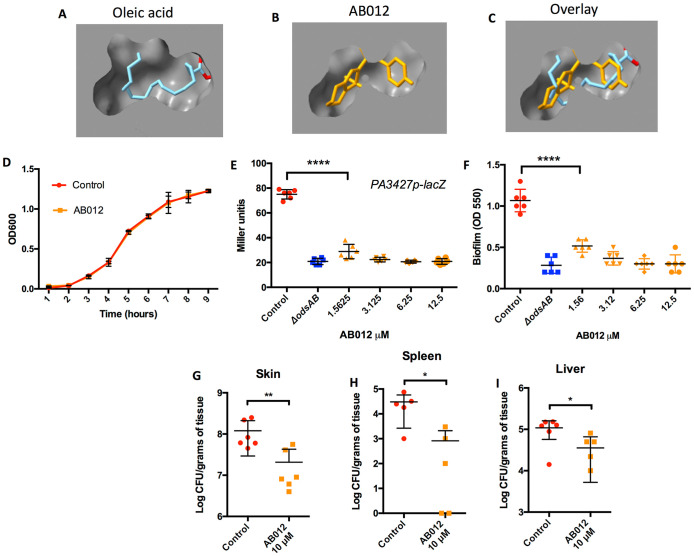 Figure 4
Peer Reviews
No public reviews on file for this paper yet. If you reviewed it on a platform where reviews are public (OpenReview, ICLR, NeurIPS, ICML), you can paste yours below so the community can read it here.
Videos
No videos yet. Explain this paper in a talk, walkthrough, or lecture? Add one.
Taxonomy
TopicsBacterial biofilms and quorum sensing · Infections and bacterial resistance · Nosocomial Infections in ICU