Genomic characterization of a severe West Nile Virus transmission season using a single reaction amplicon sequencing approach
Shawn Freed, Sarah Chandler, Sarah Uhm, Zach Pella, Dikchha Gurung, Hallie Smith, Tammy Dowdy, Amanda M. Bartling, Ava Butz, Michael R. Wiley, M. Jana Broadhurst, Sydney Stein, Emily L. McCutchen, Jeff Hamik, Peter C. Iwen, Nick Downey, Kaylee S. Herzog, Joseph R. Fauver

TL;DR
Researchers used a new sequencing method to study West Nile Virus in Nebraska, finding high genetic diversity and early transmission in the west part of the state.
Contribution
Validated a single-reaction amplicon sequencing method for generating high-quality WNV genomes from mosquito pools.
Findings
The IDT xGen WNV panel produced coding-complete and accurate WNV genomes from mosquito pools.
The 2023 Nebraska outbreak showed significant genetic diversity with minimal clustering of WNV genomes.
Early and intense WNV transmission occurred in western Nebraska without seeding transmission elsewhere.
Abstract
West Nile virus (WNV) is an endemic arthropod-borne virus that has routinely caused seasonal outbreaks in the United States since it was first detected in 1999. While phylogenetic studies have shown how WNV has diversified and undergone genotype replacement since introduction, more geographically focused studies are needed to understand intricate transmission dynamics at local and regional scales. In this study, we validate the IDT xGen WNV panel, a novel single reaction amplicon-based Next-Generation Sequencing approach, to generate high-quality WNV genomes and compare it to the “Primal Scheme” assay for WNV, a common amplicon sequencing strategy. By generating >250 genomes from mosquito pools, we show that the IDT xGen WNV panel generated coding-complete and accurate WNV genomes when compared to the current sequencing approaches. Additionally, we used this approach to generate 100…
Genes, proteins, chemicals, diseases, species, mutations and cell lines named across the full text — each resolved to its canonical identifier and authoritative record.
Click any figure to enlarge with its caption.
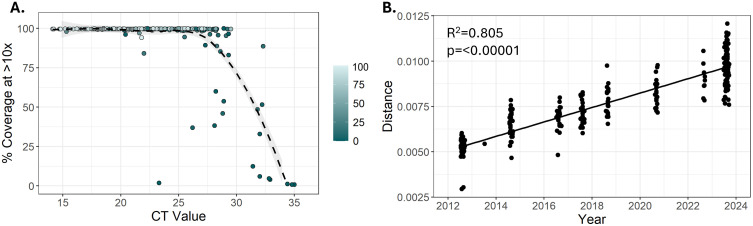 Figure 1
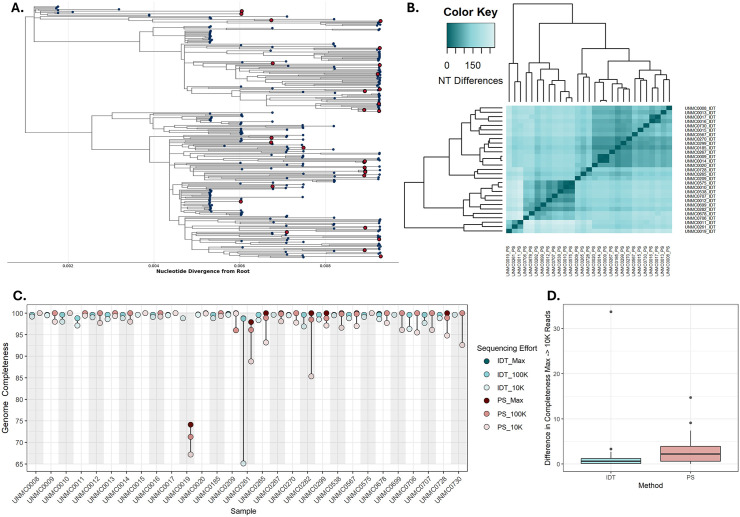 Figure 2
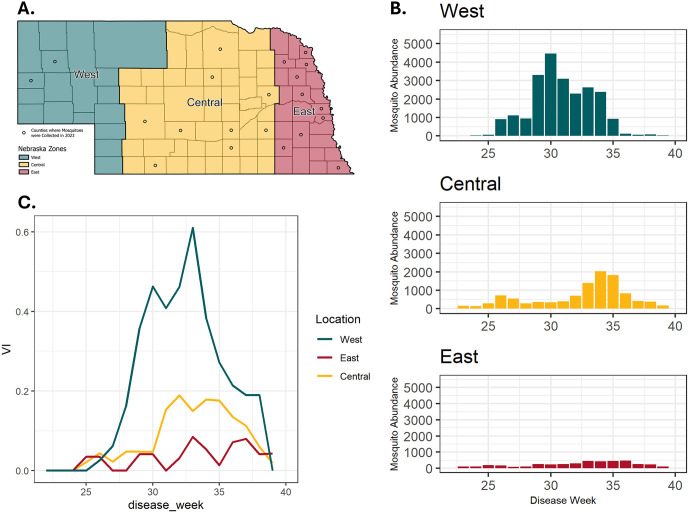 Figure 3
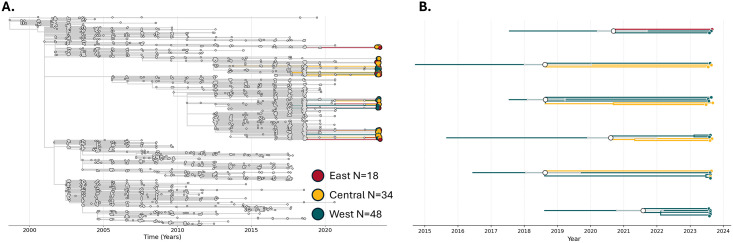 Figure 4
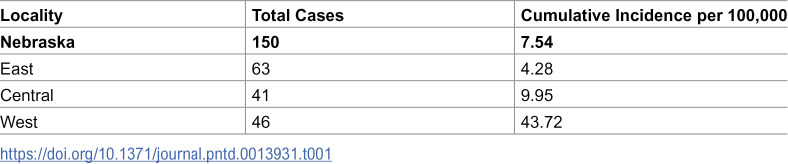 Figure 5
Peer Reviews
No public reviews on file for this paper yet. If you reviewed it on a platform where reviews are public (OpenReview, ICLR, NeurIPS, ICML), you can paste yours below so the community can read it here.
Videos
No videos yet. Explain this paper in a talk, walkthrough, or lecture? Add one.
Taxonomy
TopicsMosquito-borne diseases and control · Studies on Chitinases and Chitosanases · Invertebrate Immune Response Mechanisms