Differential impacts of the COVID-19 pandemic on sociodemographic groups: A mathematical model framework
Gbeminiyi J. Oyedele, Ivo Vlaev, Michael J. Tildesley

TL;DR
This paper uses a mathematical model to show how age and deprivation affect the spread and impact of diseases like COVID-19, highlighting persistent inequalities even during lockdowns.
Contribution
The novel contribution is a model integrating age and deprivation to study how mixing patterns and lockdowns influence disease disparities.
Findings
Disease outcomes are highest under diagonal mixing, with the most deprived groups disproportionately affected.
Lockdowns reduced overall disease outcomes but did not eliminate inequalities between social groups.
The model suggests targeted interventions could help reduce health disparities during epidemics.
Abstract
Deprivation and age can both drive disparities in infectious disease transmission and outcomes; however, few models capture their combined effects. We developed a deterministic ordinary differential equation model stratified by age and deprivation decile coupled with time-dependent testing proportion to examine how mixing patterns shape inequalities in disease burden, using COVID-19 in England as a case study. The framework allows three mixing scenarios–diagonal, preferred, and proportionate, and we simulated the epidemic with movement restrictions to reflect lockdown measures. We assessed the effectiveness of these restrictions in reducing transmission and explored their implications for different social groups. Results show that under diagonal mixing, disease outcomes are significantly higher than under the other mixing scenarios, with the most deprived deciles experiencing…
Genes, proteins, chemicals, diseases, species, mutations and cell lines named across the full text — each resolved to its canonical identifier and authoritative record.
Click any figure to enlarge with its caption.
 Figure 1
 Figure 2
 Figure 3
 Figure 4
 Figure 5
 Figure 6
 Figure 7
 Figure 8
 Figure 9
 Figure 10
 Figure 11
 Figure 12
 Figure 13
 Figure 14
 Figure 15
 Figure 16
 Figure 17
 Figure 18
 Figure 19
 Figure 20
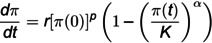 Figure 21
 Figure 22
 Figure 23
 Figure 24
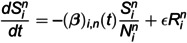 Figure 25
 Figure 26
 Figure 27
 Figure 28
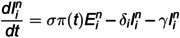 Figure 29
 Figure 30
 Figure 31
 Figure 32
 Figure 33
 Figure 34
 Figure 35
 Figure 36
 Figure 37
 Figure 38
 Figure 39
 Figure 40
 Figure 41
 Figure 42
 Figure 43
 Figure 44
 Figure 45
 Figure 46
 Figure 47
 Figure 48
 Figure 49
 Figure 50
Peer Reviews
No public reviews on file for this paper yet. If you reviewed it on a platform where reviews are public (OpenReview, ICLR, NeurIPS, ICML), you can paste yours below so the community can read it here.
Videos
No videos yet. Explain this paper in a talk, walkthrough, or lecture? Add one.
Taxonomy
TopicsCOVID-19 epidemiological studies · Health disparities and outcomes · Zoonotic diseases and public health