From Dormancy to Viability: The Resuscitation Processes of Viable but Non-Culturable Bacteria—A Systematic Review
Prisca Tchato, Karine Marion-Sanchez, Talyssa Lebielle, Claude Olive

TL;DR
This systematic review explores methods to resuscitate viable but non-culturable bacteria, focusing on factors and protocols that help revive these metabolically active yet non-growing cells.
Contribution
The study systematically reviews in vitro resuscitation methods for VBNC Enterobacteriaceae and Pseudomonas aeruginosa, identifying key influencing factors and methodological gaps.
Findings
Resuscitation of VBNC bacteria often uses standard media with additives and moderate temperatures, with recovery typically occurring within 24–48 hours.
Pseudomonas aeruginosa requires less supplementation for resuscitation compared to Enterobacteriaceae.
Key resuscitation mechanisms include metabolic reactivation, oxidative stress modulation, and ribosome reactivation.
Abstract
Viable but non-culturable (VBNC) cells represent a reversible, metabolically active state that promotes the survival of bacteria under stressful conditions and their persistence in healthcare facilities and food industry. We conducted a systematic review following PRISMA 2020 guidelines to identify in vitro methodologies for inducing and resuscitating VBNC Enterobacteriaceae and Pseudomonas aeruginosa, and to determine key influencing factors. Eligible studies reported in vitro resuscitation of these species. Searches were performed in MEDLINE (PubMed), Scopus, and Google Scholar up to July 2025. Two independent reviewers screened and extracted data. Exclusion criteria included absence of original experimental data, focus on other species, or lack of clear VBNC definition. Risk of bias was qualitatively assessed. Analyses were descriptive without meta-analysis. Of the 1041 records, 24…
Genes, proteins, chemicals, diseases, species, mutations and cell lines named across the full text — each resolved to its canonical identifier and authoritative record.
Click any figure to enlarge with its caption.
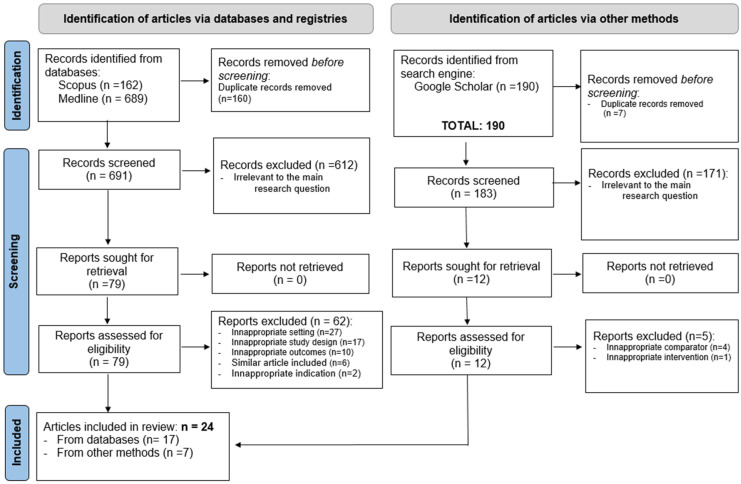 Figure 1
Peer Reviews
No public reviews on file for this paper yet. If you reviewed it on a platform where reviews are public (OpenReview, ICLR, NeurIPS, ICML), you can paste yours below so the community can read it here.
Videos
No videos yet. Explain this paper in a talk, walkthrough, or lecture? Add one.
Taxonomy
TopicsVibrio bacteria research studies · Bacillus and Francisella bacterial research · Cancer Research and Treatments