Logic Gates Based on Skyrmions
Yun Shu, Qianrui Li, Wei Zhang, Yi Peng, Ping Lai, Guoping Zhao

TL;DR
This paper explores magnetic skyrmion-based logic gates as a promising alternative to traditional computing methods for ultra-low-power computing.
Contribution
The paper introduces magnetic skyrmion-based logic gates as a novel computing architecture integrating memory and computation.
Findings
Magnetic skyrmions offer stable and mobile information carriers for low-power computing.
Skyrmion-based logic gates could enable brain-inspired neuromorphic computing.
Challenges remain in material synthesis and detection for practical implementation.
Abstract
Traditional complementary metal-oxide-semiconductor (CMOS) logic gates serve as the fundamental building blocks of modern computing, operating through the electron charge manipulation wherein binary information is encoded as distinct high- and low-voltage states. However, as physical dimensions approach the quantum limit, conventional logic gates encounter fundamental bottlenecks, including power consumption barriers, memory limitations, and a significant increase in static power dissipation. Consequently, the pursuit of novel low-power computing methodologies has emerged as a research hotspot in the post-Moore era. Logic gates based on magnetic skyrmions constitute a highly promising candidate in this context. Magnetic skyrmions, nanoscale quasiparticles endowed with topological protection, offer ideal carriers for information transmission due to their exceptional stability and…
Click any figure to enlarge with its caption.
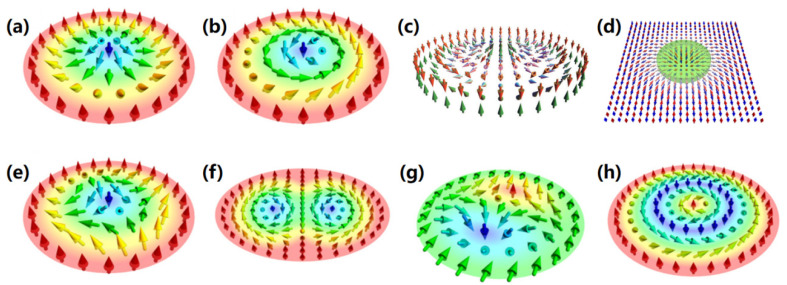 Figure 1
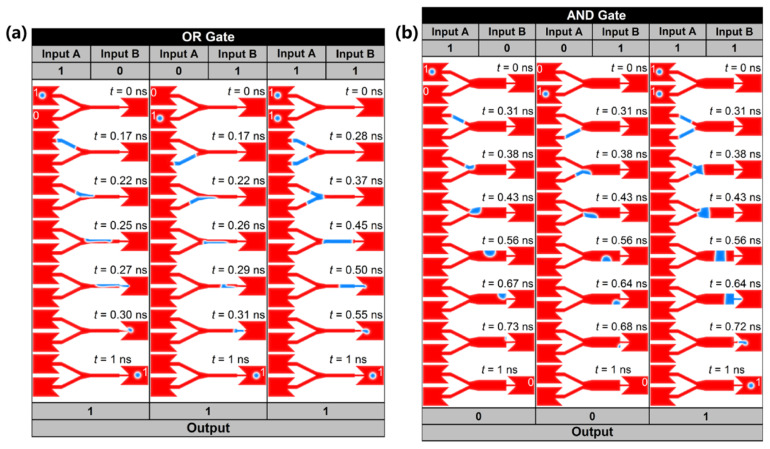 Figure 2
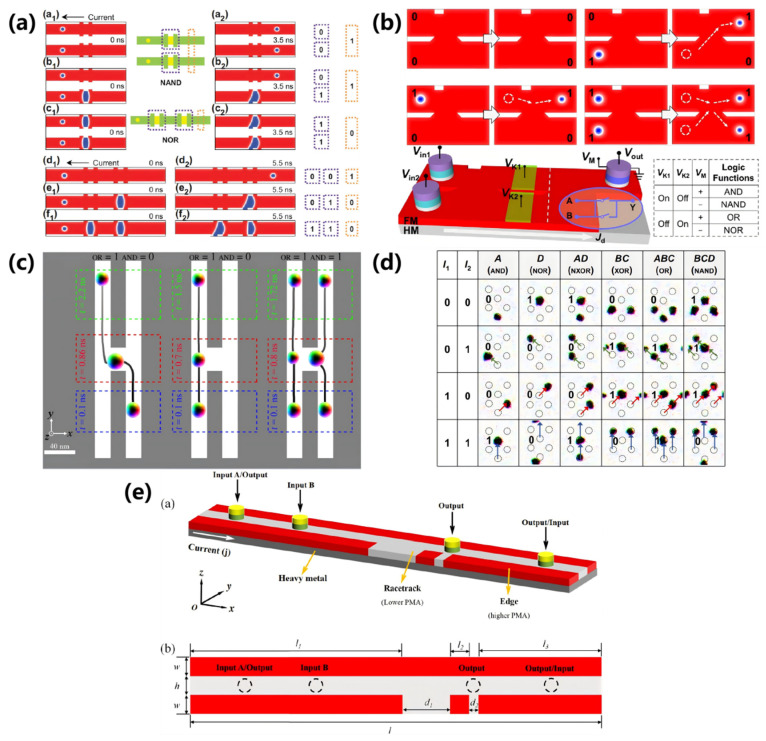 Figure 3
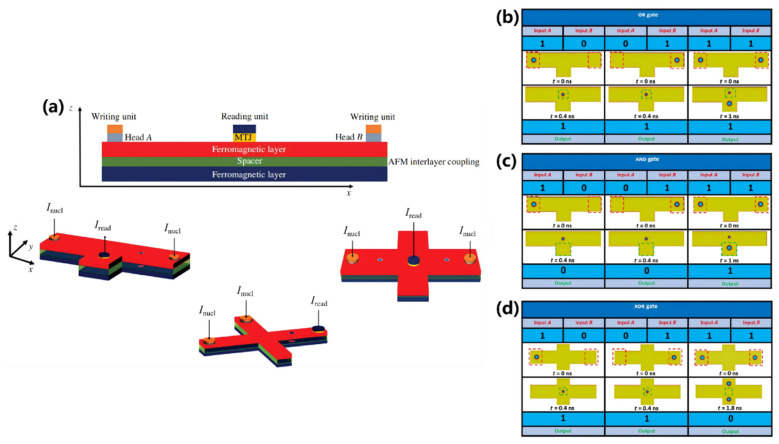 Figure 4
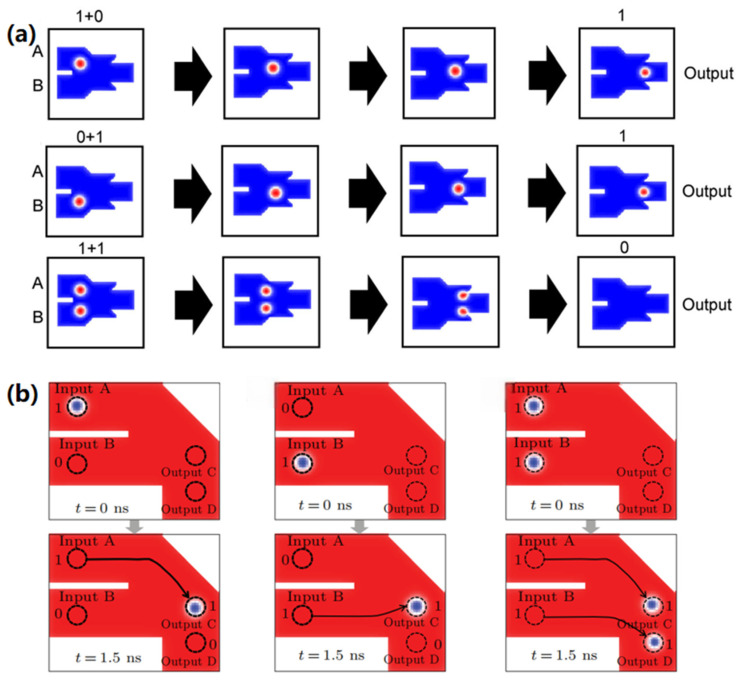 Figure 5
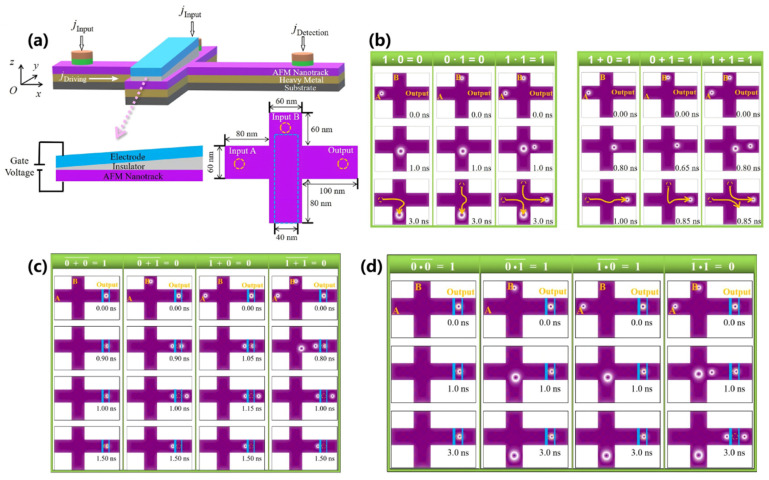 Figure 6
Peer Reviews
No public reviews on file for this paper yet. If you reviewed it on a platform where reviews are public (OpenReview, ICLR, NeurIPS, ICML), you can paste yours below so the community can read it here.
Videos
No videos yet. Explain this paper in a talk, walkthrough, or lecture? Add one.
Taxonomy
TopicsMagnetic properties of thin films · Quantum and electron transport phenomena · Ferroelectric and Negative Capacitance Devices