Structural and Catalytic Roles of the Disulfide Bonds Cys19–Cys154 and Cys134–Cys199 in Trypsin-like Proteases: Evolutionary Insights for Disulfide Bond Acquisition
Maiko Minakata, Yuri Murakami, Orika Ashida, Miki Matsuzaki, Kairi Ogawa, Nanako Saeki, Shigeru Shimamoto, Mitsuhiro Miyazawa, Yuji Hidaka, Nana Sakata

TL;DR
The study reveals how disulfide bonds in trypsin-like proteases evolved to improve enzyme structure and function.
Contribution
The novel contribution is identifying how specific disulfide bonds enhance catalytic efficiency and structural stability during protease evolution.
Findings
Cys19–Cys154 improves substrate recognition (Km), while Cys134–Cys199 enhances catalytic turnover (kcat).
Cys134–Cys199 increases structural stability, and Cys19–Cys154 promotes a more compact fold.
Combined disulfide bonds synergistically boost catalytic activity toward BAEE.
Abstract
Trypsin is one of the most extensively studied enzymes in biochemistry. However, little information is available on the role of the disulfide bonds to establish the correct conformation and enzyme activity during molecular evolution. To obtain this information, two additional disulfide bonds corresponding to those found in human trypsin were individually or simultaneously introduced into the trypsin-like protease cocoonase (Bombyx mori), which contains three consensus disulfide bonds, and structural effects were analyzed. Enzyme assays of the mutant proteins revealed that, during molecular evolution, the Cys19–Cys154 bond contributed to improving substrate recognition (Km), whereas the Cys134–Cys199 bond contributed to enhancing catalytic turnover (kcat). In addition, the Cys134–Cys199 disulfide bond significantly increased the structural stability, whereas the Cys19–Cys154 disulfide…
Genes, proteins, chemicals, diseases, species, mutations and cell lines named across the full text — each resolved to its canonical identifier and authoritative record.
Click any figure to enlarge with its caption.
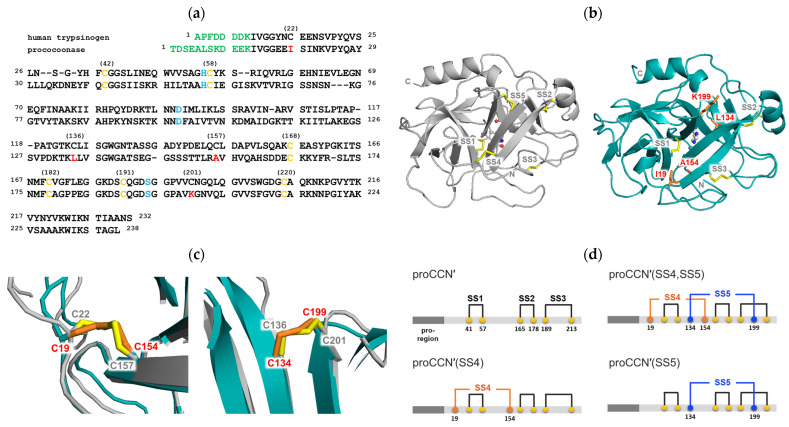 Figure 1
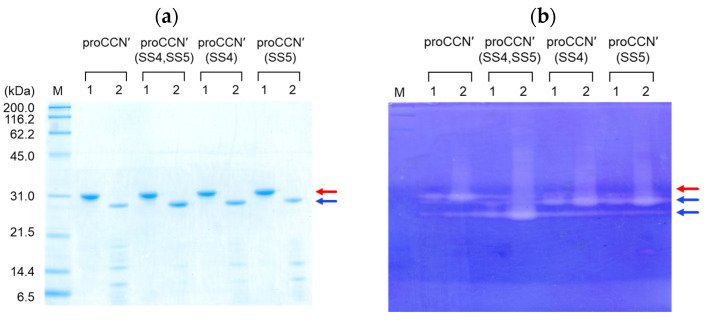 Figure 2
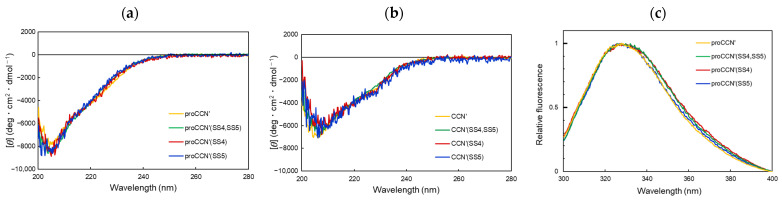 Figure 3
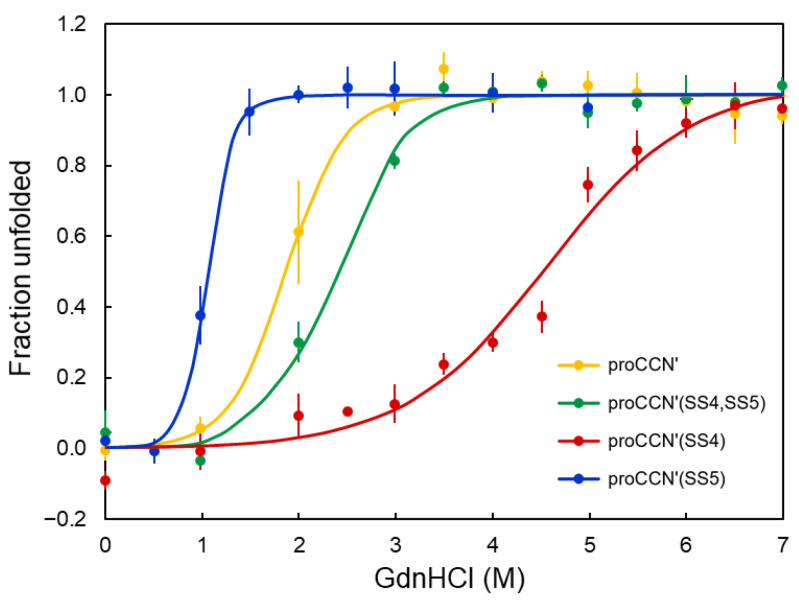 Figure 4
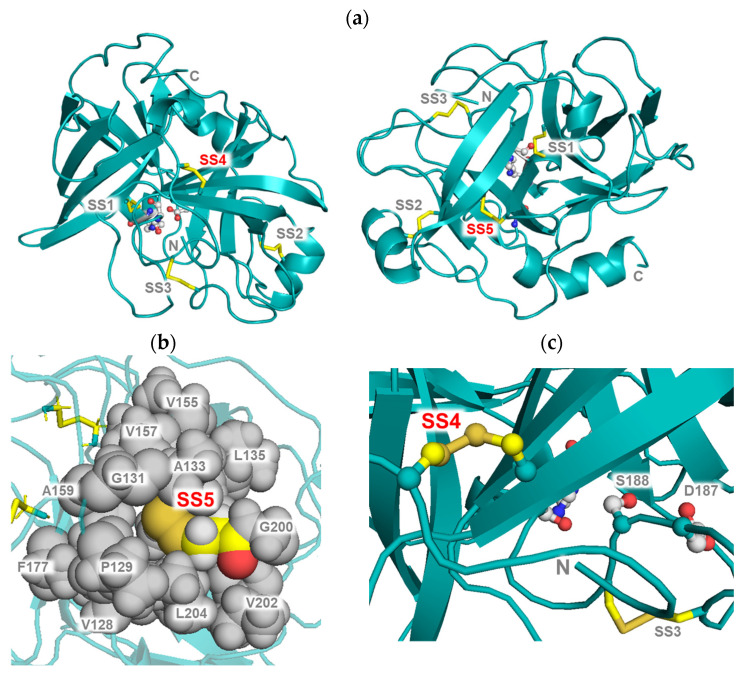 Figure 5
Peer Reviews
No public reviews on file for this paper yet. If you reviewed it on a platform where reviews are public (OpenReview, ICLR, NeurIPS, ICML), you can paste yours below so the community can read it here.
Videos
No videos yet. Explain this paper in a talk, walkthrough, or lecture? Add one.
Taxonomy
TopicsBiochemical and Structural Characterization · Protease and Inhibitor Mechanisms · Protein Structure and Dynamics