A Recombinant Porcine Epidemic Diarrhea Virus with Multiple S2 Subunit Mutations from China: Isolation, Genetic Characterization, and Pathogenicity Analysis
Nana Yan, Jingru Xu, Yuqi Li, Sisi Fan, Shuqi Qiu, Linjie Huang, Xiaoziyi Xiao, Yuting Liao, Weiye Lin, Bo Dong, Ailing Dai, Kewei Fan

TL;DR
A new highly virulent strain of PEDV was isolated in China and found to have multiple mutations in a key viral protein, posing a threat to pig farming.
Contribution
Identification of a recombinant PEDV strain with multiple S2 subunit mutations and high virulence in young piglets.
Findings
PEDV/FJLY202201 is a recombinant strain with mutations in the S2 subunit of the spike protein.
The strain caused 100% mortality and significant weight loss in 3-day-old piglets.
The virus originated from recombination events between G2a and G2b PEDV strains.
Abstract
Porcine epidemic diarrhea virus (PEDV) is a major cause of fatal diarrhea in piglets. The continuous emergence of new variants, driven by recombination and mutation, poses a persistent global threat to the swine industry, resulting in significant economic losses. Therefore, ongoing surveillance of PEDV evolution is critical. In this study, we isolated a novel PEDV strain, designated PEDV/FJLY202201, from experimental intestinal samples collected from a diarrheal piglet in Fujian, China, and sequenced its complete genome. Complete genome analysis, phylogenetic analysis, and recombination analysis were conducted. Results showed that PEDV/FJLY202201 was a recombinant strain derived from two recombination events between G2a and G2b strains, with three breakpoints located in the ORF1b, Domain 0 (D0) and S2 subunit, respectively. Notably, multiple mutations were identified in the S2 subunit,…
Genes, proteins, chemicals, diseases, species, mutations and cell lines named across the full text — each resolved to its canonical identifier and authoritative record.
Click any figure to enlarge with its caption.
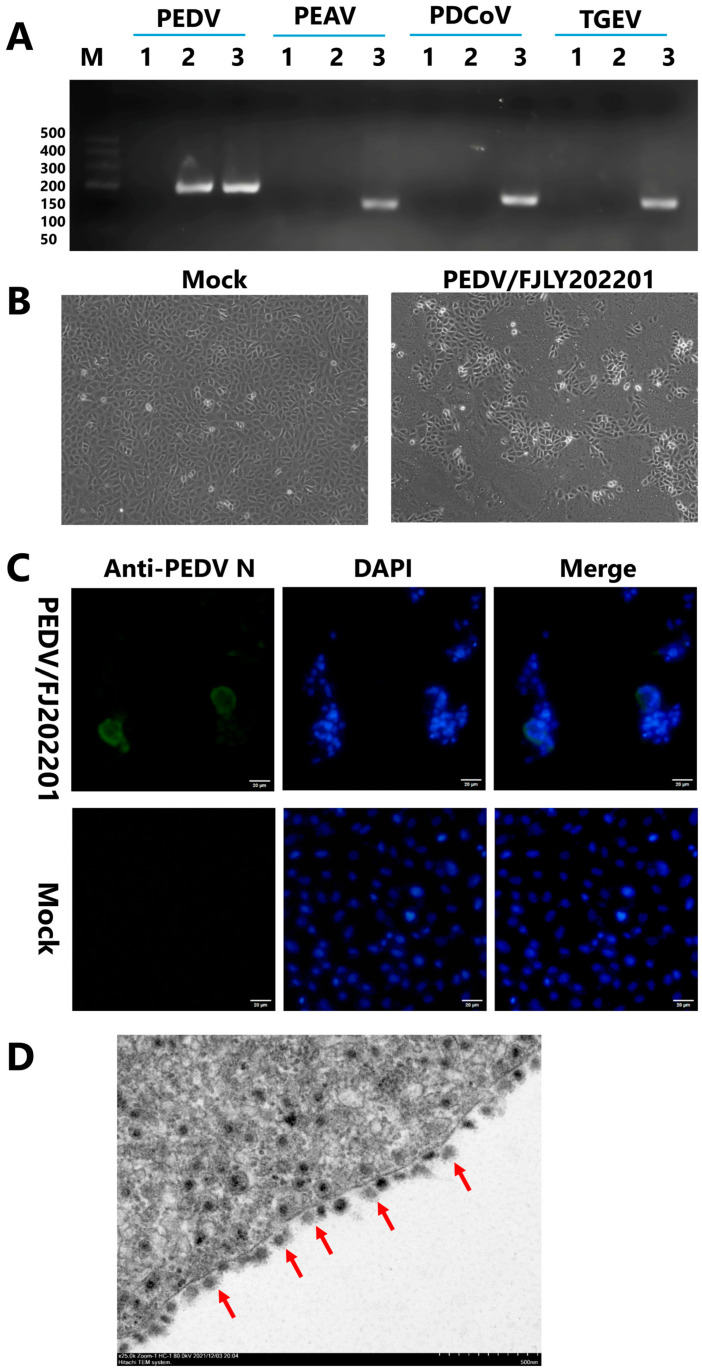 Figure 1
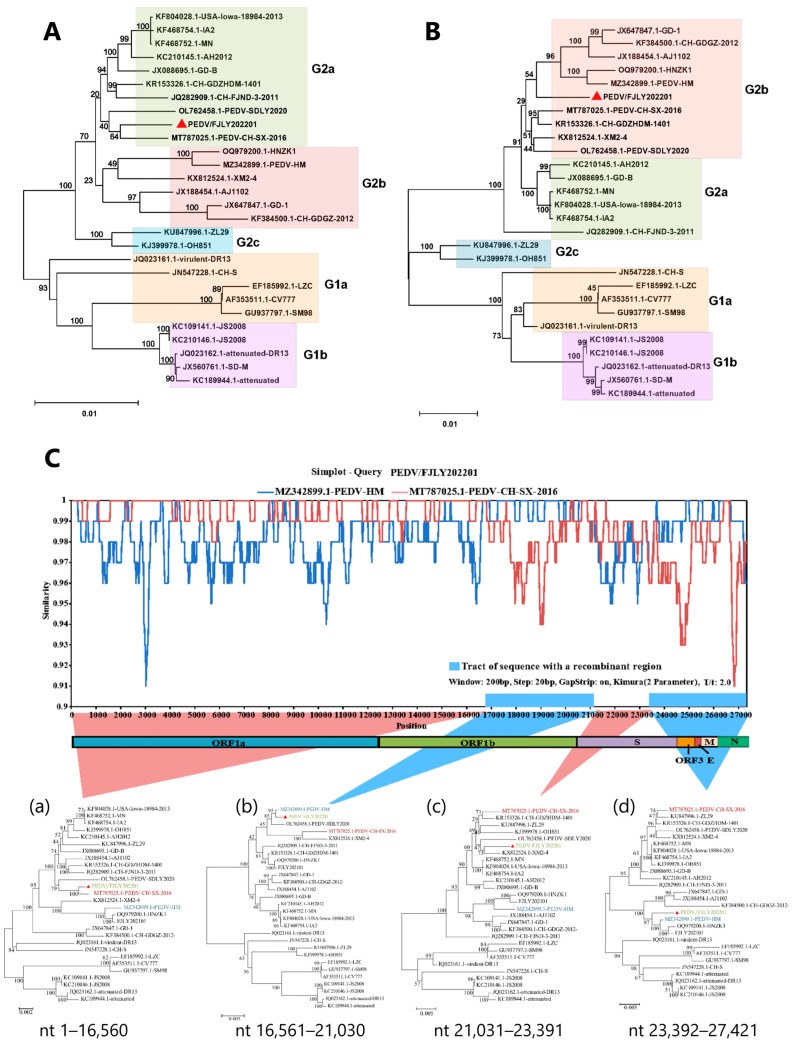 Figure 2
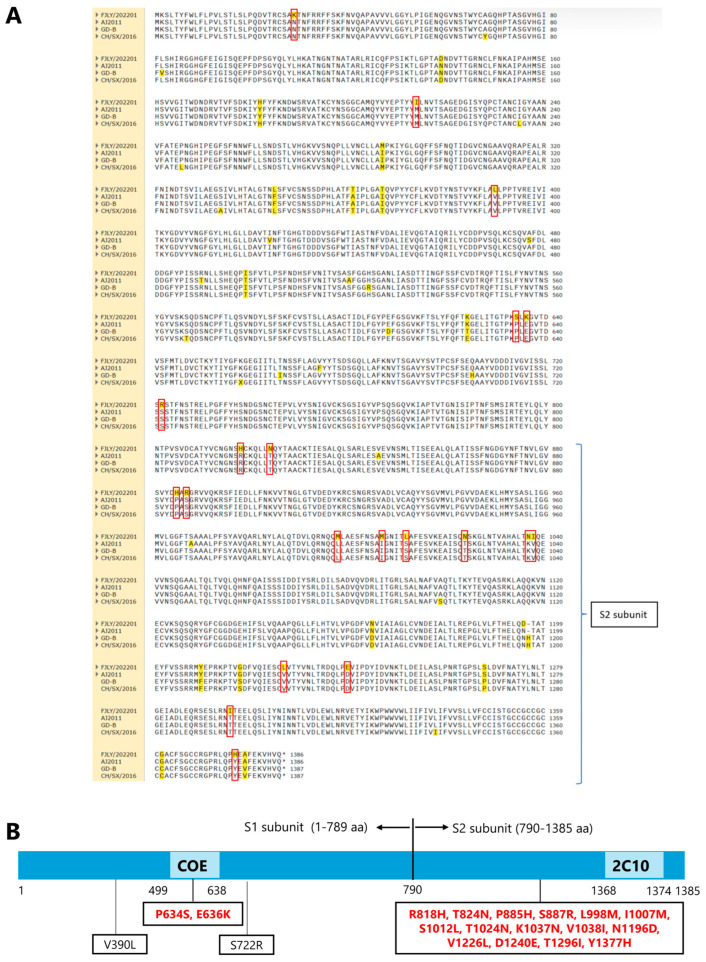 Figure 3
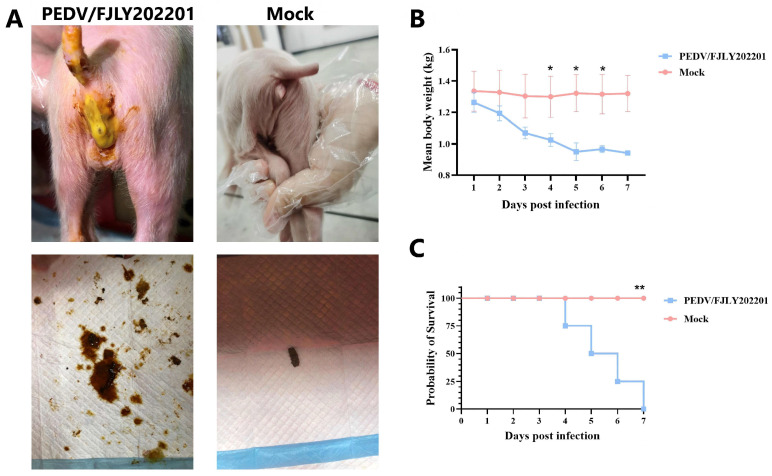 Figure 4
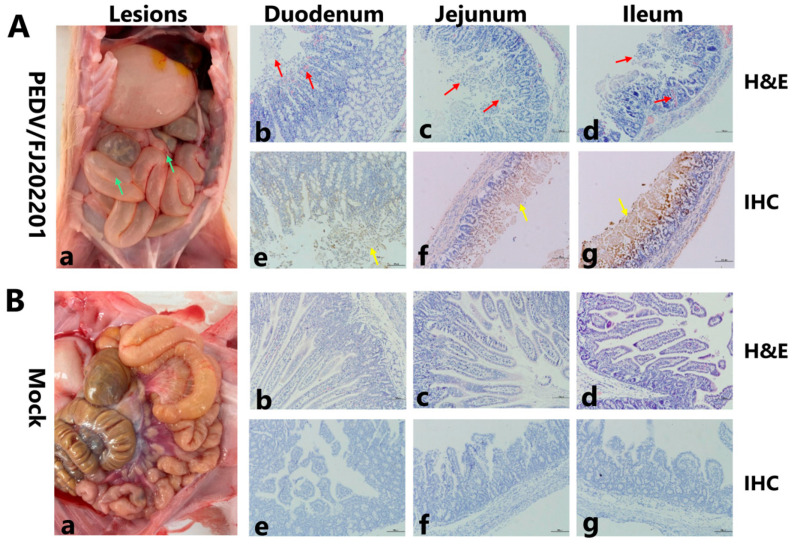 Figure 5
Peer Reviews
No public reviews on file for this paper yet. If you reviewed it on a platform where reviews are public (OpenReview, ICLR, NeurIPS, ICML), you can paste yours below so the community can read it here.
Videos
No videos yet. Explain this paper in a talk, walkthrough, or lecture? Add one.
Taxonomy
TopicsAnimal Virus Infections Studies · Animal Disease Management and Epidemiology · Virus-based gene therapy research