Bacterial Nanocellulose Functionalized with Graphite and Niobium Pentoxide: Limited Antimicrobial Effects and Preserved Cytocompatibility
Juliana Silva Ribeiro de Andrade, Adriana Poli Castilho Dugaich, Andressa da Silva Barboza, Maurício Malheiros Badaró, Pedro Henrique Santaliestra e Silva, Tiago Moreira Bastos Campos, Karina Cesca, Debora de Oliveira, Sheila Cristina Stolf, Rafael Guerra Lund

TL;DR
Researchers modified bacterial nanocellulose with graphite and niobium pentoxide to create antimicrobial wound dressings that remain biocompatible.
Contribution
The study introduces a novel approach to functionalizing bacterial nanocellulose with graphite and niobium pentoxide for antimicrobial wound dressings.
Findings
BNC/f-Gr showed moderate antimicrobial activity, especially against Staphylococcus aureus.
BNC/Nb2O5 did not significantly improve antimicrobial performance compared to unmodified BNC.
Cytocompatibility was preserved in all formulations, with only slight reductions in the combined group.
Abstract
Chronic wounds remain locked in persistent inflammation with high microbial burden, demanding dressings that suppress infection without sacrificing biocompatibility. Bacterial nanocellulose (BNC) is an attractive matrix due to its biocompatibility, nanofibrillar architecture, and moisture retention, but it lacks antimicrobial activity. Here, we engineer BNC membranes post-functionalized with functionalized graphite (f-Gr; predominantly graphitic with residual surface groups) and/or niobium pentoxide (Nb2O5), and evaluate four groups: BNC (matrix control), BNC/Nb2O5, BNC/f-Gr, and BNC/f-Gr/Nb2O5. Physicochemical analyses (Raman and Voigt fitting, FTIR-ATR, XRD, and SEM) confirm a graphitic carbon phase and physical incorporation of the modifiers into the BNC network, with a noticeable shift in the hydration/polarity profile—more evident in the presence of f-Gr. In standardized…
Genes, proteins, chemicals, diseases, species, mutations and cell lines named across the full text — each resolved to its canonical identifier and authoritative record.
Click any figure to enlarge with its caption.
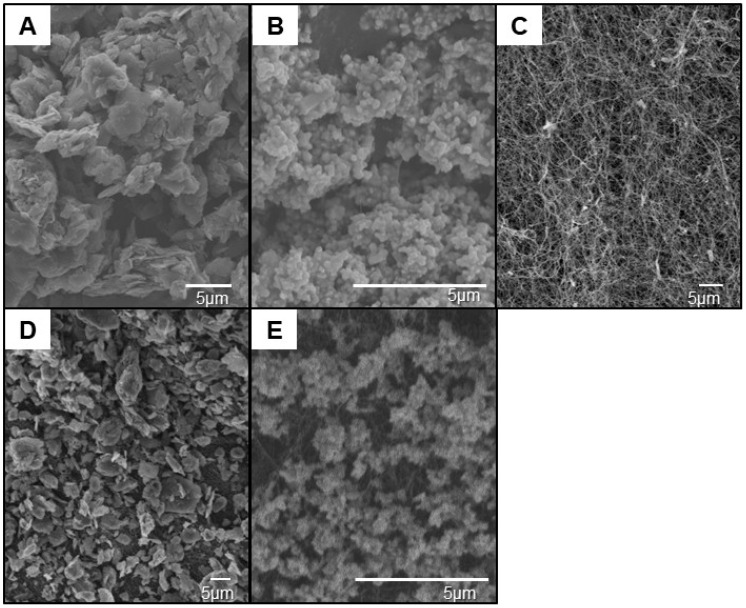 Figure 1
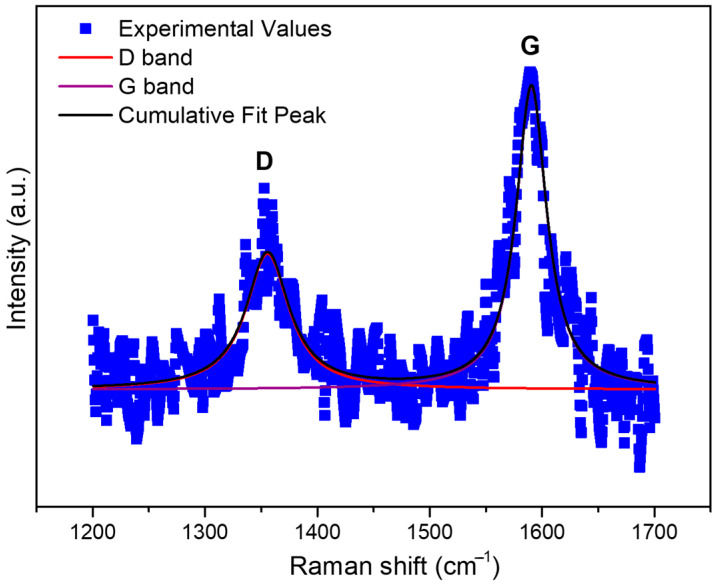 Figure 2
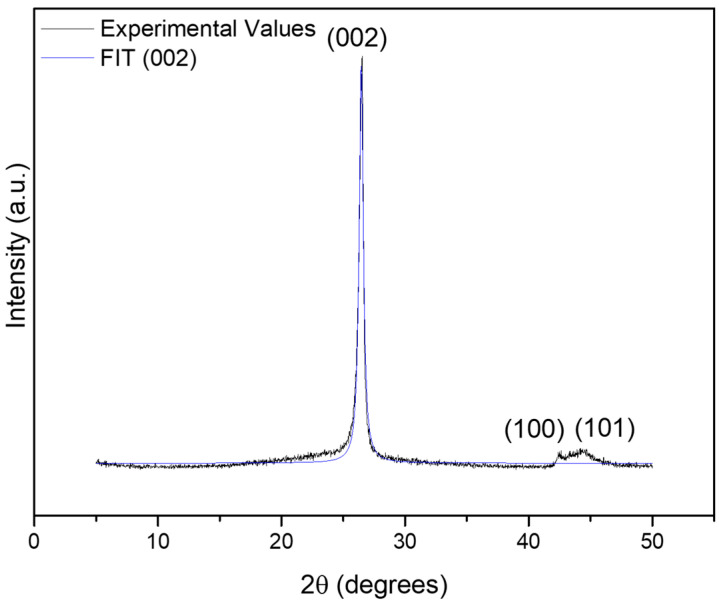 Figure 3
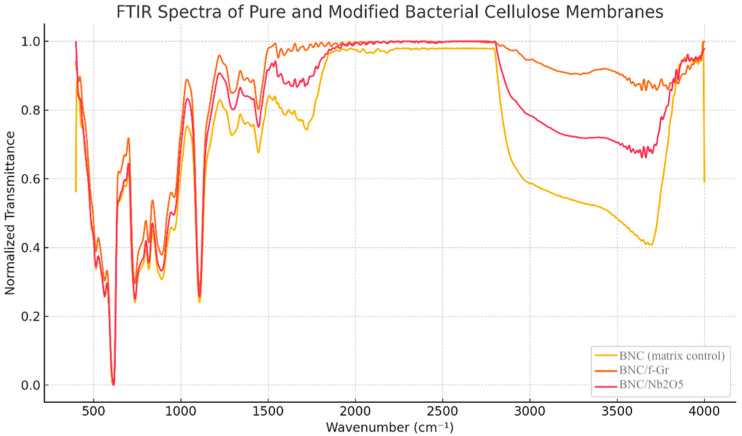 Figure 4
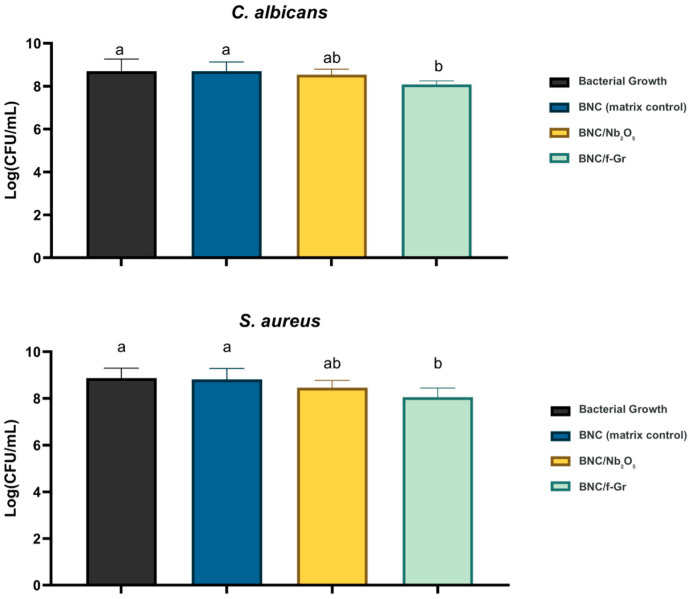 Figure 5
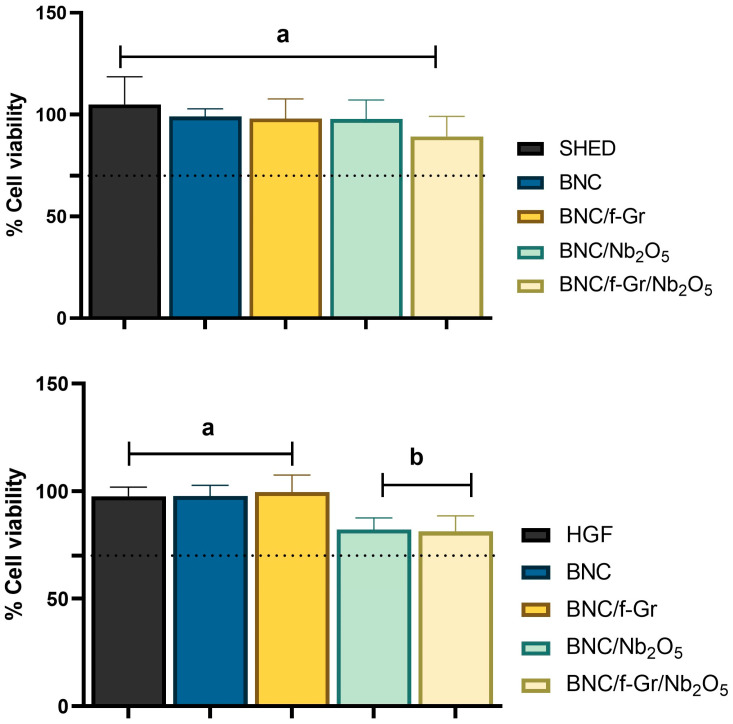 Figure 6
Peer Reviews
No public reviews on file for this paper yet. If you reviewed it on a platform where reviews are public (OpenReview, ICLR, NeurIPS, ICML), you can paste yours below so the community can read it here.
Videos
No videos yet. Explain this paper in a talk, walkthrough, or lecture? Add one.
Taxonomy
TopicsAdvanced Cellulose Research Studies · Wound Healing and Treatments · Graphene and Nanomaterials Applications