Mitochondrial Redox Vulnerabilities in Triple-Negative Breast Cancer: Integrative Perspectives and Emerging Therapeutic Strategies
Alfredo Cruz-Gregorio

TL;DR
This review explores how targeting mitochondrial redox imbalances could lead to new treatments for aggressive triple-negative breast cancer.
Contribution
The paper is the first to integrate mitochondrial metabolism, redox imbalance, and novel cell-death pathways in the context of TNBC.
Findings
TNBC relies on mitochondria and OXPHOS to sustain ROS production for tumor progression.
Modulating redox balance and targeting mitochondria could offer new therapeutic strategies for TNBC.
Emerging strategies include metal-based compounds, redox nanoparticles, and mitochondrial-targeted therapies.
Abstract
Breast cancer is a significant public health concern, with triple-negative breast cancer (TNBC) being the most aggressive subtype characterized by considerable heterogeneity and the absence of estrogen receptor (ER), progesterone receptor (PR), and human epidermal growth factor receptor 2 (HER2) expression. Currently, there are no practical alternatives to chemotherapy, which is associated with a poor prognosis. Therefore, developing new treatments for TNBC is an urgent need. Reactive oxygen species (ROS) and redox adaptation play central roles in TNBC biology. Targeting the redox state has emerged as a promising therapeutic approach, as it is vital to the survival of tumors, including TNBC. Although TNBC does not produce high levels of ROS compared to ER- or PR-positive breast cancers, it relies on mitochondria and oxidative phosphorylation (OXPHOS) to sustain ROS production and create…
Genes, proteins, chemicals, diseases, species, mutations and cell lines named across the full text — each resolved to its canonical identifier and authoritative record.
Click any figure to enlarge with its caption.
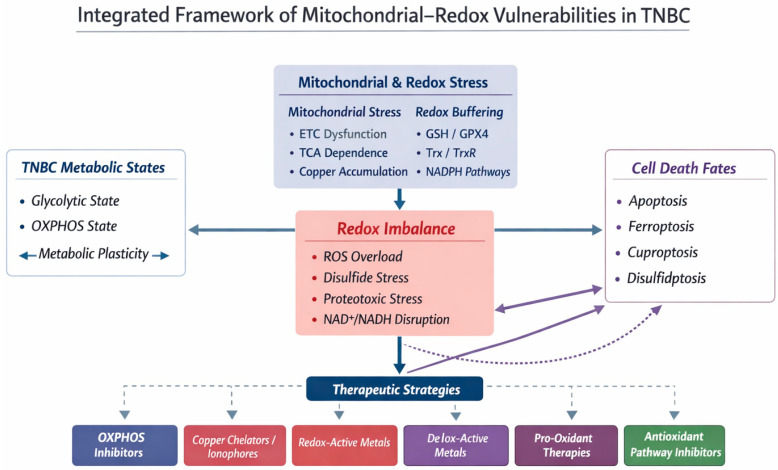 Figure 1
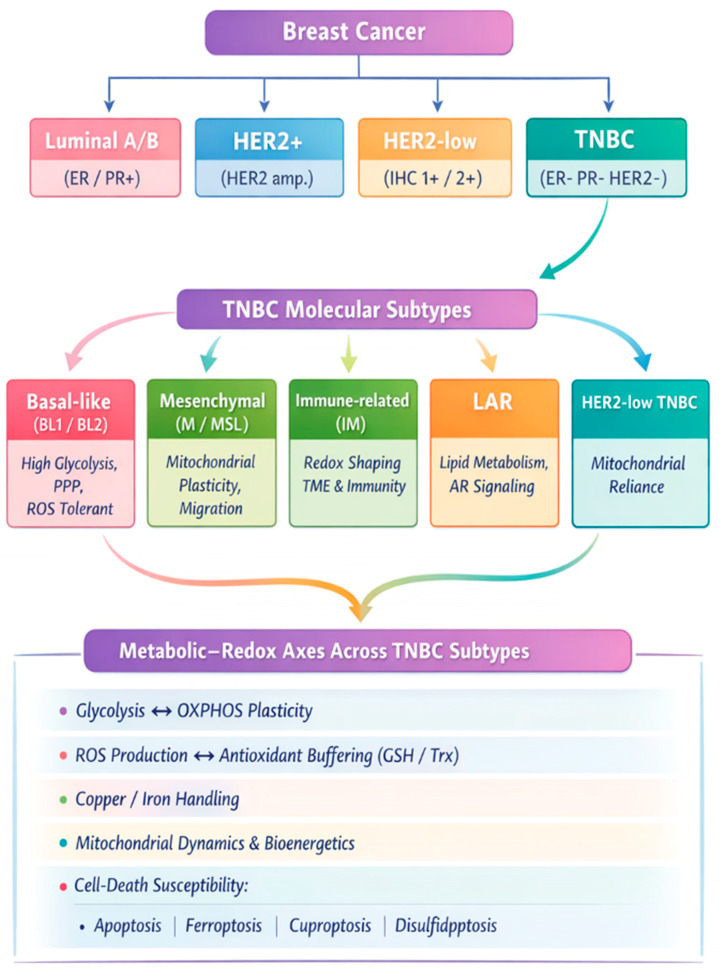 Figure 2
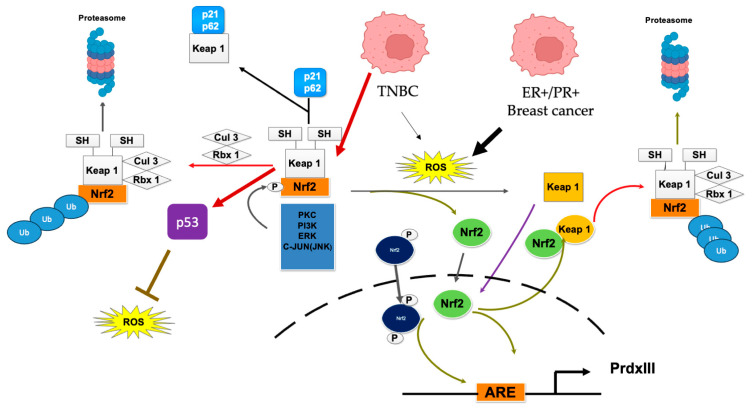 Figure 3
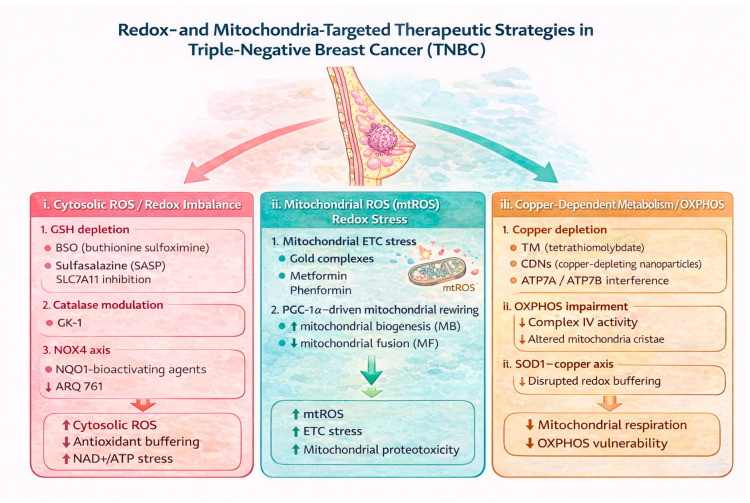 Figure 4
Peer Reviews
No public reviews on file for this paper yet. If you reviewed it on a platform where reviews are public (OpenReview, ICLR, NeurIPS, ICML), you can paste yours below so the community can read it here.
Videos
No videos yet. Explain this paper in a talk, walkthrough, or lecture? Add one.
Taxonomy
TopicsFerroptosis and cancer prognosis · Redox biology and oxidative stress · Cancer Research and Treatment