From Ornamental Value to Antioxidant Activity: Comparative Phytochemistry of Lavandula Species and Cultivars
Andrea Baptista, Cecilia Brunetti, Dalila Pasquini, Luana Beatriz dos Santos Nascimento, Cassandra Detti, Francesco Ferrini, Sara Beltrami, Antonella Gori

TL;DR
This study compares the chemical profiles and antioxidant activity of different lavender species and cultivars, revealing variations that affect their potential uses.
Contribution
The study provides a comparative phytochemical and antioxidant analysis of multiple Lavandula species and cultivars under uniform conditions.
Findings
Lavandula latifolia had the highest hydroxycinnamic acid content, while L. stoechas ‘Alba’ had the highest flavonoid concentration.
Antioxidant activity was significantly correlated with flavonoid content across species and cultivars.
Hydrocarbon and oxygenated monoterpenes were predominant terpenes, with highest levels in L. stoechas L.
Abstract
Background: Lavandula (Lamiaceae) includes numerous species, cultivars, and hybrids widely cultivated for both their ornamental traits and for functional uses in perfumery, nutrition, medicinal, and cosmetic applications. Objectives: This study characterized the phytochemical profiles of three species (Lavandula stoechas L., Lavandula latifolia Medik., and Lavandula angustifolia Mill.), two cultivars (L. stoechas ‘Alba’ L. and L. angustifolia ‘Krajova’ Mill.), and the interspecific hybrid Lavandula × intermedia ‘Alba’ Emeric ex Loisel. Methods: All grown species and cultivars were maintained under uniform environmental and harvested simultaneously, to provide a comparative assessment of their terpene and polyphenol profiles and content, as well as their associated antioxidant activity. Results: HPLC-DAD/QTOF-MS analysis revealed differences in flavonoid and hydroxycinnamic acid content…
Genes, proteins, chemicals, diseases, species, mutations and cell lines named across the full text — each resolved to its canonical identifier and authoritative record.
Click any figure to enlarge with its caption.
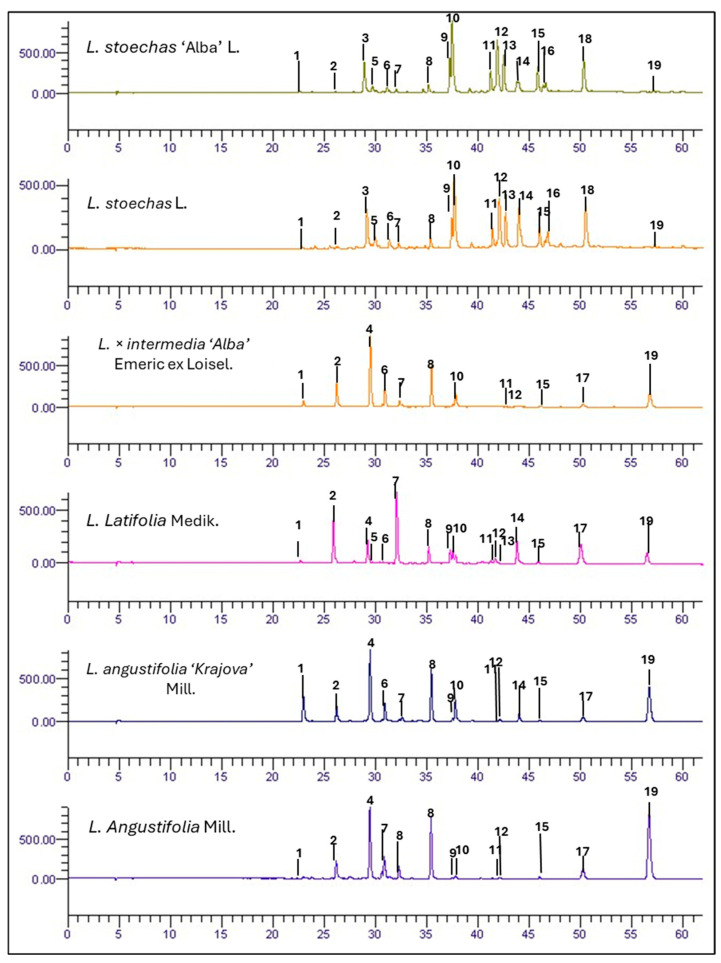 Figure 1
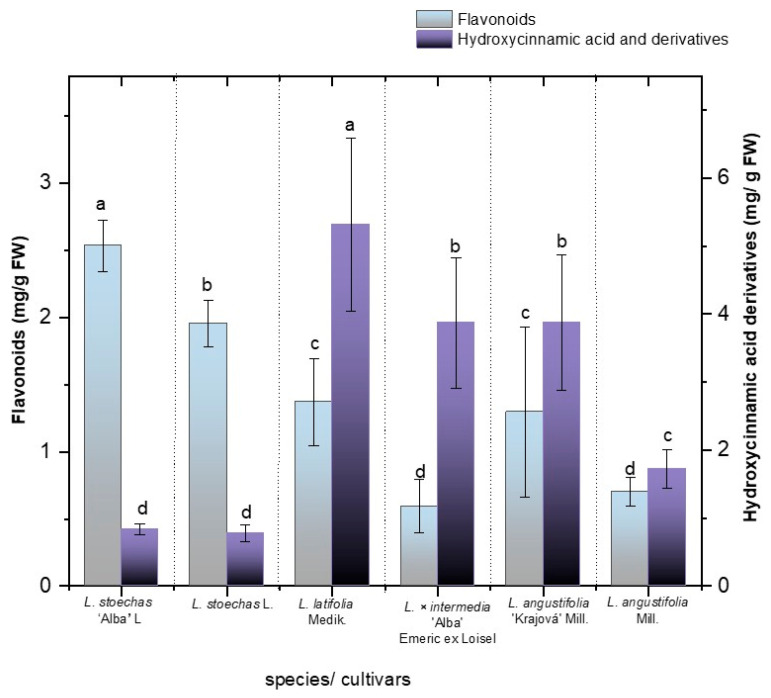 Figure 2
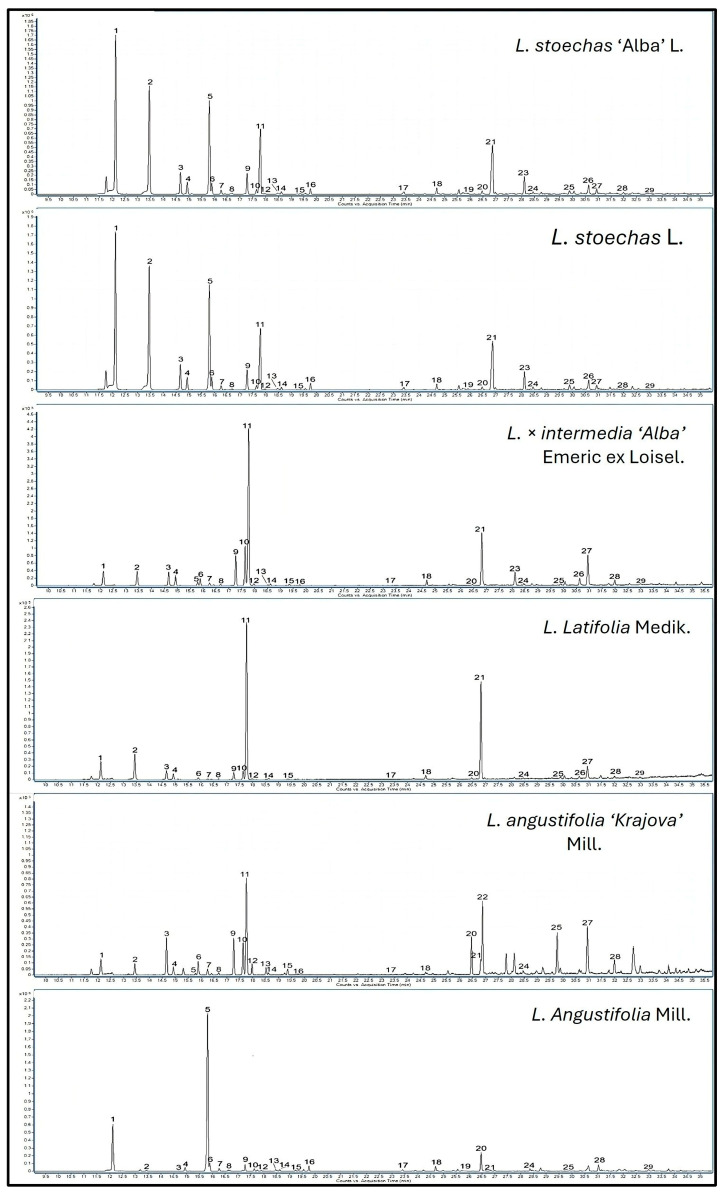 Figure 3
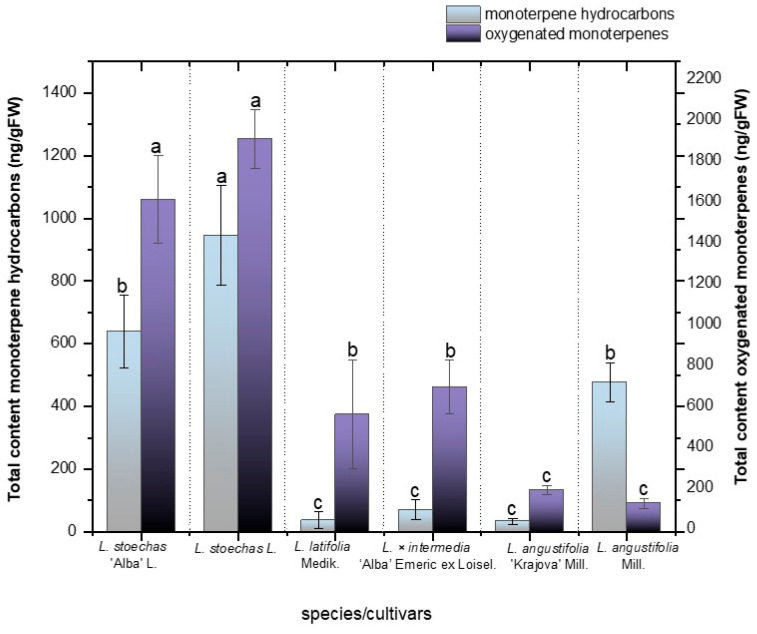 Figure 4
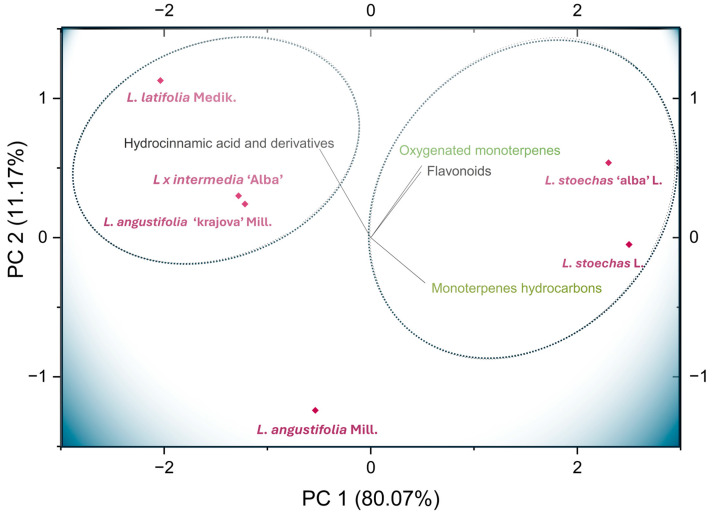 Figure 5
Peer Reviews
No public reviews on file for this paper yet. If you reviewed it on a platform where reviews are public (OpenReview, ICLR, NeurIPS, ICML), you can paste yours below so the community can read it here.
Videos
No videos yet. Explain this paper in a talk, walkthrough, or lecture? Add one.
Taxonomy
TopicsEssential Oils and Antimicrobial Activity · Phytochemicals and Antioxidant Activities · Phytochemistry and Biological Activities