Standardized Hydroxytyrosol-Enriched Olive Pomace Juice Modulates Metabolic and Neurotrophic Signaling Pathways to Attenuate Neuroinflammation and Protect Neuronal Cells
Ye-Lim You, Ha-Jun Byun, Namgil Kang, Min Soo Lee, Jeong-In Lee, Ilbum Park, Hyeon-Son Choi

TL;DR
This study shows that olive pomace juice, rich in hydroxytyrosol, protects neurons and reduces inflammation, offering potential for neurodegenerative disease treatments.
Contribution
The study identifies hydroxytyrosol as the key compound in olive pomace juice responsible for neuroprotection and anti-inflammatory effects.
Findings
OPJ reduced H2O2-induced neuronal cell death and inhibited amyloid fibril formation.
Hydroxytyrosol showed greater neuroprotective and anti-inflammatory effects than tyrosol.
OPJ modulated antioxidant, anti-apoptotic, and neurotrophic pathways via Nrf2, AMPKα–SIRT1–PGC1α, and CREB–BDNF–TrkB signaling.
Abstract
Olive pomace (OP), a by-product of olive oil production, is a sustainable resource rich in bioactive compounds with potential applications in cosmetics and pharmaceuticals. This study investigates the protective effects of olive pomace juice (OPJ) against H2O2-induced neuronal damage and LPS-induced inflammatory responses in HT22 and BV2 cells, respectively. OPJ suppressed H2O2-induced cell death and exerted anti-apoptotic effects by reducing the BAX/BCL2 ratio and caspase-3 cleavage. OPJ also mitigated neurodegenerative hallmarks by decreasing amyloid fibrils formation and inhibiting β-secretase and acetylcholinesterase (AChE) activity. Mechanistically, OPJ enhanced antioxidant response by upregulating Nrf2 and its downstream molecule HO-1, along with increasing mRNA levels of antioxidant enzymes, including catalase, SOD1, and GPx. OPJ further activated AMPKα–SIRT1–PGC1α signaling and…
Genes, proteins, chemicals, diseases, species, mutations and cell lines named across the full text — each resolved to its canonical identifier and authoritative record.
Click any figure to enlarge with its caption.
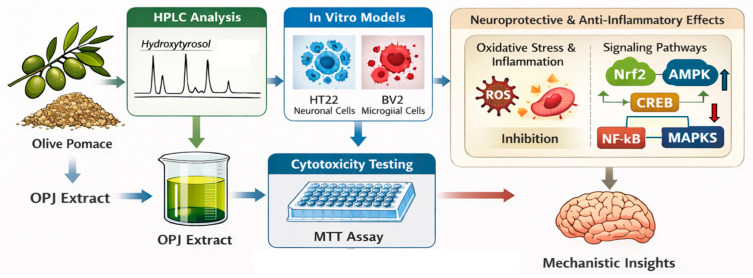 Figure 1
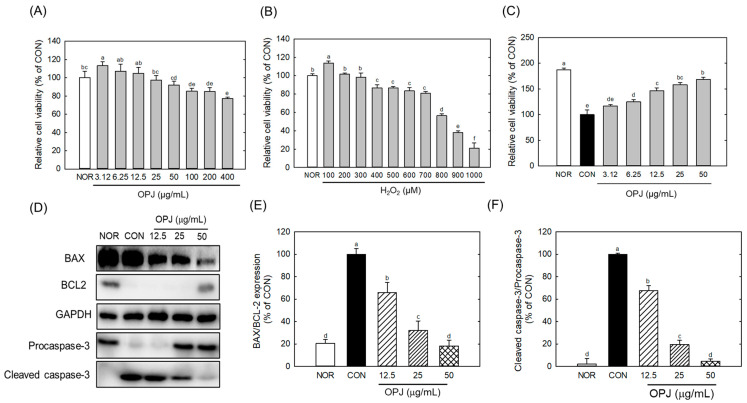 Figure 2
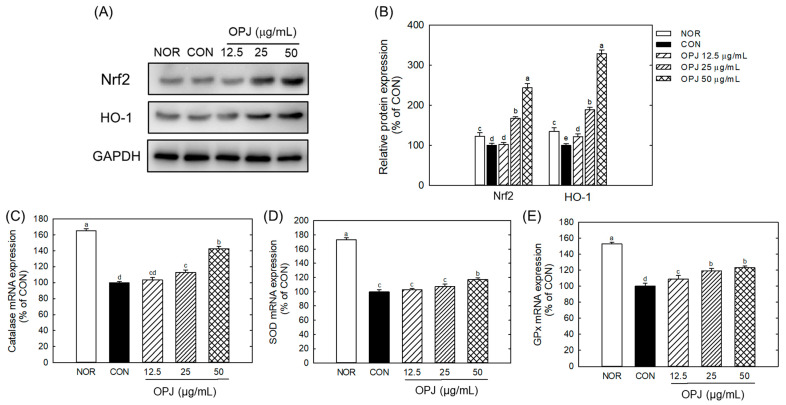 Figure 3
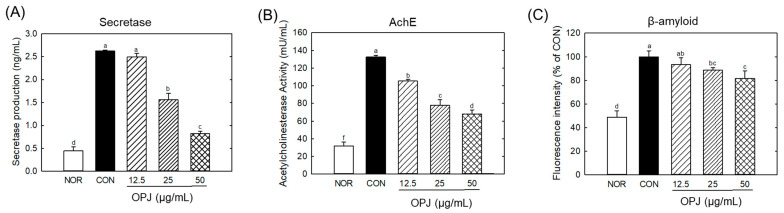 Figure 4
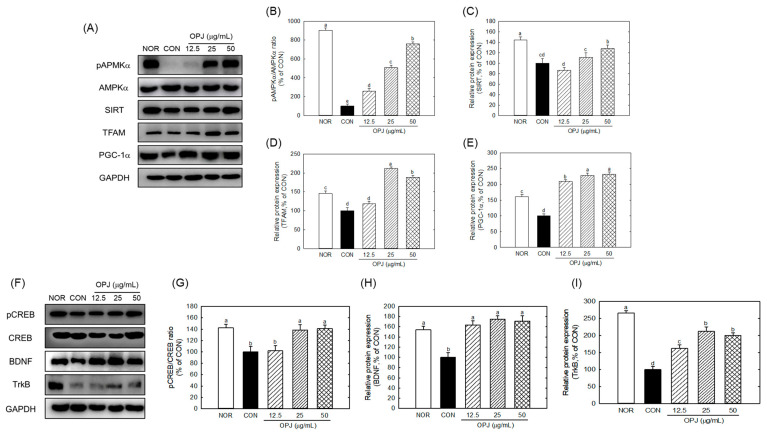 Figure 5
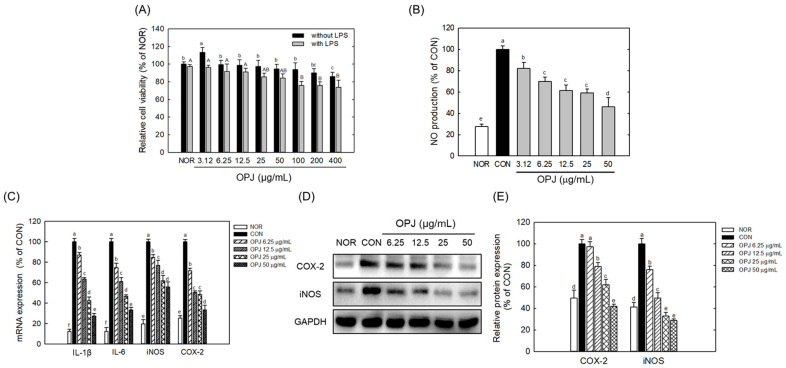 Figure 6
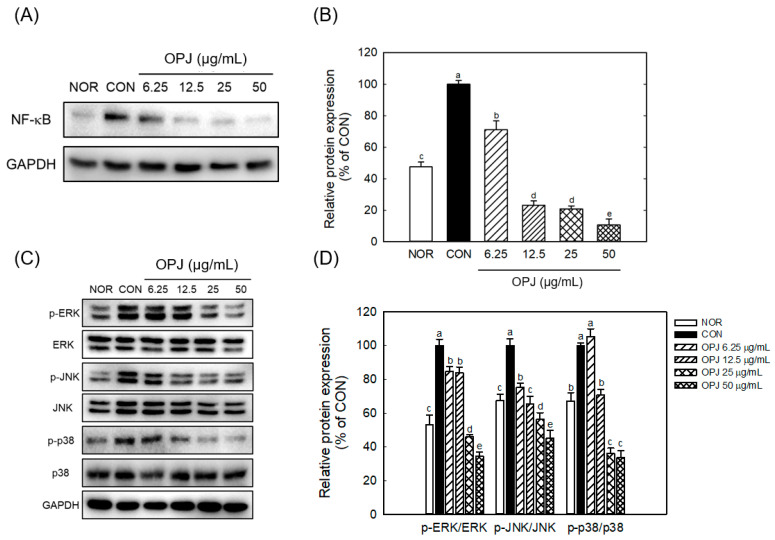 Figure 7
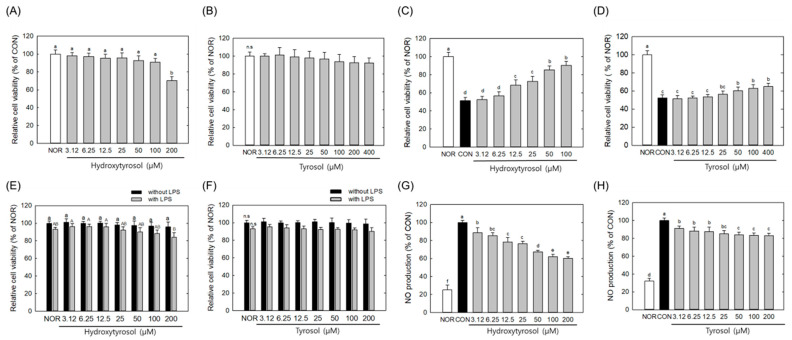 Figure 8
Peer Reviews
No public reviews on file for this paper yet. If you reviewed it on a platform where reviews are public (OpenReview, ICLR, NeurIPS, ICML), you can paste yours below so the community can read it here.
Videos
No videos yet. Explain this paper in a talk, walkthrough, or lecture? Add one.
Taxonomy
TopicsEdible Oils Quality and Analysis · Phytochemicals and Antioxidant Activities · Genomics, phytochemicals, and oxidative stress