Support Effects of Microwave-Synthesized Ru-Based Catalysts on Their Hydrogen Evolution Performance in Acidic Media
Luan Liu, Hongru Liu, Genghua Cao, Xiaoyu Wu, Baorui Jia, Lin Su, Linhui Su, Xuanhui Qu, Mingli Qin

TL;DR
This study shows how different supports affect the performance of ruthenium catalysts in producing hydrogen in acidic conditions.
Contribution
The paper introduces a microwave synthesis method and identifies support-induced electronic effects as key to enhancing HER performance.
Findings
Ru/TiO2 showed the best HER performance with 187 mV overpotential and 97.56 mV·dec−1 Tafel slope.
Electronic modulation via metal-support interactions optimizes Ru-H binding strength for better kinetics.
Ru/15TiO2 was the optimal catalyst with low resistance and stability over 17 hours.
Abstract
Ruthenium-based catalysts supported on TiO2, SnO2, and WO3 were synthesized via a microwave-assisted rapid reduction method and evaluated for the hydrogen evolution reaction (HER) in acidic media. The Ru species existed as highly dispersed nanoclusters, as confirmed by XRD and TEM, and the catalytic activity was strongly dependent on the oxide support. Ru/TiO2 exhibited the best HER performance, achieving an overpotential of 187 mV at 10 mA·cm−2 and a Tafel slope of 97.56 mV·dec−1. While particle size differences (1.8–3.7 nm) did not account for the activity trend, XPS revealed distinct metal–support interactions that modulated the electronic state of Ru. Ru/TiO2 showed an intermediate electron depletion that optimizes the Ru-H binding strength, explaining its superior kinetics. Regulation of Ru loading further identified Ru/15TiO2 as the optimal catalyst, exhibiting low charge transfer…
Genes, proteins, chemicals, diseases, species, mutations and cell lines named across the full text — each resolved to its canonical identifier and authoritative record.
Click any figure to enlarge with its caption.
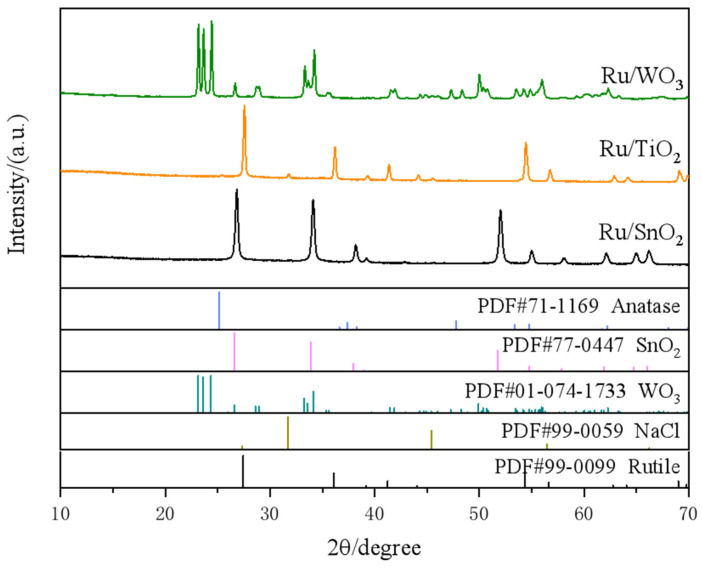 Figure 1
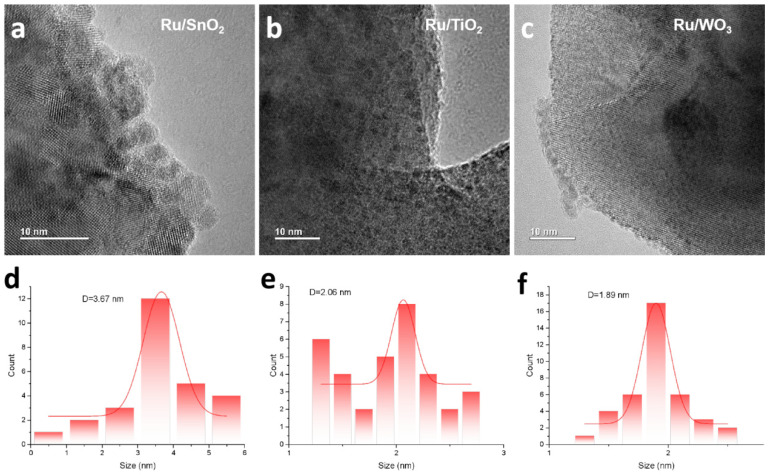 Figure 2
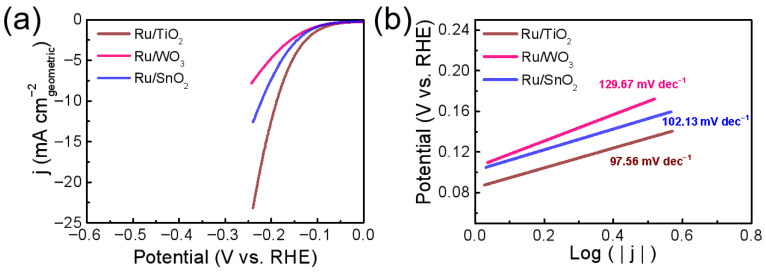 Figure 3
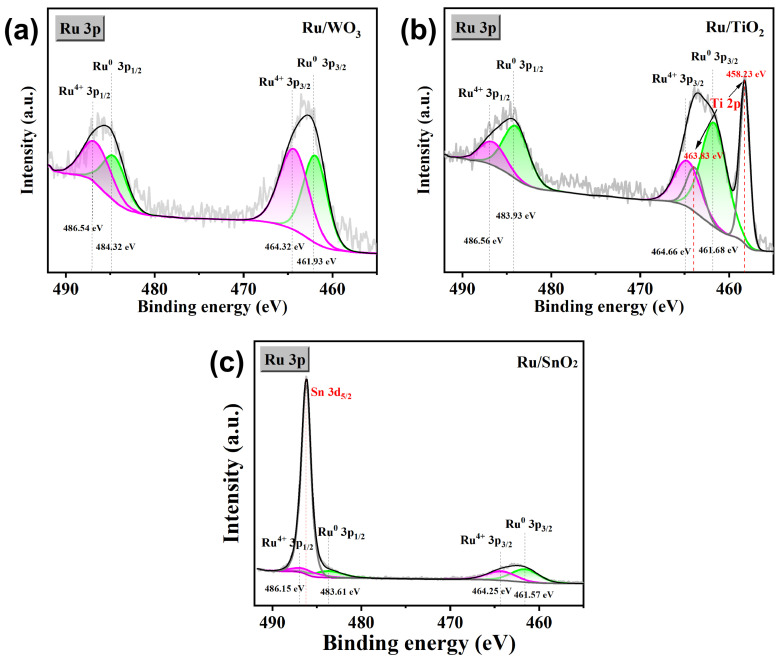 Figure 4
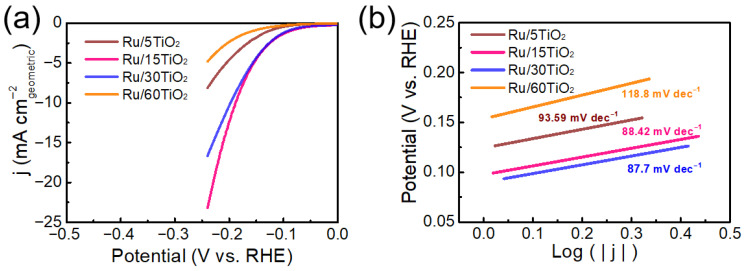 Figure 5
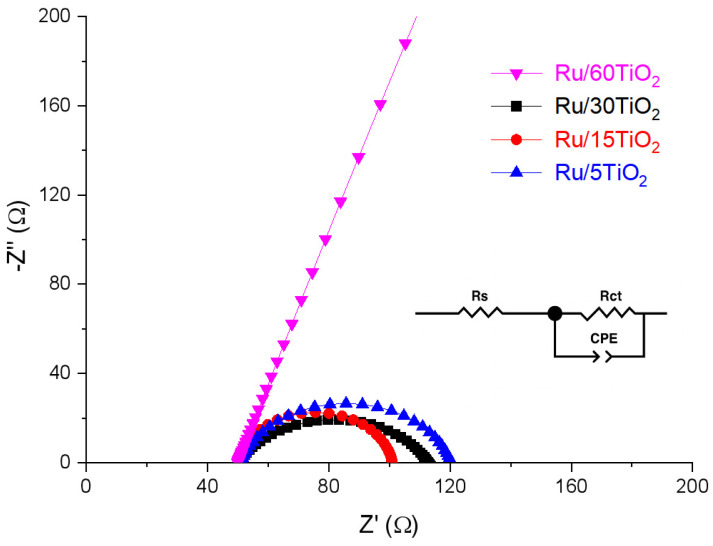 Figure 6
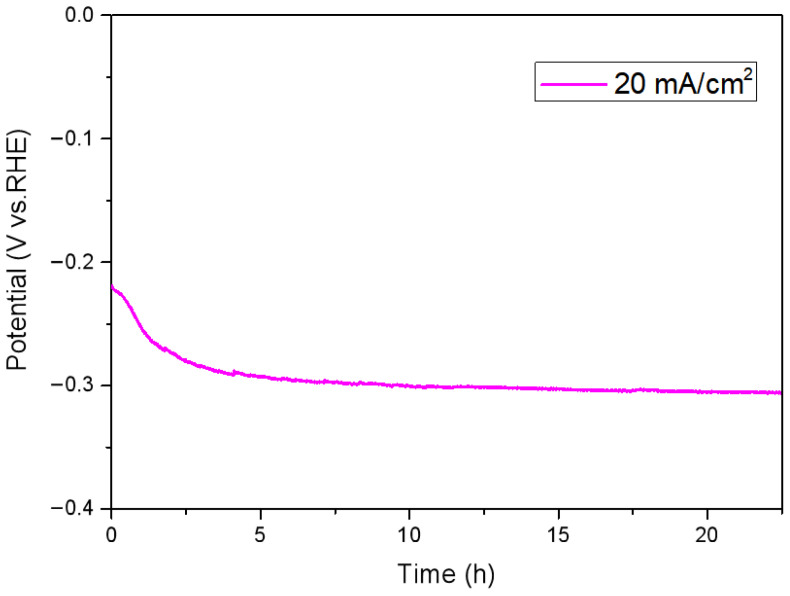 Figure 7
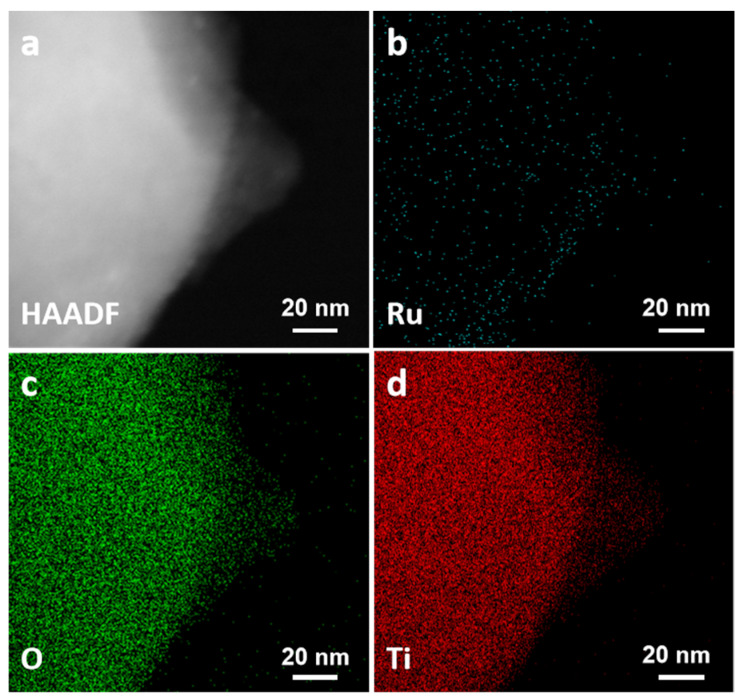 Figure 8
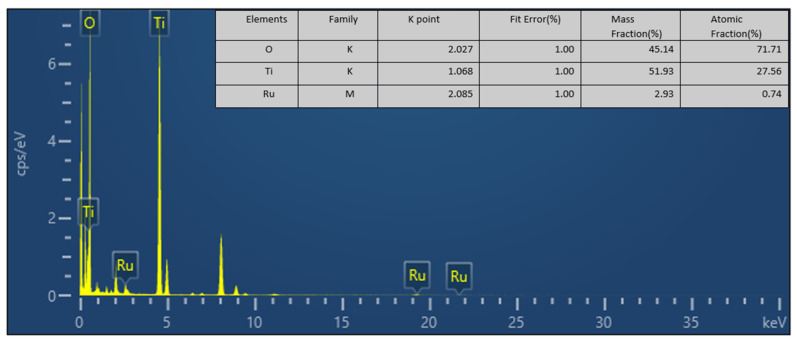 Figure 9
Peer Reviews
No public reviews on file for this paper yet. If you reviewed it on a platform where reviews are public (OpenReview, ICLR, NeurIPS, ICML), you can paste yours below so the community can read it here.
Videos
No videos yet. Explain this paper in a talk, walkthrough, or lecture? Add one.
Taxonomy
TopicsElectrocatalysts for Energy Conversion · Ammonia Synthesis and Nitrogen Reduction · Metalloenzymes and iron-sulfur proteins