Decoupling Solvent Effects: Perfluorinated Sulfonic Acid Structure and Catalyst Layer Stability in PEM Water Electrolysis
Jong-Hyeok Park, Jin-Soo Park

TL;DR
This study examines how the structure of perfluorinated sulfonic acid ionomers affects catalyst layer performance and stability in water electrolysis, using a single solvent to isolate structural effects.
Contribution
The study introduces a propylene-glycol solvent platform to decouple solvent effects from ionomer structure in PEM water electrolysis catalyst layers.
Findings
Propylene-glycol reduces ionomer aggregate size and catalyst–ionomer agglomerates without a systematic equivalent weight trend.
Short- and mid-side chain ionomers show better durability and lower ohmic overpotentials compared to long-side chain Nafion.
SSC ionomers (EW ≈ 980) are recommended for stability, while MSC maximizes current with moderate durability.
Abstract
Solvent differences in perfluorinated sulfonic acid ionomer (PFSI) dispersions confound comparisons of catalyst-layer (CL) binders for PEM water electrolysis. We use a propylene-glycol (PG) single-solvent platform to isolate effects of ionomer structure, i.e., side-chain architecture and equivalent weight (EW), across five PFSIs (Nafion D2021, Nafion D2020, Aquivion D98-25BS, Aquivion D72-25BS, and 3M E-22397B) as hydrogen evolution reaction-CL binders. PG collapses ionomer aggregates from microns to sub-100 nm and reduces catalyst–ionomer agglomerates without a systematic EW trend, indicating that performance differences originate during film formation. PG makes CLs more hydrophobic (higher θR), yet aerophobicity (θAir) still increases with decreasing EW, consistent with higher sulfonic-acid density. Under PG, current density at 1.9 V rises with decreasing EW, with thicker short-side…
Genes, proteins, chemicals, diseases, species, mutations and cell lines named across the full text — each resolved to its canonical identifier and authoritative record.
Click any figure to enlarge with its caption.
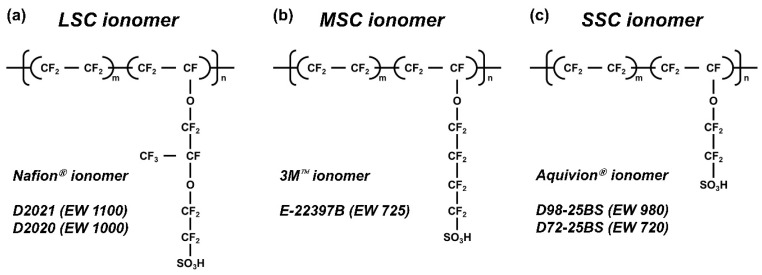 Figure 1
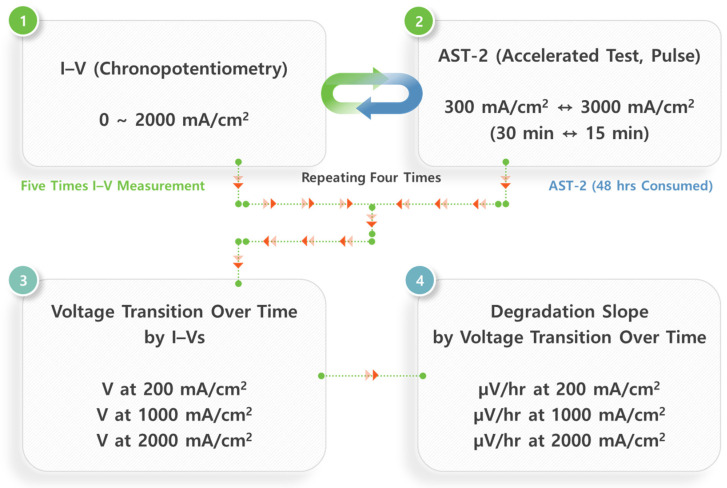 Figure 2
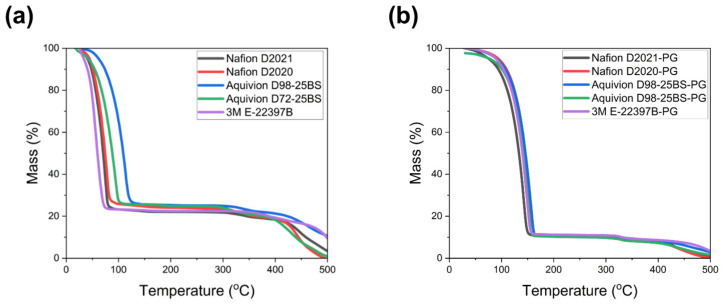 Figure 3
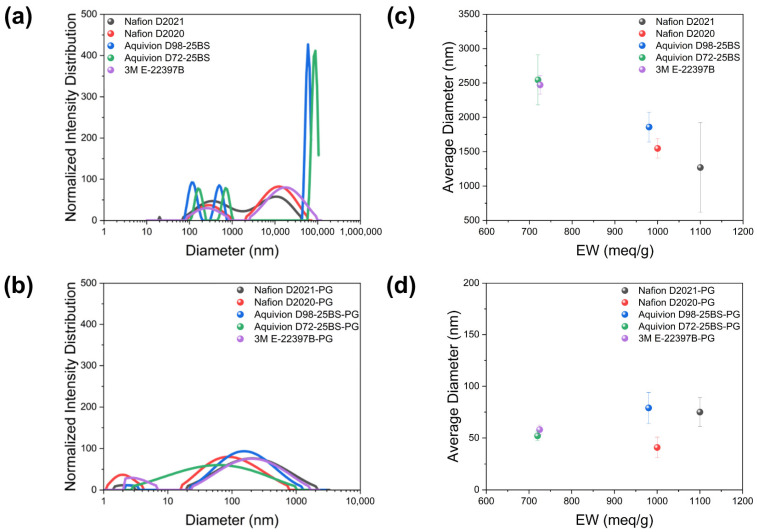 Figure 4
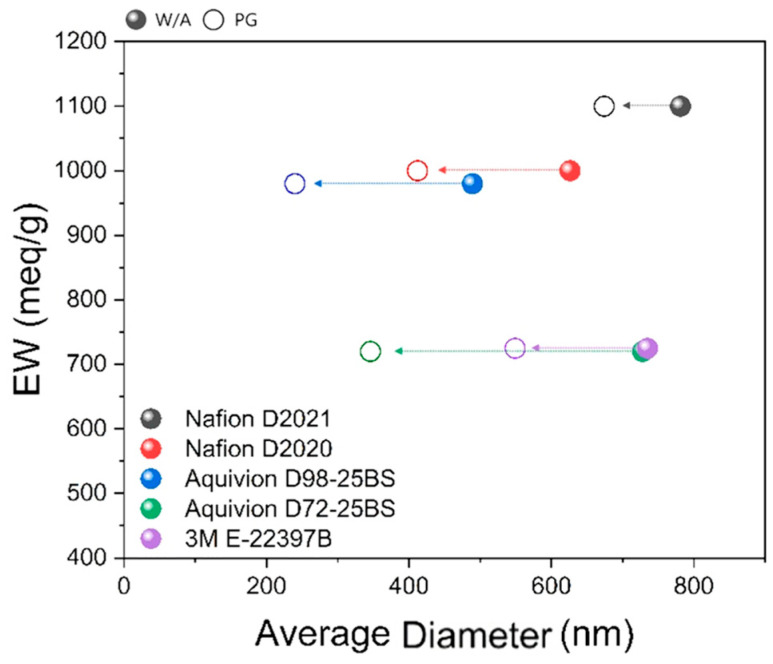 Figure 5
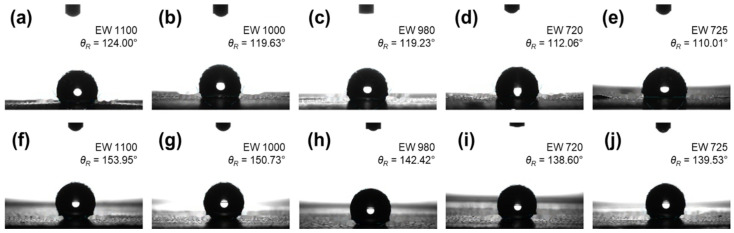 Figure 6
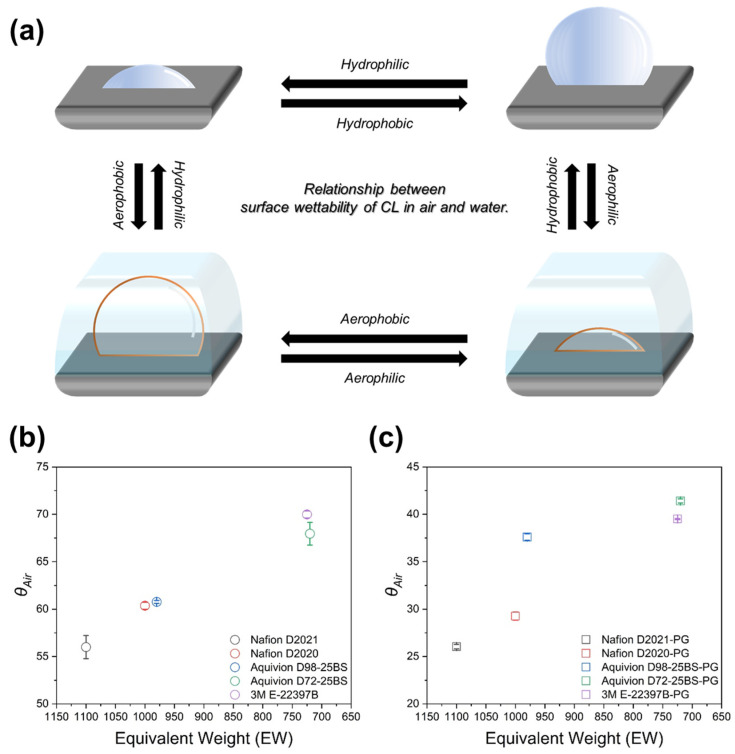 Figure 7
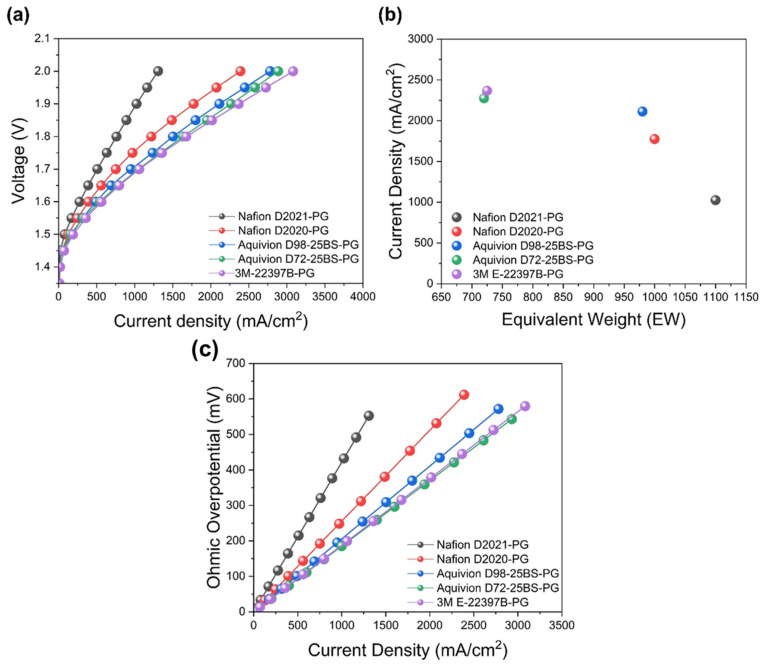 Figure 8
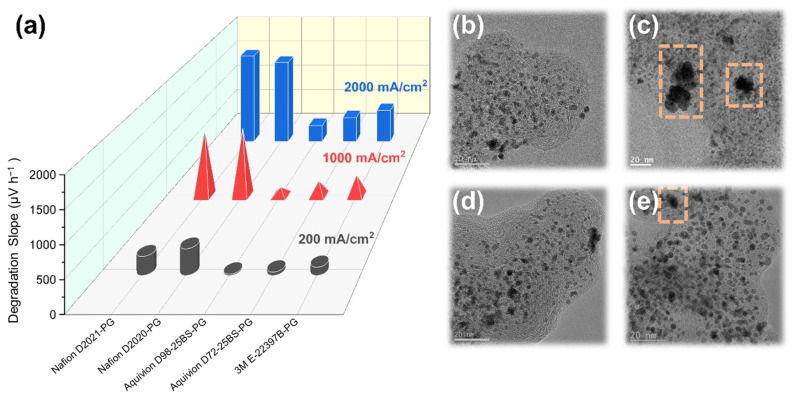 Figure 9
Peer Reviews
No public reviews on file for this paper yet. If you reviewed it on a platform where reviews are public (OpenReview, ICLR, NeurIPS, ICML), you can paste yours below so the community can read it here.
Videos
No videos yet. Explain this paper in a talk, walkthrough, or lecture? Add one.
Taxonomy
TopicsFuel Cells and Related Materials · Advanced Battery Materials and Technologies · Electrocatalysts for Energy Conversion