Early SGLT2 Inhibitor Therapy in Acute Coronary Syndrome: Mitigating Adverse Remodeling in High-Risk Phenotypes—A Real-World Study
Teodora Mateoc, Ioana-Maria Suciu, Dan Gaiță, Andor Minodora, Roxana Popescu, Tania Vlad, Corina Flangea, Călin Muntean, Daliborca-Cristina Vlad

TL;DR
This study finds that early use of SGLT2 inhibitors in high-risk heart attack patients helps stabilize heart structure, even when patients start with worse health conditions.
Contribution
The study demonstrates that early SGLT2 inhibitor therapy stabilizes cardiac structure in high-risk acute coronary syndrome patients, regardless of diabetes status.
Findings
Early SGLT2 inhibitor therapy was associated with structural cardiac stabilization in high-risk ACS patients.
Despite a higher baseline risk profile, SGLT2-treated patients achieved outcomes comparable to lower-risk controls.
The benefits of SGLT2 inhibitors were consistent regardless of diabetes status.
Abstract
Background and Objectives: SGLT2 inhibitors are foundational in heart failure therapy, yet their impact on left ventricular (LV) remodeling immediately following acute coronary syndrome (ACS) remains less defined. This study evaluated the association between early SGLT2 inhibitor initiation and structural recovery in a real-world post-ACS cohort. Materials and Methods: We conducted a retrospective observational study including 238 revascularized ACS patients, stratified into an SGLT2 inhibitor group (n = 71) and a control group (n = 167). Changes in LV ejection fraction (LVEF) and indexed LV mass (LVMi) were assessed by echocardiography at baseline and follow-up (mean 286 days). Multivariable regression models were adjusted for baseline imbalances and tested for interactions with diabetes status. Results: A significant “confounding by indication” was observed; the SGLT2 group presented…
Genes, proteins, chemicals, diseases, species, mutations and cell lines named across the full text — each resolved to its canonical identifier and authoritative record.
Click any figure to enlarge with its caption.
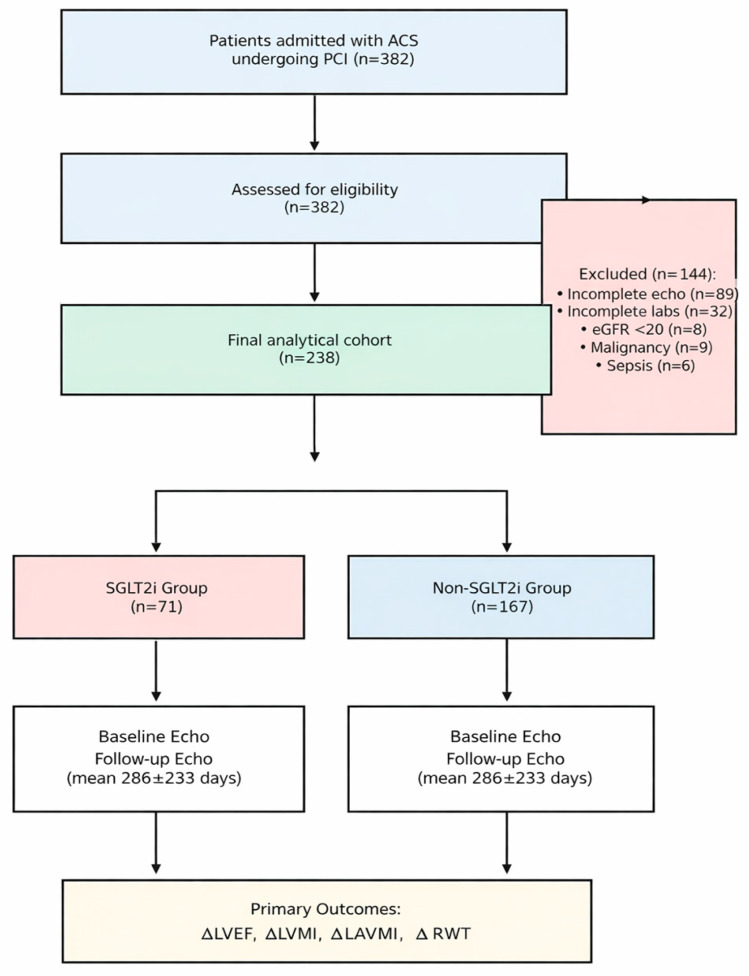 Figure 1
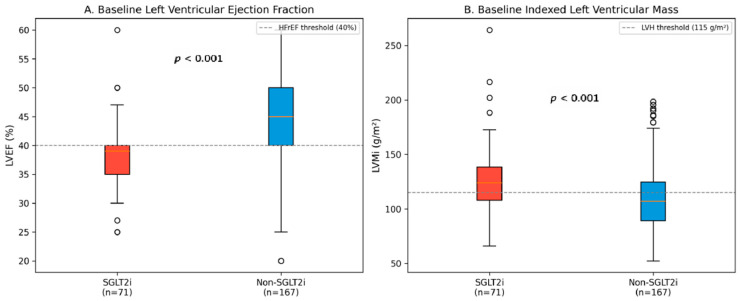 Figure 2
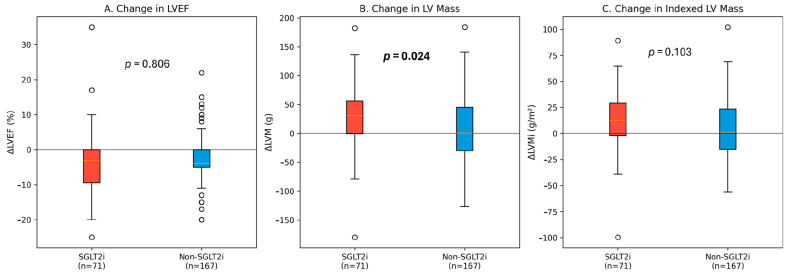 Figure 3
Peer Reviews
No public reviews on file for this paper yet. If you reviewed it on a platform where reviews are public (OpenReview, ICLR, NeurIPS, ICML), you can paste yours below so the community can read it here.
Videos
No videos yet. Explain this paper in a talk, walkthrough, or lecture? Add one.
Taxonomy
TopicsDiabetes Treatment and Management · Cardiovascular Function and Risk Factors · Heart Failure Treatment and Management