Effects of Anionic Groups on Structural and Luminescent Properties of ZnO:Sm3+ Phosphors Synthesized via Combustion Method
Edwin Tumelo Maleho, Machaba Leanyatsa Abraham Letswalo, Buyisiwe M. Sondezi

TL;DR
This paper studies how different anionic groups affect the structure and light emission of Sm3+-doped ZnO phosphors made through combustion synthesis.
Contribution
The study demonstrates how anionic groups like BO33− and PO43− influence crystal structure and luminescence in ZnO-based phosphors.
Findings
Borate and phosphate anions induce new crystalline phases with distinct structures and enhanced luminescence.
Zn4B6O13:Sm3+ shows the most intense photoluminescence and high color purity in the orange region.
Sulfate anions do not form new phases but leave only minor sulfur traces on ZnO surfaces.
Abstract
BO33−, PO43−, and SO42− anionic groups were used to study their effects on the structure and luminescence of Sm3+-doped ZnO. ZnO, ZnO:Sm3+, ZnO, Zn4B6O13:Sm3+, and Zn2P2O7:Sm3+ phosphors were successfully synthesized via combustion synthesis. While BO33− and PO43− ions led to the formation of new crystalline phases, the sulfate precursor decomposed during synthesis, yielding ZnO with only minor surface sulfur traces. The XRD results revealed the formation of wurtzite crystal structures in the ZnO, ZnO:Sm3+, and ZnO-SO4:Sm3+ samples, while a complete change of structure was observed after the incorporation of borate (BO33−) and phosphate (PO43−) ions into ZnO:Sm3+ to Zn4B6O13:Sm3+ and Zn2P2O7:Sm3+, respectively. The structures for borate and phosphate ions were confirmed as cubic (Zn4B6O13) and monoclinic (Zn2P2O7) crystal structures, respectively. The morphological studies of ZnO:Sm3+…
Genes, proteins, chemicals, diseases, species, mutations and cell lines named across the full text — each resolved to its canonical identifier and authoritative record.
Click any figure to enlarge with its caption.
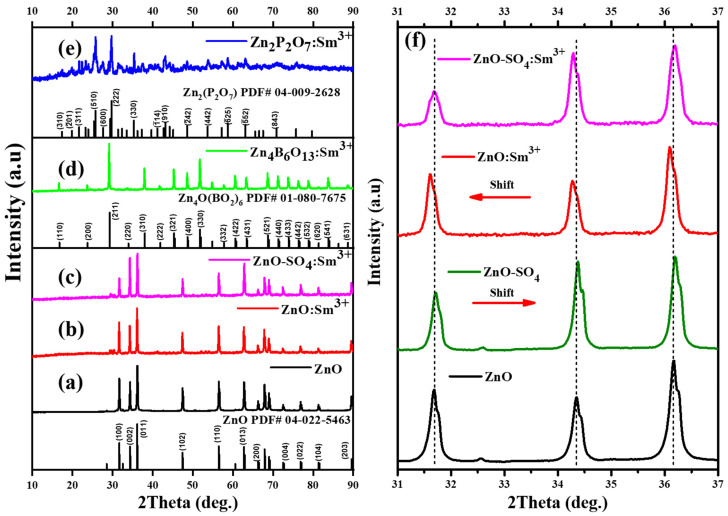 Figure 1
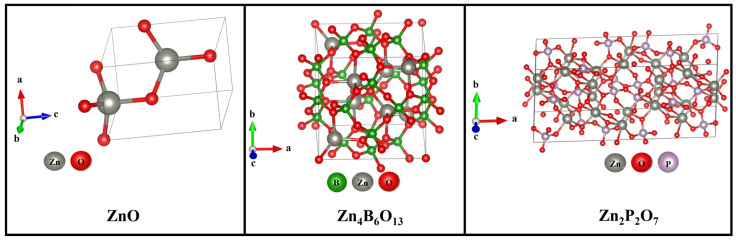 Figure 2
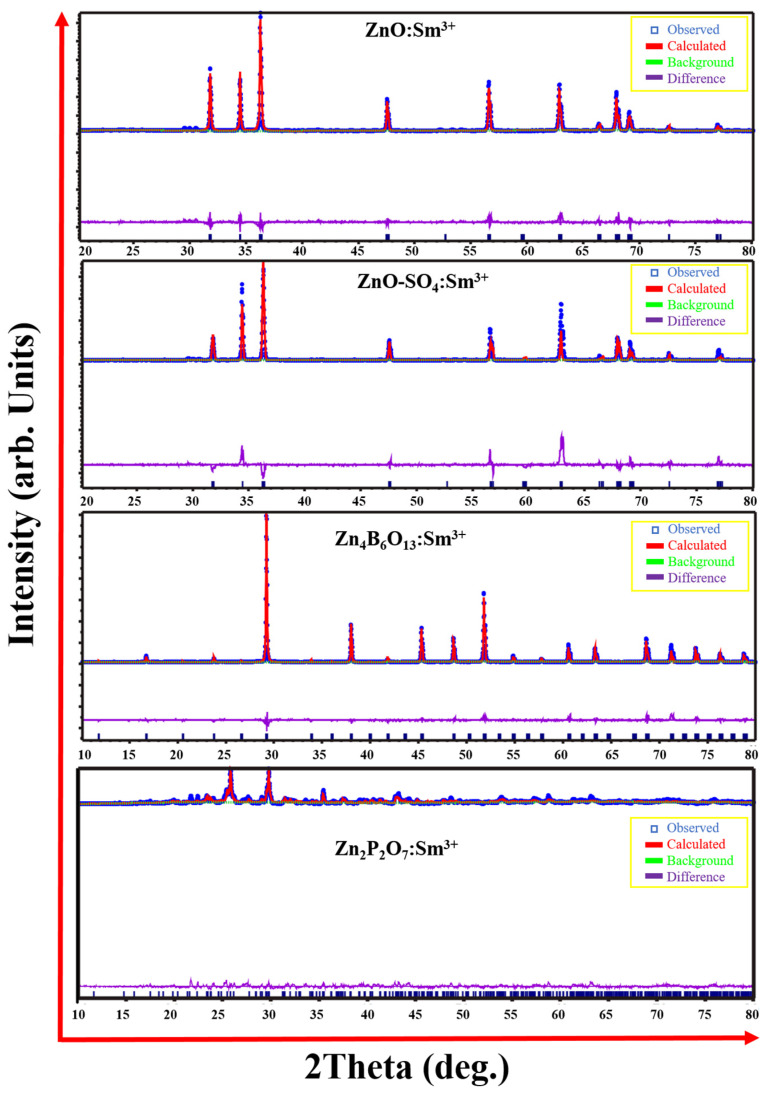 Figure 3
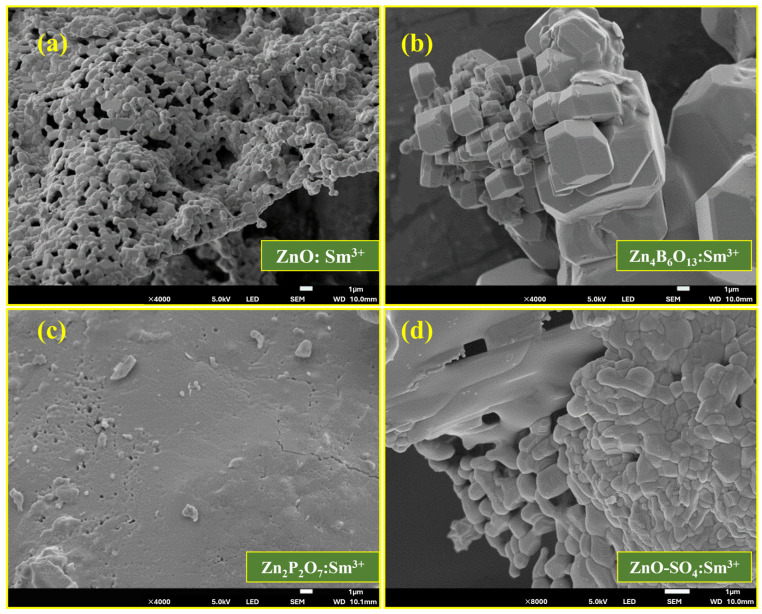 Figure 4
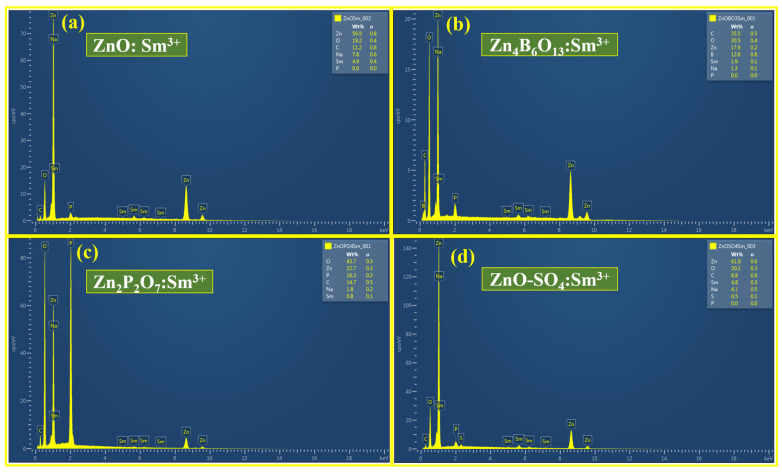 Figure 5
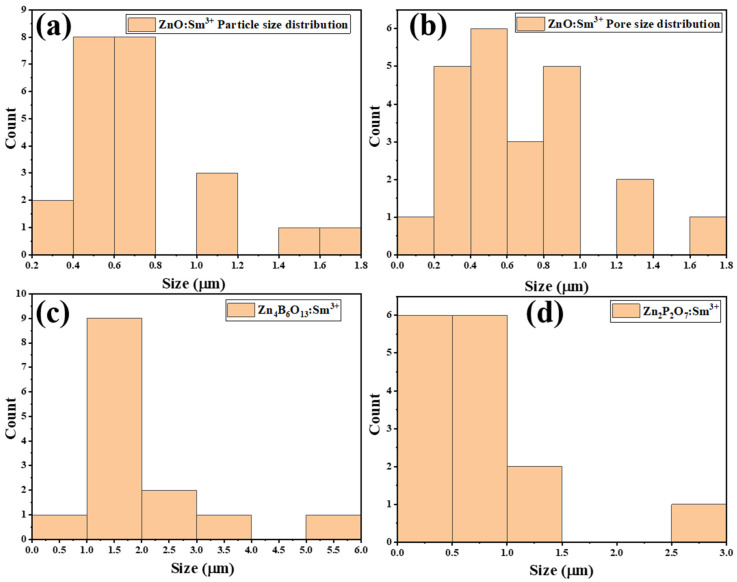 Figure 6
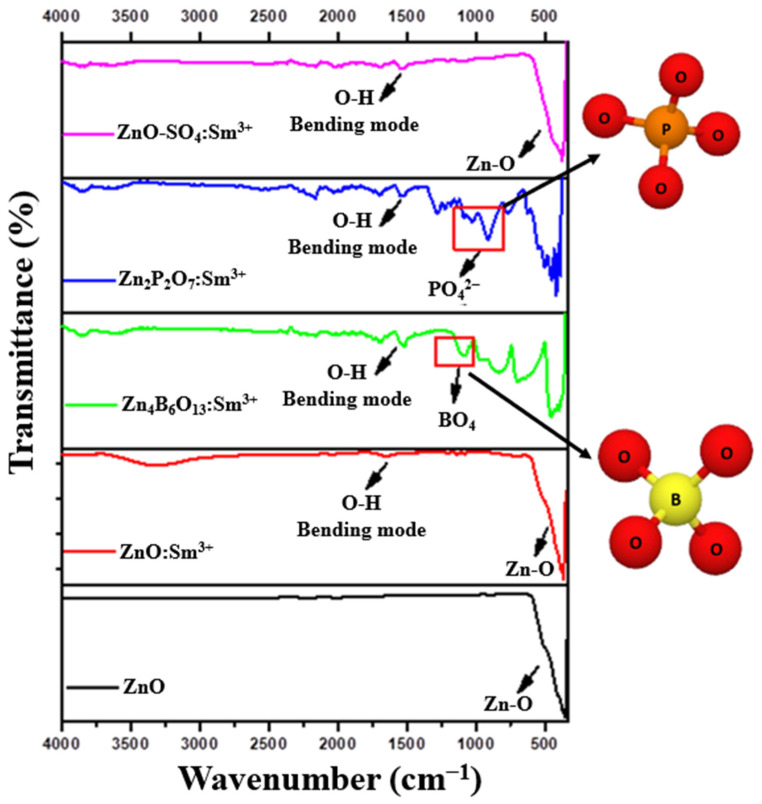 Figure 7
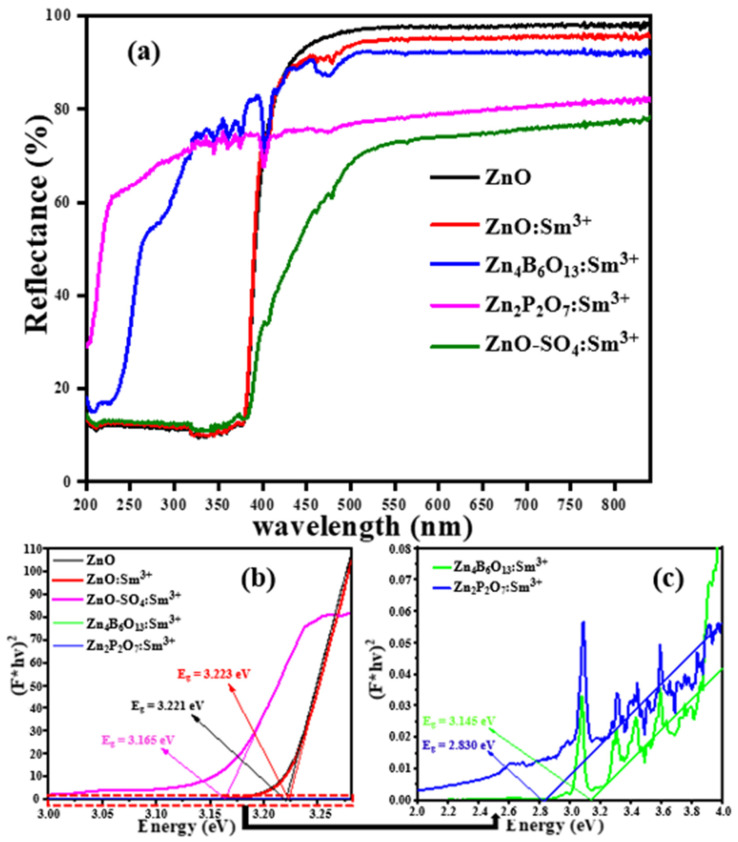 Figure 8
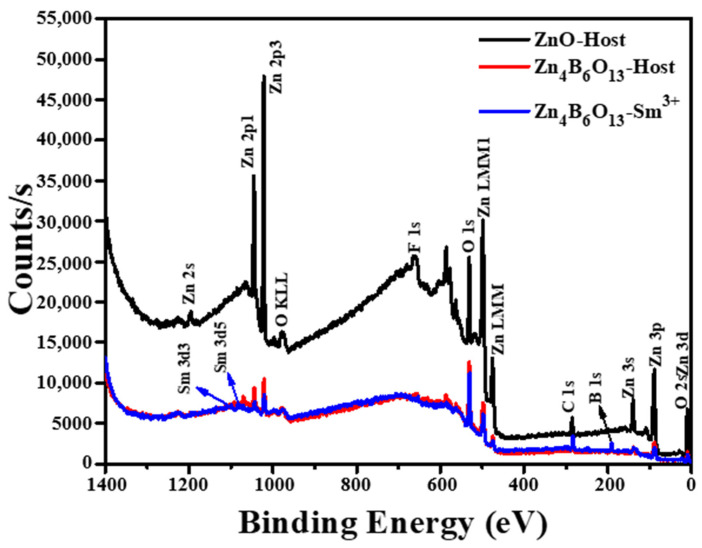 Figure 9
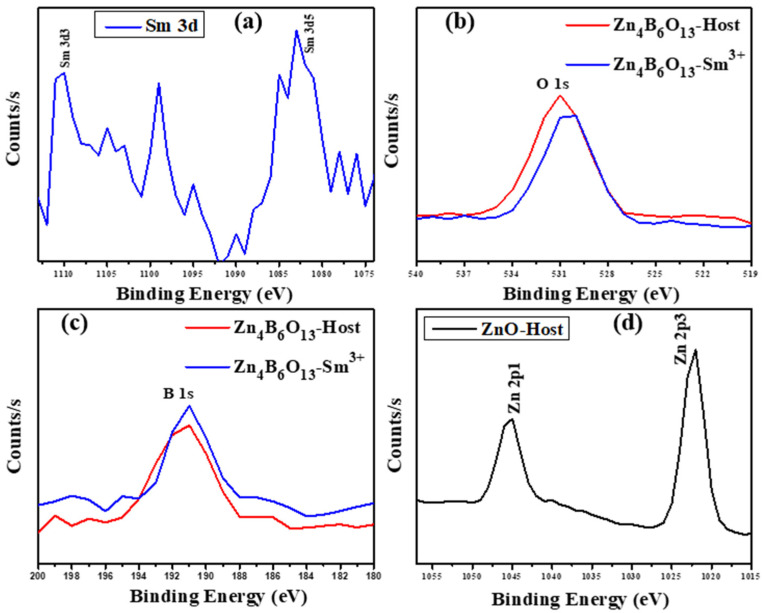 Figure 10
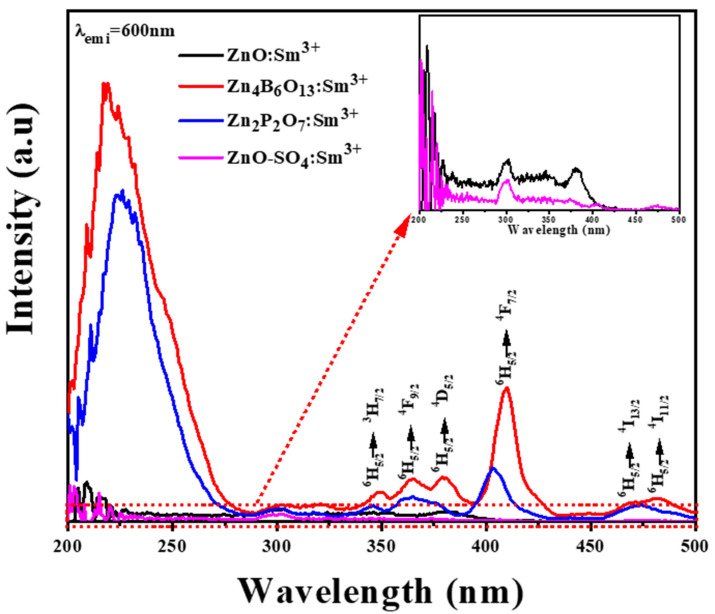 Figure 11
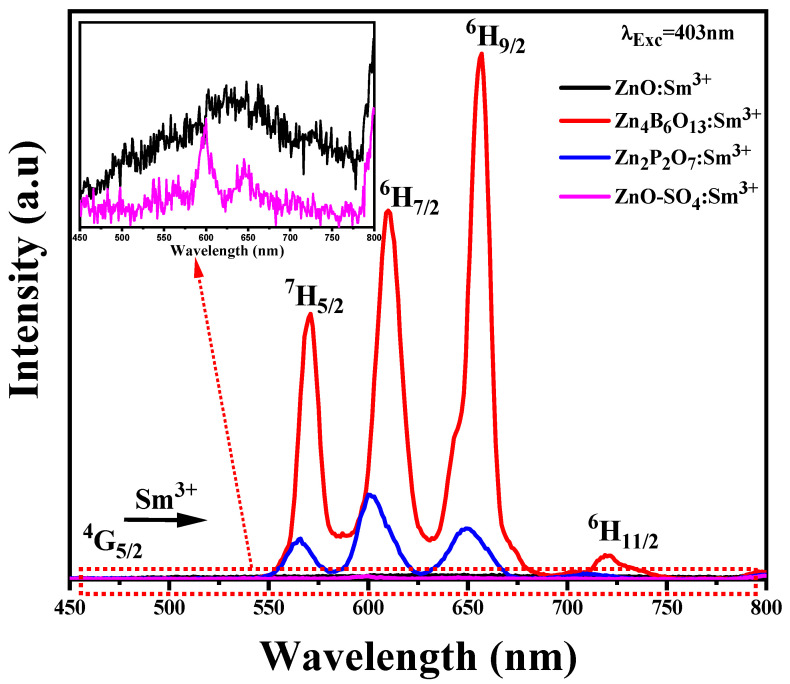 Figure 12
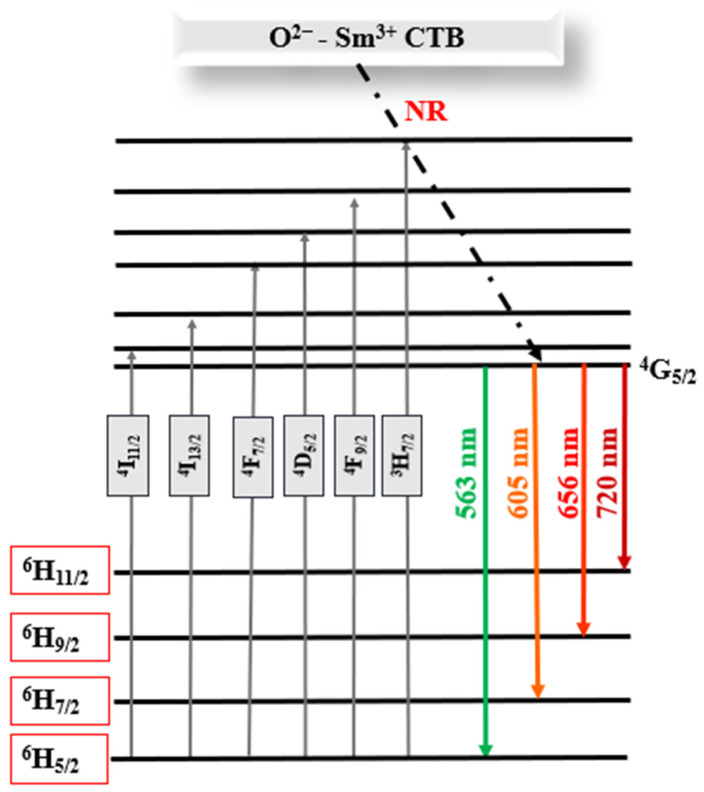 Figure 13
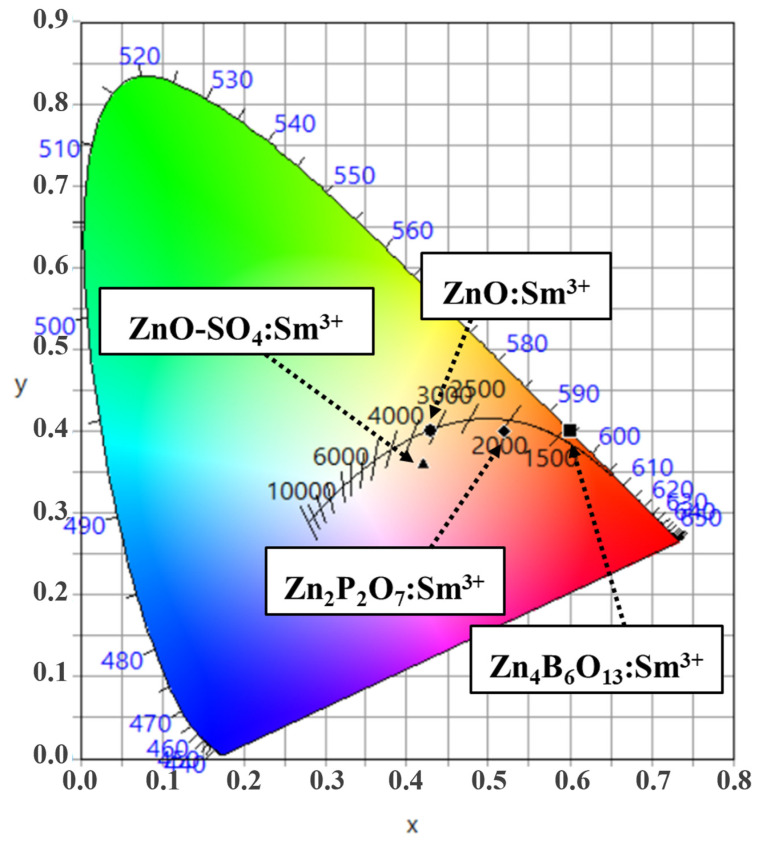 Figure 14
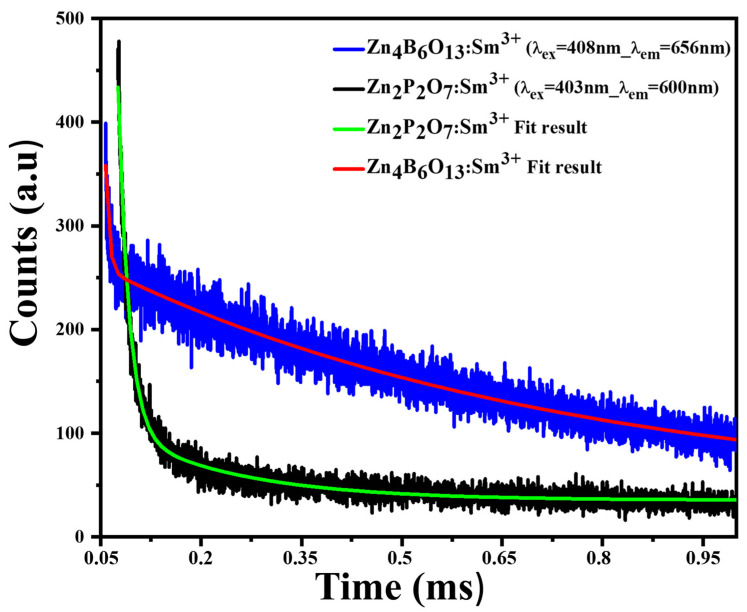 Figure 15
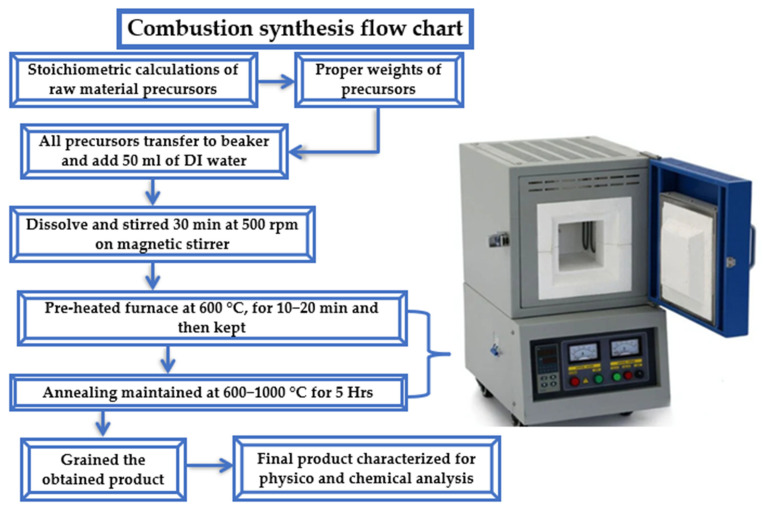 Figure 16
Peer Reviews
No public reviews on file for this paper yet. If you reviewed it on a platform where reviews are public (OpenReview, ICLR, NeurIPS, ICML), you can paste yours below so the community can read it here.
Videos
No videos yet. Explain this paper in a talk, walkthrough, or lecture? Add one.
Taxonomy
TopicsLuminescence Properties of Advanced Materials · Magnesium Oxide Properties and Applications · ZnO doping and properties