Experimental Primary Brain Calcification Model and Its Application to Pathogenesis Mechanism Analysis and Therapeutic Research
Hisaka Kurita, Junya Murata, Kazuki Ohuchi, Yuichi Hayashi, Masatoshi Inden

TL;DR
This paper reviews models of Primary Brain Calcification to understand its causes and develop treatments.
Contribution
The paper systematically reviews familial causative genes and experimental models for PBC to guide future research.
Findings
Familial causative genes like SLC20A2 and PDGFB are associated with PBC.
Genetically modified animals and disease-specific iPS cells are useful models for PBC.
Current models help in understanding disease mechanisms and advancing therapeutic research.
Abstract
Primary Brain Calcification (PBC) is a neurodegenerative disorder of unknown etiology that results in bilateral calcifications within the brain. PBC symptoms vary, including Parkinsonian symptoms and psychiatric symptoms. Abnormalities in phosphate metabolism within the brain are hypothesized to be a mechanism underlying the onset of PBC, but the precise pathophysiological mechanism remains unclear. Furthermore, no fundamental treatment or therapeutic agent for PBC has been established. Previous studies have reported SLC20A2, PDGFB, PDGFRB, XPR1, MYORG, JAM2, CMPK2, and NAA60 as causative genes for familial PBC. Elucidating the pathophysiological mechanisms of PBC and developing treatments and therapeutic agents requires appropriate experimental disease models. Knockout mice and mutant mice targeting familial causative genes have been reported to be useful as in vivo models of PBC.…
Genes, proteins, chemicals, diseases, species, mutations and cell lines named across the full text — each resolved to its canonical identifier and authoritative record.
Click any figure to enlarge with its caption.
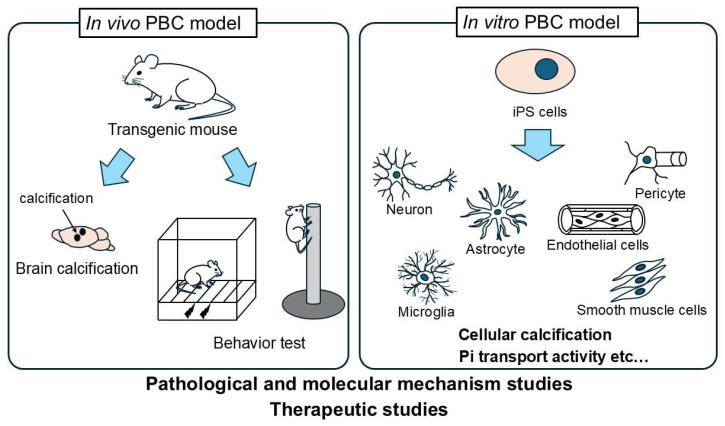 Figure 1
Peer Reviews
No public reviews on file for this paper yet. If you reviewed it on a platform where reviews are public (OpenReview, ICLR, NeurIPS, ICML), you can paste yours below so the community can read it here.
Videos
No videos yet. Explain this paper in a talk, walkthrough, or lecture? Add one.
Taxonomy
TopicsThyroid and Parathyroid Surgery · Parathyroid Disorders and Treatments · Oropharyngeal Anatomy and Pathologies