Characterization and Identification of the Ent-Kaurane Diterpenoids in Isodonis Excisoidis Herba Using UHPLC-LTQ-Orbitrap-MS
Xiaoya Sun, Lingxia Zhang, Conglong Lian, Suiqing Chen, Liping Dai, Yaozu Han

TL;DR
This paper identifies and characterizes ent-kaurane diterpenoids in a herbal medicine using advanced mass spectrometry techniques.
Contribution
The study provides a systematic characterization of ent-kaurane diterpenoids in Isodonis Excisoidis Herba using UHPLC-LTQ-Orbitrap-MS.
Findings
94 ent-kaurane diterpenoids were identified, including 48 potentially new compounds.
Fragmentation patterns were established for three types of ent-kaurane diterpenoids.
Specific ions and mass losses were observed for different structural classes of diterpenoids.
Abstract
Isodonis Excisoidis Herba (IEH) is a newly discovered herbal medicine used to treat esophageal cancer, chronic pharyngitis, and hepatitis, and ent-kaurane diterpenoids are its main active components. However, systematic studies on the chemical profile of ent-kaurane diterpenoids are lacking. In this study, UHPLC-LTQ-Orbitrap-MS was performed to investigate the fragmentation behaviors of three different types of ent-kaurane diterpenoids from IEH. Bridgehead-unsubstituted 7,20-epoxy-ent-kaurane diterpenoids yielded ions with typical losses of R7H, R1H, R14H, CH2O, CO, and R6H. The [M + NH4 − NH3 − R20]+ precursor ions at 331.1895 and the characteristic ions at m/z 313.1792, 295.1686, 285.1842, 277.1581, 267.1737, and 249.1632 were the most possible fragmentation pathways for bridgehead-substituted 7,20-epoxy-ent-kaurane diterpenoids. Fragmentation with the successive loss of multiple 18,…
Genes, proteins, chemicals, diseases, species, mutations and cell lines named across the full text — each resolved to its canonical identifier and authoritative record.
Click any figure to enlarge with its caption.
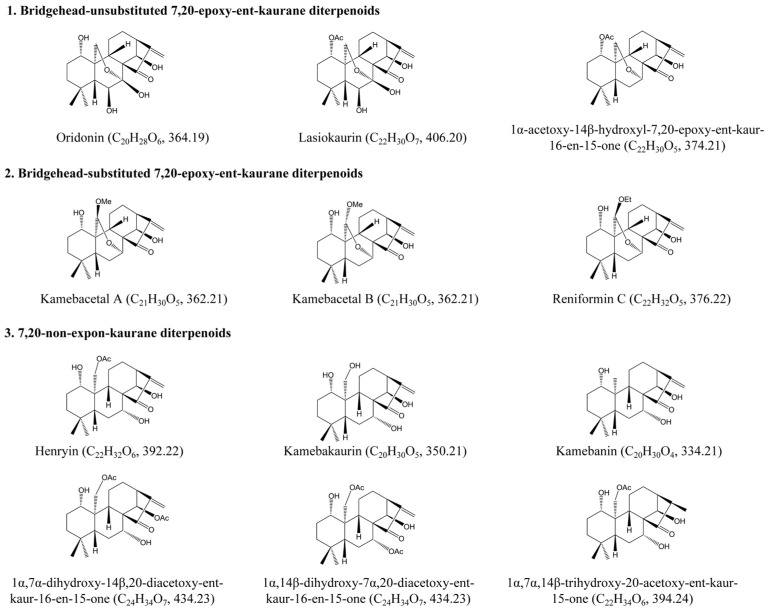 Figure 1
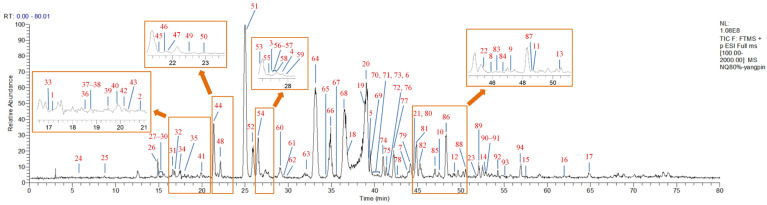 Figure 2
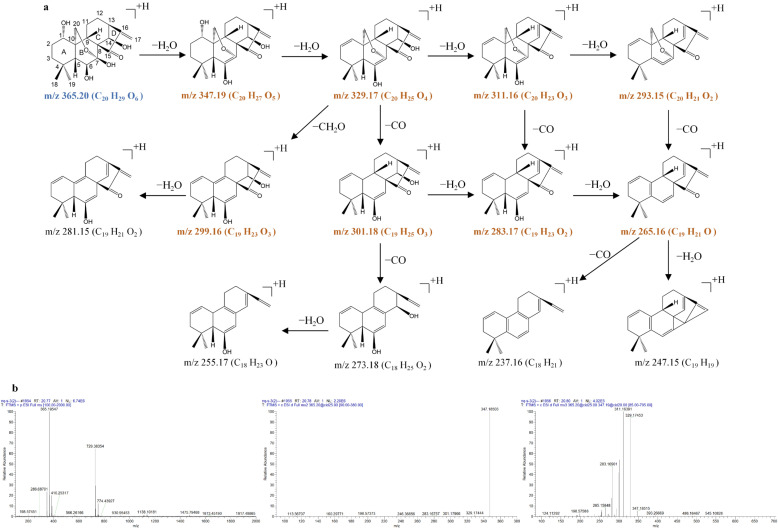 Figure 3
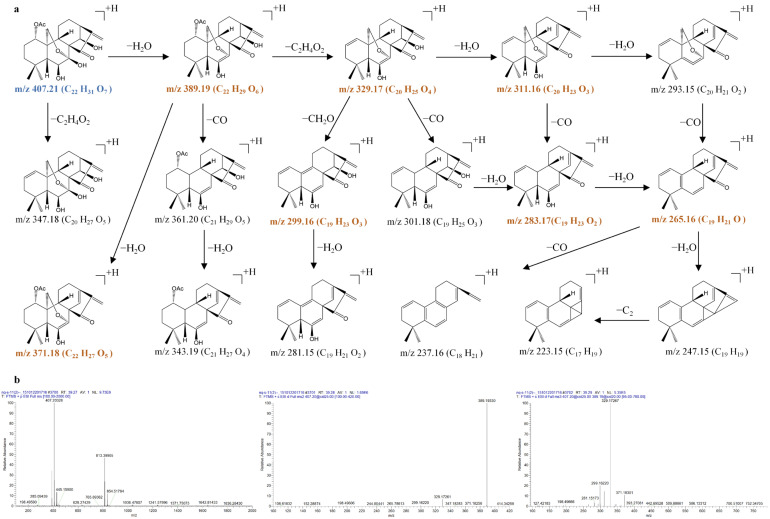 Figure 4
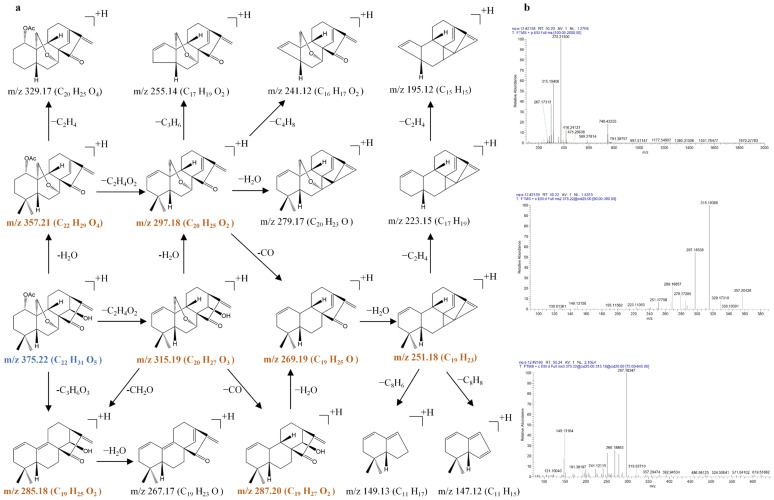 Figure 5
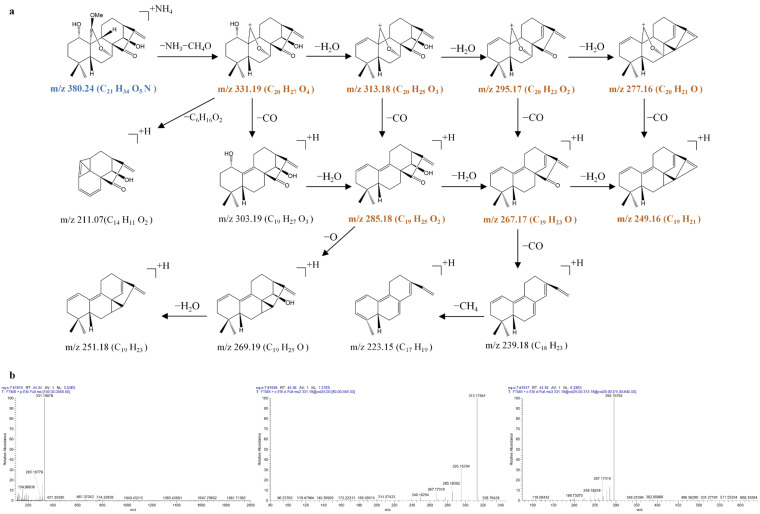 Figure 6
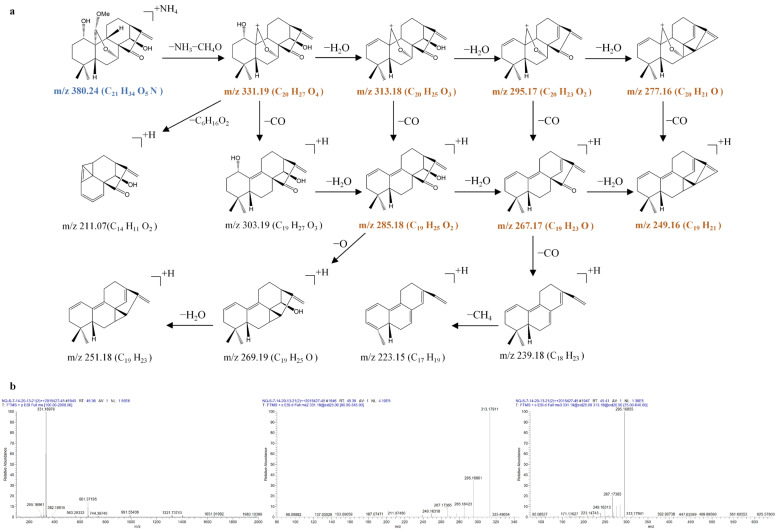 Figure 7
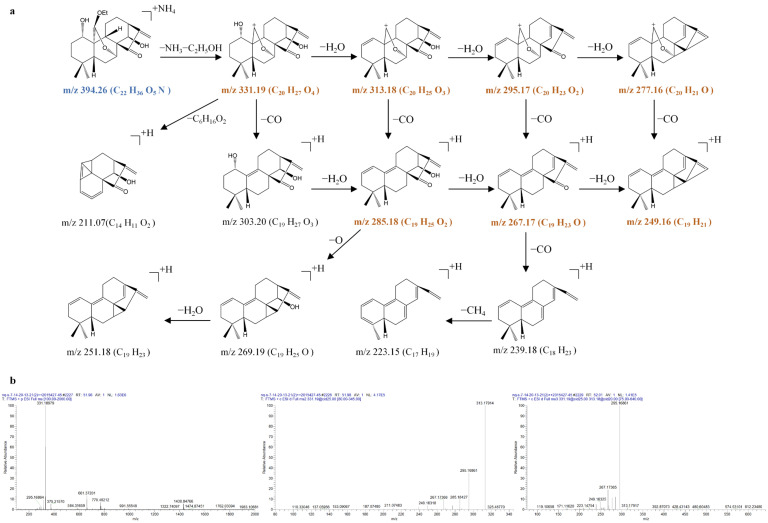 Figure 8
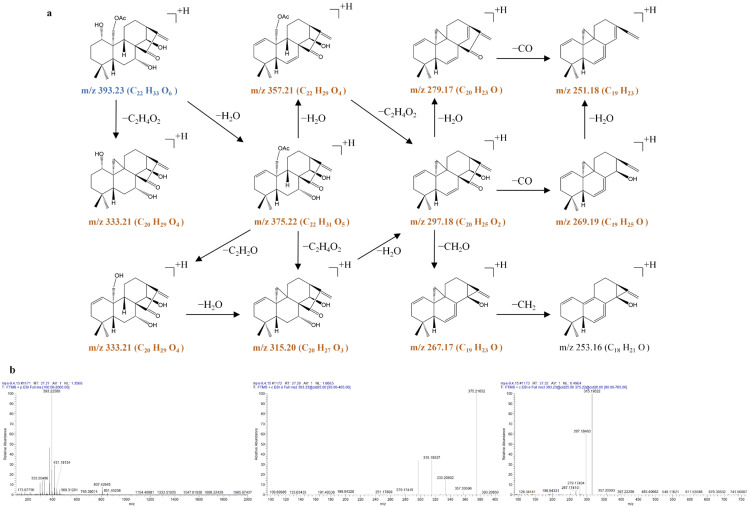 Figure 9
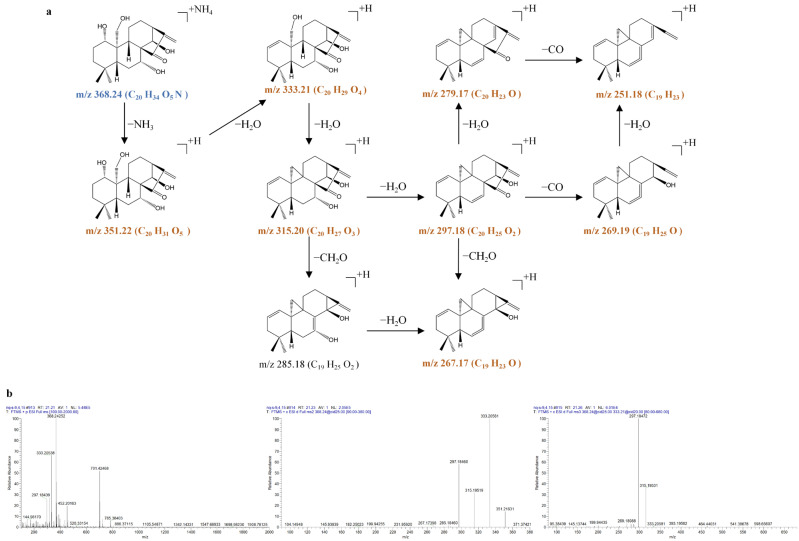 Figure 10
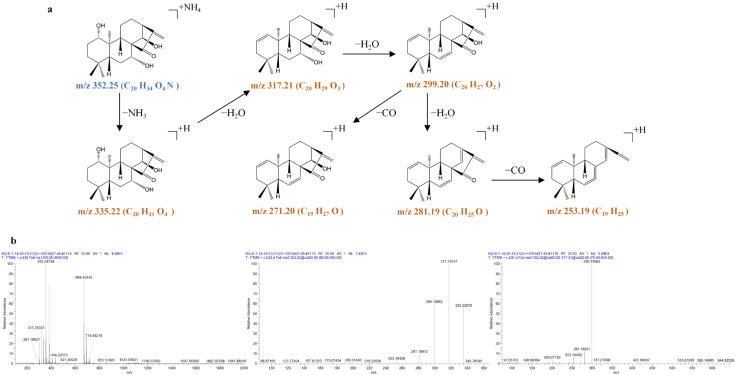 Figure 11
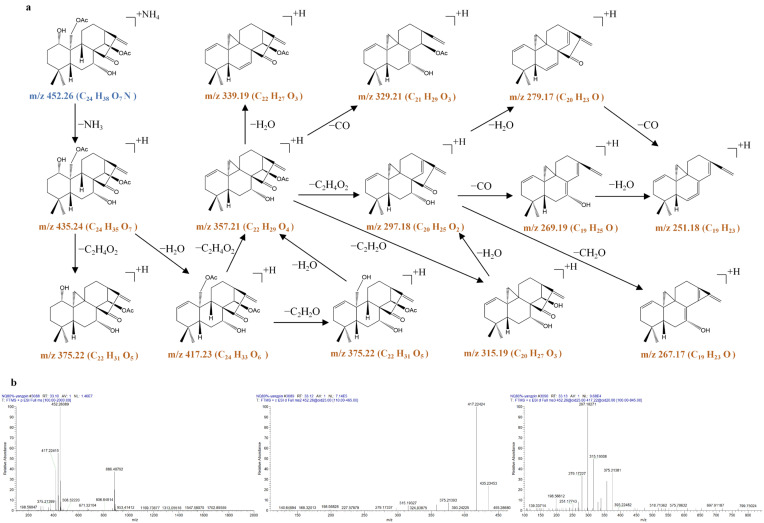 Figure 12
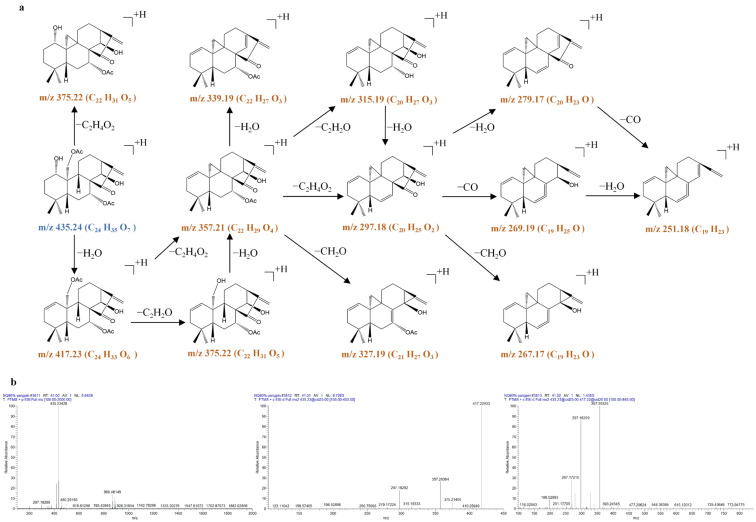 Figure 13
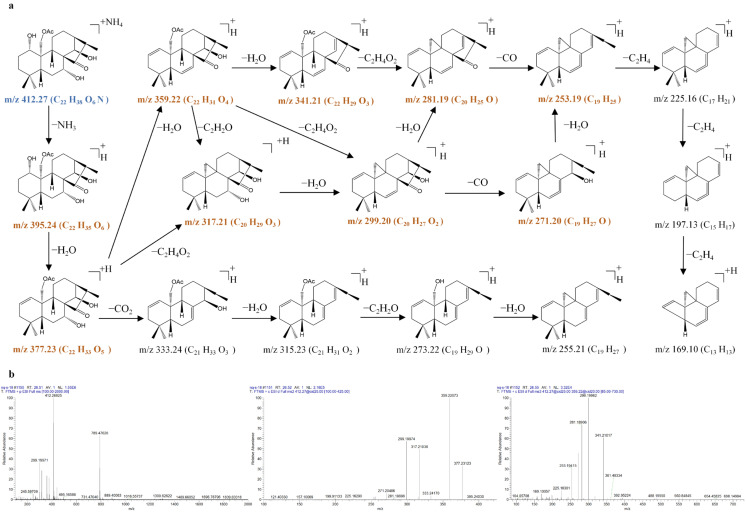 Figure 14
Peer Reviews
No public reviews on file for this paper yet. If you reviewed it on a platform where reviews are public (OpenReview, ICLR, NeurIPS, ICML), you can paste yours below so the community can read it here.
Videos
No videos yet. Explain this paper in a talk, walkthrough, or lecture? Add one.
Taxonomy
TopicsBioactive Natural Diterpenoids Research · Sesquiterpenes and Asteraceae Studies · Plant-derived Lignans Synthesis and Bioactivity