CRISPR/Cas9 Knockout Studies Implicate Phenazine-1-carboxylic Acid, but Not 2-Hydroxy Phenazine, in the Biocontrol Activity of Pseudomonas chlororaphis Subsp. phenazini Strain S1Bt23 Against Pythium arrhenomanes (Drechsler)
Mercy Akuma, Sylvia Ighem Chi, Renlin Xu, Indira Thapa, Aida Kebede, Barbara Blackwell, James Tabi Tambong

TL;DR
This study shows that phenazine-1-carboxylic acid, not 2-hydroxyphenazine, is responsible for the biocontrol activity of a Pseudomonas strain against a corn root rot pathogen.
Contribution
The study identifies PCA as the key biocontrol compound and reveals the role of phzO in protecting the bacteria from its own toxins.
Findings
PCA is essential for antagonism against Pythium arrhenomanes, while 2-OH-PHZ is not.
Deleting phzF eliminates both PCA and 2-OH-PHZ production and antagonistic activity.
Deleting phzO prevents 2-OH-PHZ production but does not affect biocontrol ability.
Abstract
Liquid chromatography–mass spectrometry analysis of Pseudomonas chlororaphis subsp. phenazini S1Bt23 extracts detected phenazine-1-carboxylic acid (PCA) and 2-hydroxyphenazine (2-OH-PHZ) as the main phenazine derivatives. We investigated their relative contributions to the antagonistic activity of strain S1Bt23 against Pythium arrhenomanes, a root rot pathogen of corn. CRISPR-Cas9 knockouts were carried out on the phzF gene, required for PCA synthesis, and the phzO gene, which is involved in converting PCA to 2-OH-PHZ. Deletion of the phzF gene abrogated the production of PCA and 2-OH-PHZ, and the ΔphzF mutant lost the antagonism against Pythium arrhenomanes. In contrast, deletion of the phzO gene created a 2-OH-PHZ-negative mutant with intact antagonistic ability. Concordantly, S1Bt23 wild type and the ΔphzO mutant, but not the ΔphzF mutant, significantly bioprotected corn seeds of a…
Genes, proteins, chemicals, diseases, species, mutations and cell lines named across the full text — each resolved to its canonical identifier and authoritative record.
Click any figure to enlarge with its caption.
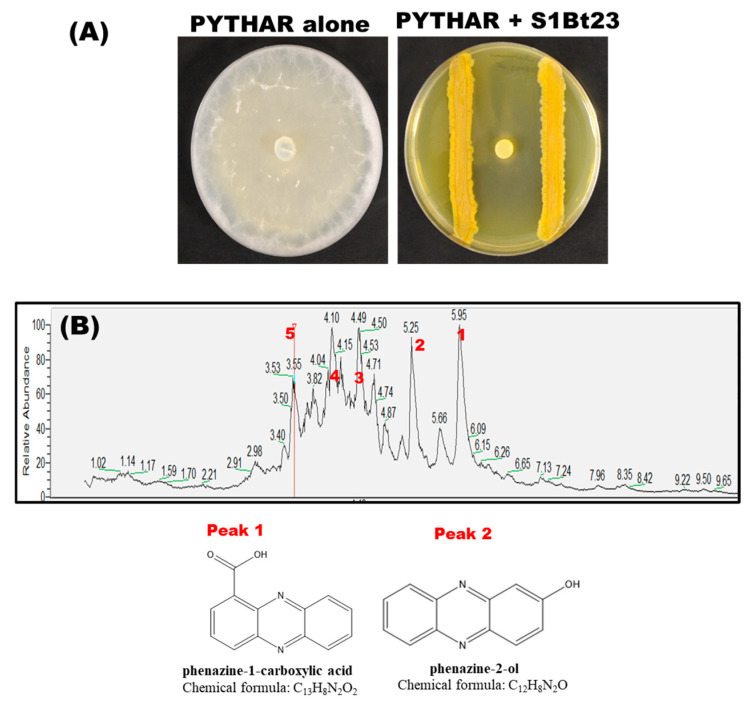 Figure 1
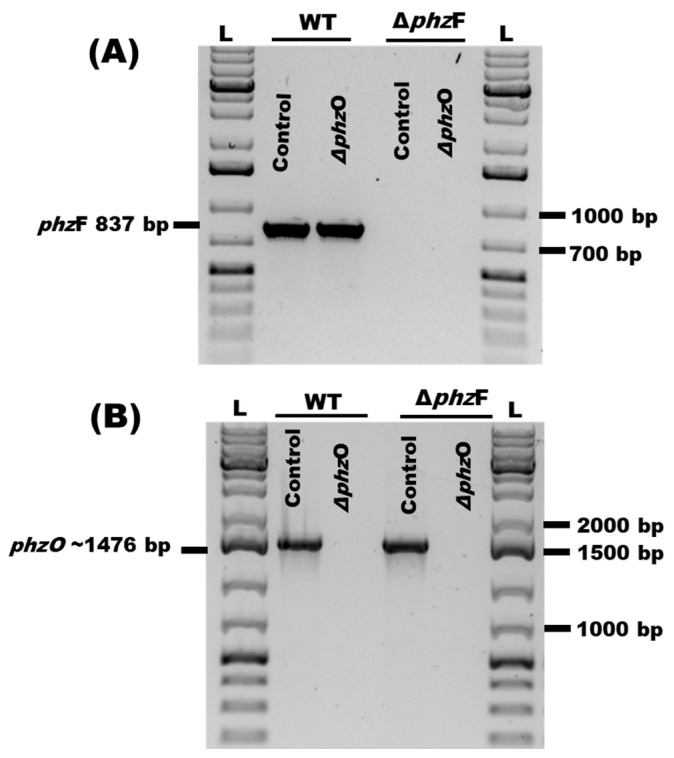 Figure 2
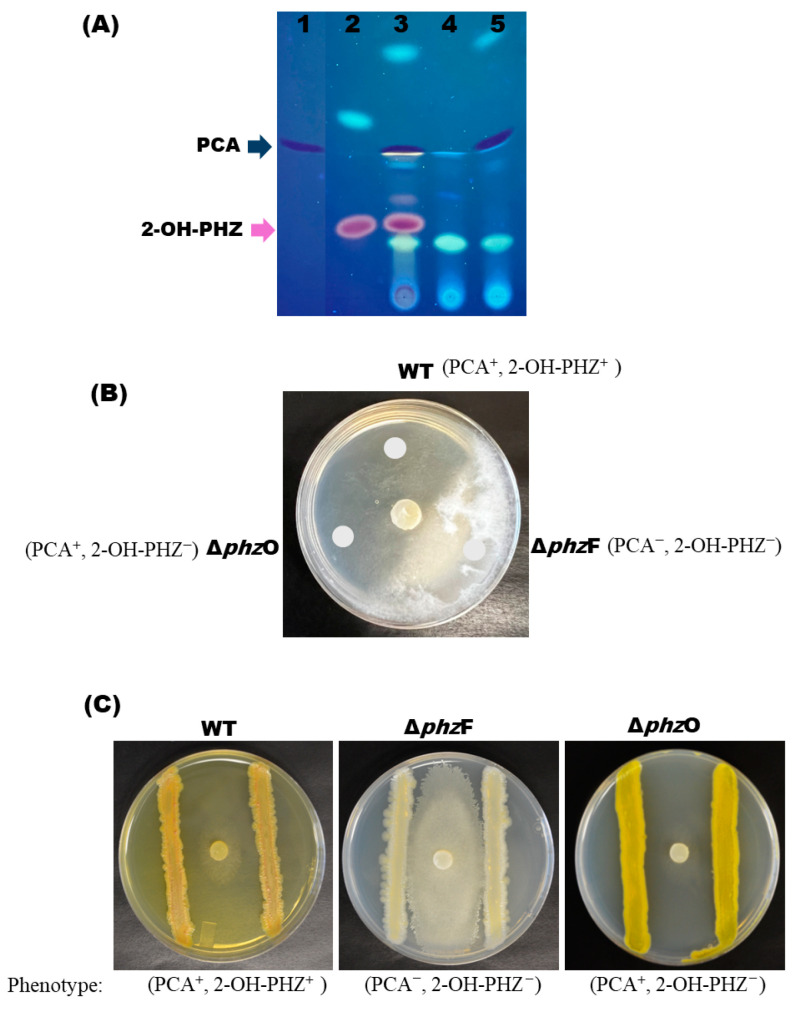 Figure 3
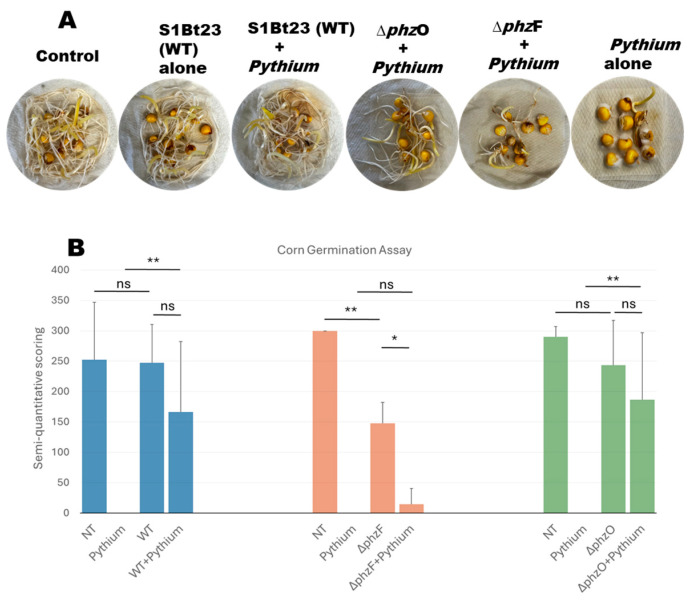 Figure 4
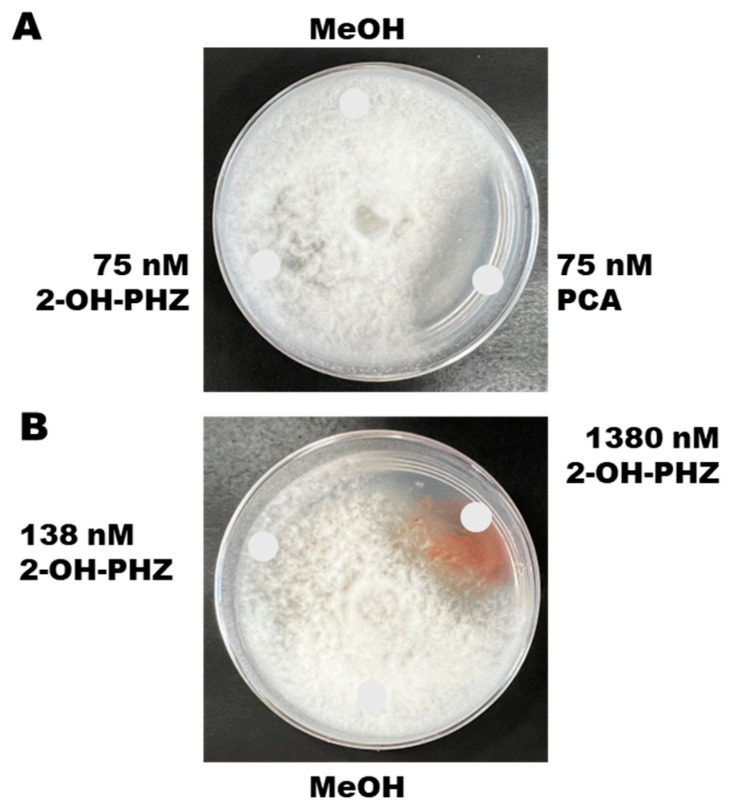 Figure 5
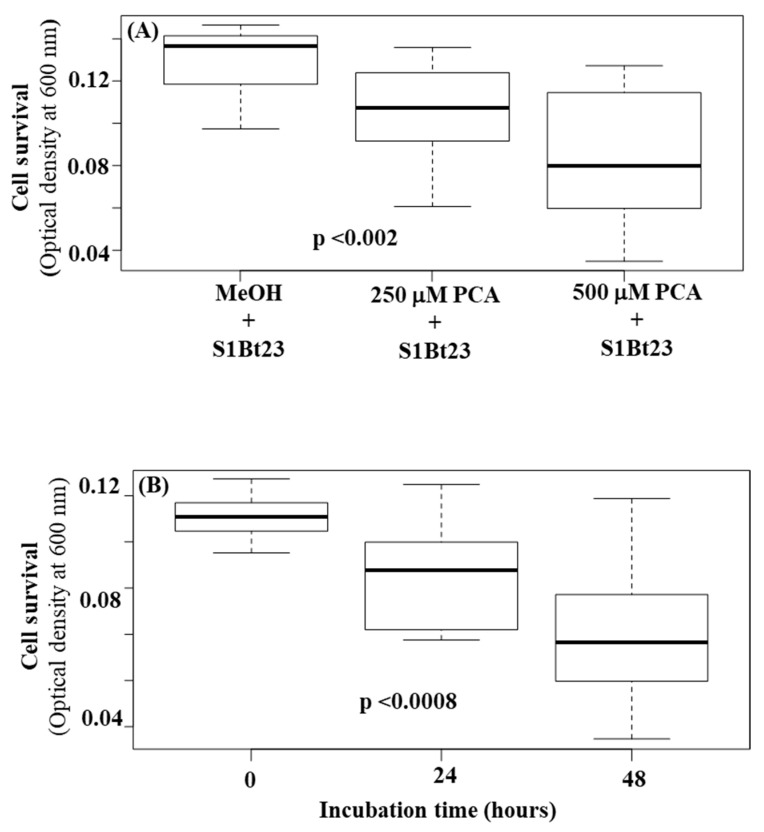 Figure 6
Peer Reviews
No public reviews on file for this paper yet. If you reviewed it on a platform where reviews are public (OpenReview, ICLR, NeurIPS, ICML), you can paste yours below so the community can read it here.
Videos
No videos yet. Explain this paper in a talk, walkthrough, or lecture? Add one.
Taxonomy
TopicsPlant-Microbe Interactions and Immunity · CRISPR and Genetic Engineering · Plant Pathogens and Resistance