Plant-Derived Secondary Metabolites Tetrahydropalmatine and Rutaecarpine Alleviate Paclitaxel-Induced Neuropathic Pain via TRPV1 and TRPM8 Modulation
Keun-Tae Park, Hyesang Yun, Juyeol Kang, Jae-Chul Lee, Woojin Kim

TL;DR
This study shows that plant compounds THP and rutaecarpine reduce neuropathic pain caused by paclitaxel by affecting TRPV1 and TRPM8 pathways.
Contribution
The study identifies CY and ER alkaloids as novel natural agents for managing chemotherapy-induced neuropathy via TRP channel modulation.
Findings
CY and ER extracts reduced cold and mechanical allodynia in a dose-dependent manner.
THP and rutaecarpine together showed stronger analgesic effects than when used alone.
TRPV1 and TRPM8 pathways were confirmed to be involved in the observed analgesic effects.
Abstract
Background: Chemotherapy-induced peripheral neuropathy (CIPN) is a major dose-limiting adverse effect of paclitaxel and is characterized by cold and mechanical allodynia. Effective therapeutic strategies for CIPN remain limited. This study evaluated the analgesic potential of Corydalis yanhusuo (CY) and Evodia rutaecarpa (ER), as well as their major alkaloids tetrahydropalmatine (THP) and rutaecarpine, in a mouse model of paclitaxel-induced neuropathic pain. Methods: Neuropathic pain was induced by paclitaxel administration (2 mg/kg, i.p., four injections). CY and ER extracts were orally administered at doses of 100 or 300 mg/kg, either alone or in combination, and cold and mechanical allodynia were assessed from days 0 to 8. The analgesic effects of THP and rutaecarpine were also examined. Gene and protein expression analyses were performed to evaluate the involvement of TRPV1 and…
Genes, proteins, chemicals, diseases, species, mutations and cell lines named across the full text — each resolved to its canonical identifier and authoritative record.
Click any figure to enlarge with its caption.
 Figure 1
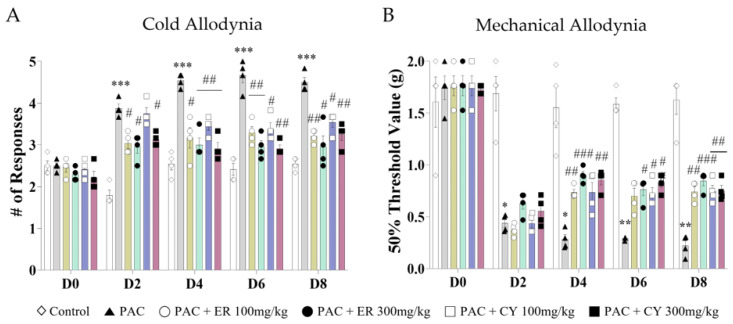 Figure 2
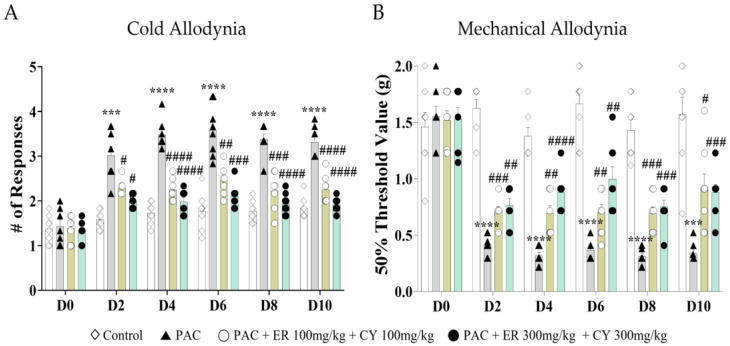 Figure 3
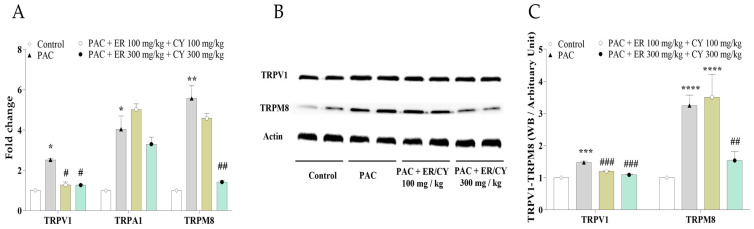 Figure 4
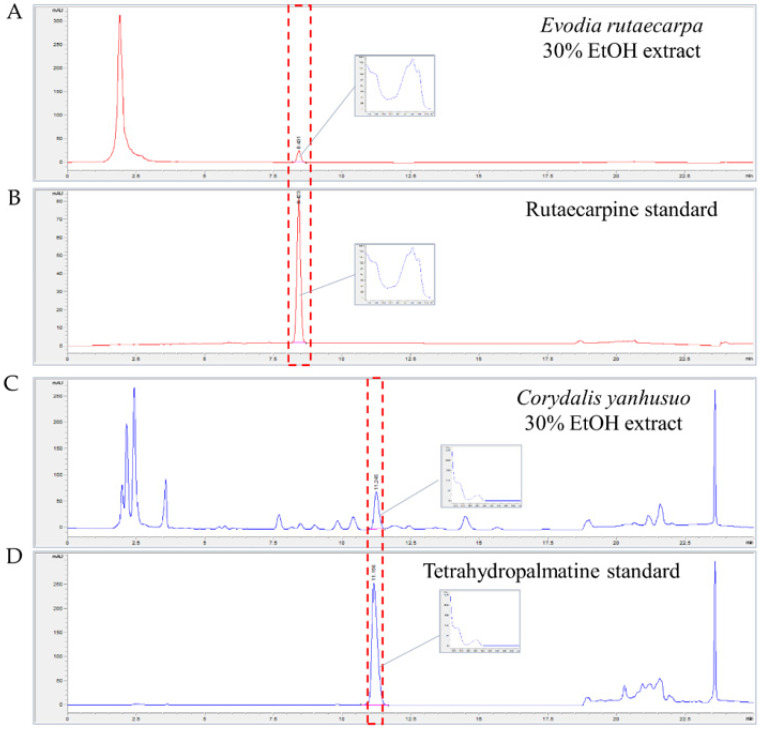 Figure 5
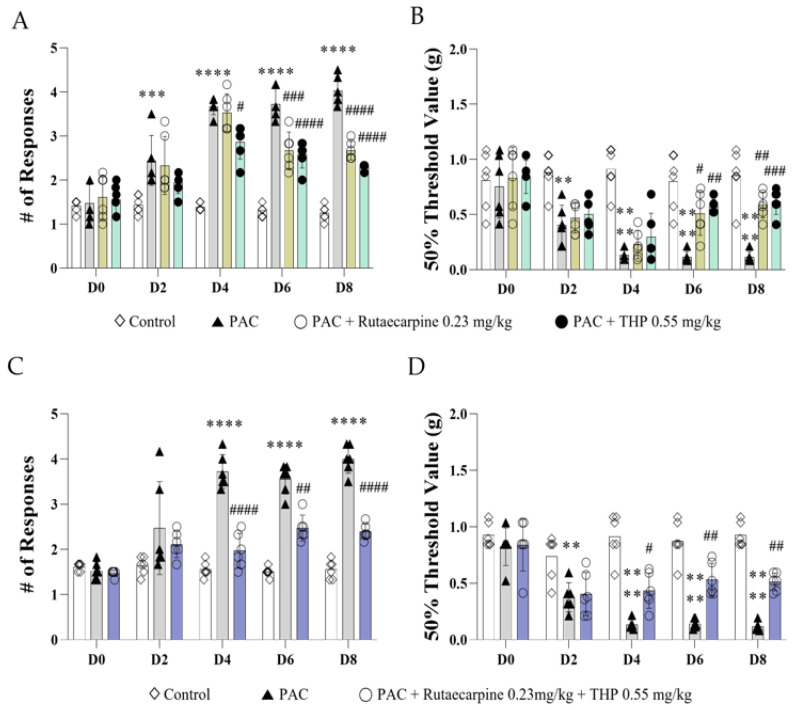 Figure 6
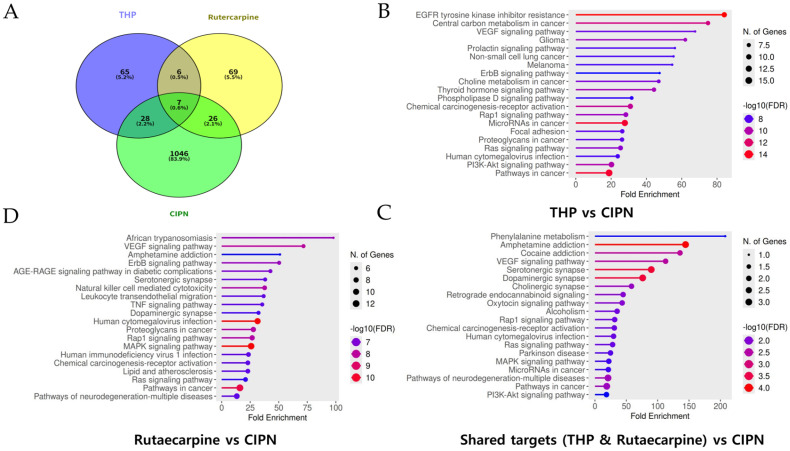 Figure 7
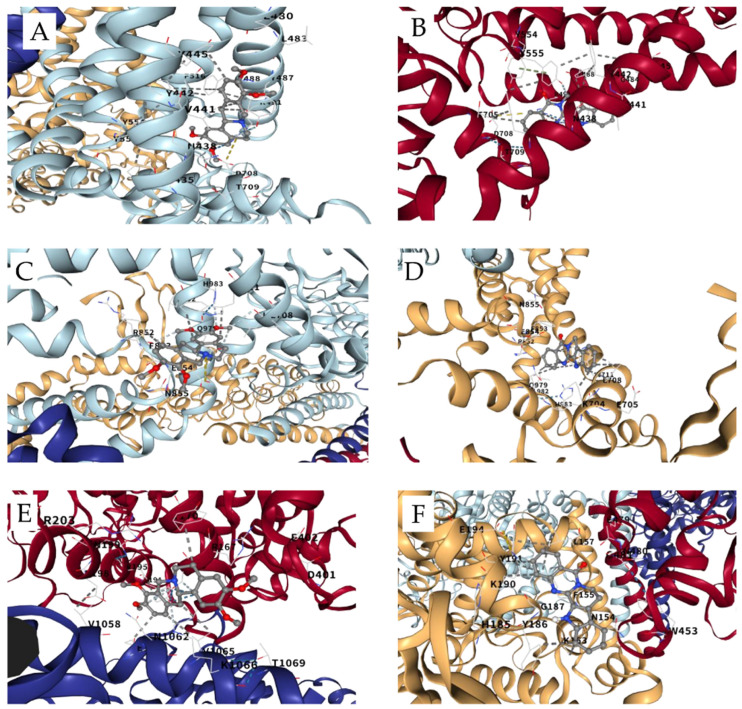 Figure 8
Peer Reviews
No public reviews on file for this paper yet. If you reviewed it on a platform where reviews are public (OpenReview, ICLR, NeurIPS, ICML), you can paste yours below so the community can read it here.
Videos
No videos yet. Explain this paper in a talk, walkthrough, or lecture? Add one.
Taxonomy
TopicsBerberine and alkaloids research · Pain Mechanisms and Treatments · Ion Channels and Receptors