Overcoming Target Drift: Development and Validation of a One-Step TaqMan qPCR Assay for Epidemiological Surveillance of Carpione rhabdovirus Circulating in Southern China
Yucong Huang, Zhiyuan Huang, Haoyu Wang, Xiaojuan Li, Xin Liu, Huajian Lin, Zhi Zhang, Xiaofeng Chen, Jichang Jian, Heng Sun

TL;DR
Researchers developed a reliable one-step qPCR test to detect Carpione rhabdovirus in marine fish, improving surveillance in southern China's aquaculture.
Contribution
A one-step TaqMan qPCR assay was developed using dual nucleic acid standards to overcome target drift and improve detection efficiency.
Findings
The assay showed strong linearity (R2 > 0.99) and amplification efficiencies between 90% and 110%.
Detection limits were 2 copies per reaction for plasmid DNA and 20 copies for in vitro–transcribed RNA.
The assay demonstrated no cross-reactivity and high repeatability (coefficients of variation below 2.0%).
Abstract
Carpione rhabdovirus (CAPRV) is an emerging virus within the family Rhabdoviridae, posing potential threats to aquaculture species such as golden pompano (Trachinotus anak). However, since the 21st century, and for CAPRV strains isolated from marine fish, only a single CAPRV2023 sequence has previously been available in public databases, with no additional sequences reported. Because the virus undergoes genetic variation, relying on this single sequence likely introduced mismatches or off-target risks in earlier detection assay designs. Notably, the previously developed two-step N-targeting detection assay was designed based solely on that single CAPRV2023 sequence. Consequently, this study involved determining and analyzing the N gene sequences from CAPRV isolates gathered from 2023 to 2025, with the aim of pinpointing conserved regions for assay development, and sequence comparisons…
Genes, proteins, chemicals, diseases, species, mutations and cell lines named across the full text — each resolved to its canonical identifier and authoritative record.
Click any figure to enlarge with its caption.
 Figure 1
 Figure 2
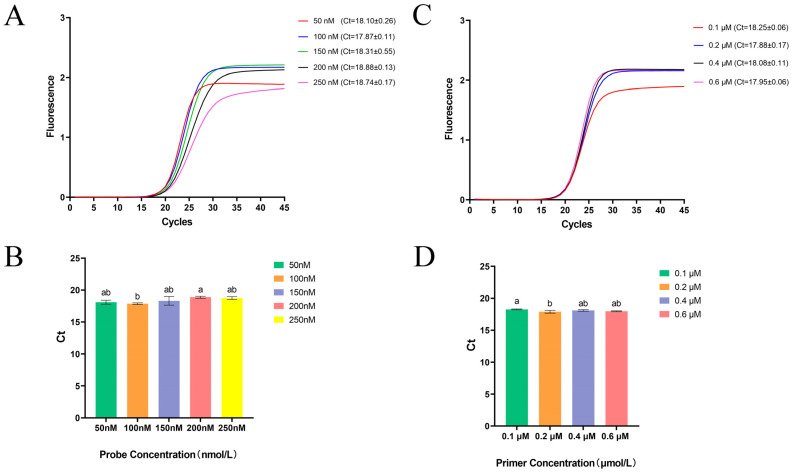 Figure 3
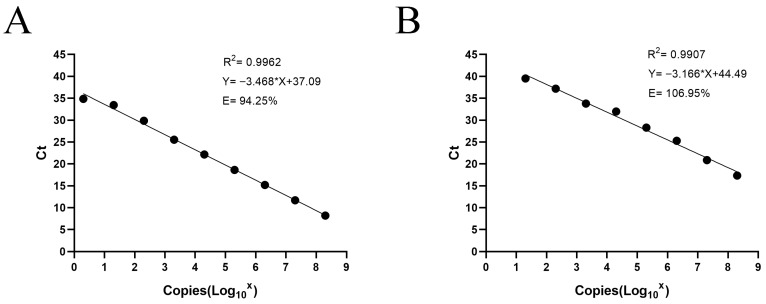 Figure 4
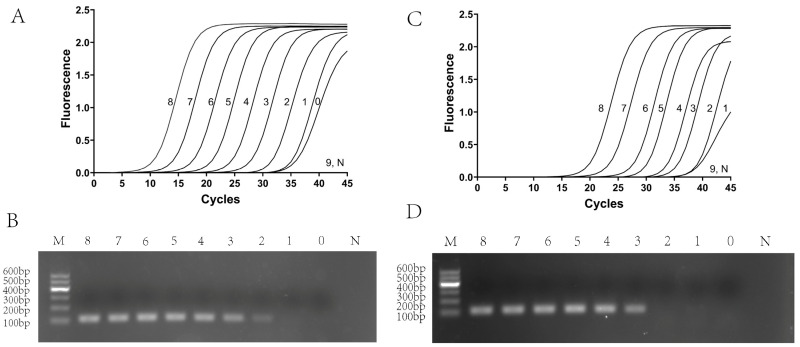 Figure 5
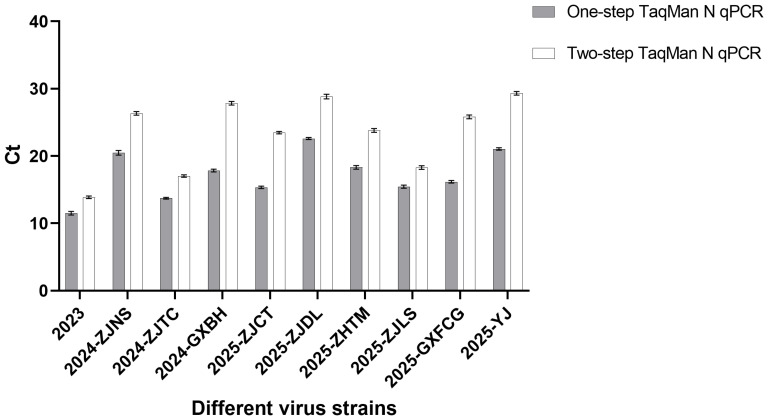 Figure 6
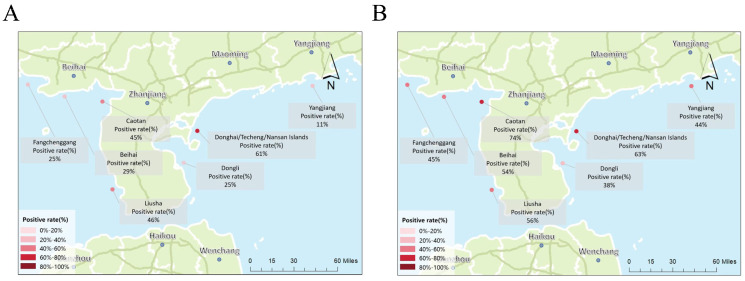 Figure 7
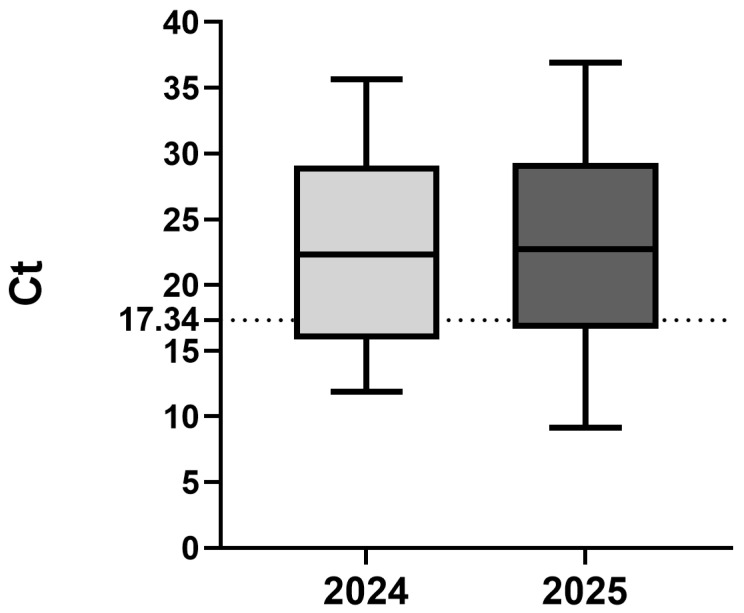 Figure 8
Peer Reviews
No public reviews on file for this paper yet. If you reviewed it on a platform where reviews are public (OpenReview, ICLR, NeurIPS, ICML), you can paste yours below so the community can read it here.
Videos
No videos yet. Explain this paper in a talk, walkthrough, or lecture? Add one.
Taxonomy
TopicsAquaculture disease management and microbiota · Invertebrate Immune Response Mechanisms · Bacteriophages and microbial interactions