Computational Analysis of the Asymmetric Hydrogenation of γ-Ketoacids: Weak Interactions and Kinetics
Ivan S. Golovanov, Evgeny V. Pospelov

TL;DR
This paper uses computational methods to study how a specific nickel catalyst works in hydrogenating γ-keto acids, focusing on reaction steps and stereoselectivity.
Contribution
The study identifies the rate-limiting step and demonstrates how weak interactions influence stereoselectivity in asymmetric hydrogenation.
Findings
The rate-limiting step is hydrogen atom transfer to the carbonyl group.
Weak interactions significantly affect the stereoselectivity of the reaction.
NCI and sobEDAw analyses reveal the role of non-covalent interactions in stereoselection.
Abstract
A computational study of the mechanism of asymmetric hydrogenation of γ-keto acids with the Ni(S,S)-QuinoxP* system was conducted. The main steps of the reaction mechanism were determined, including the formation of the NiH(S,S-QuinoxP*)+ complex starting from a γ-keto acid molecule and the involvement of the hydrogen “metathesis” step. The rate-limiting and stereo-determining step of the reaction was identified as the transfer of a hydrogen atom from the catalytic particle to the carbonyl group of the substrate molecule. The stereochemical outcome of the process was calculated. The influence of weak interactions on the stereoselectivity of the process was demonstrated using NCI and sobEDAw analyses.
Genes, proteins, chemicals, diseases, species, mutations and cell lines named across the full text — each resolved to its canonical identifier and authoritative record.
Click any figure to enlarge with its caption.
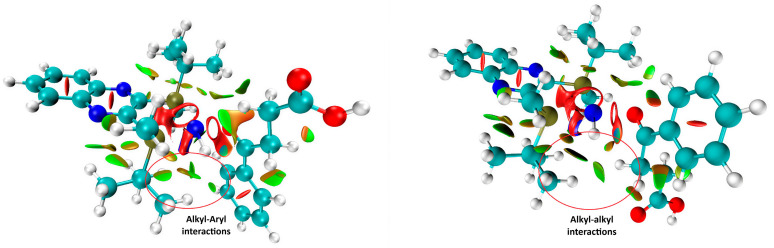 Figure 1
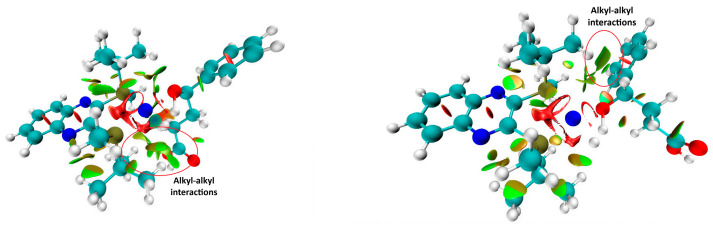 Figure 2
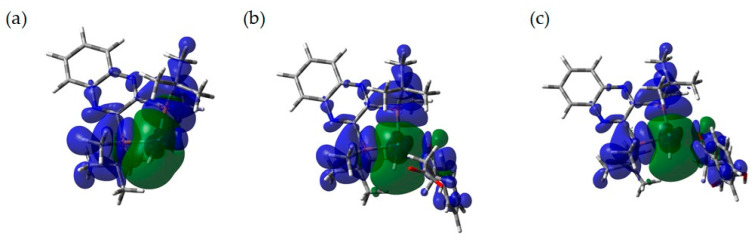 Figure 3
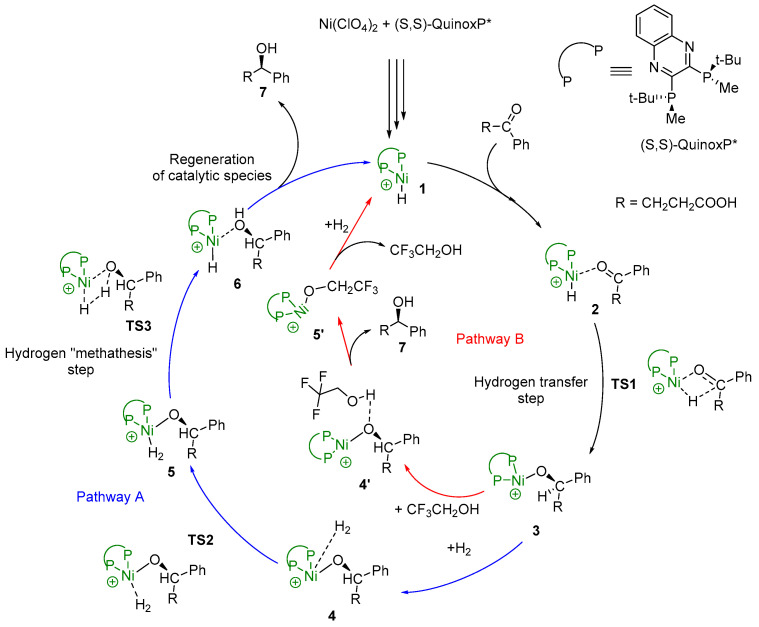 Figure 4
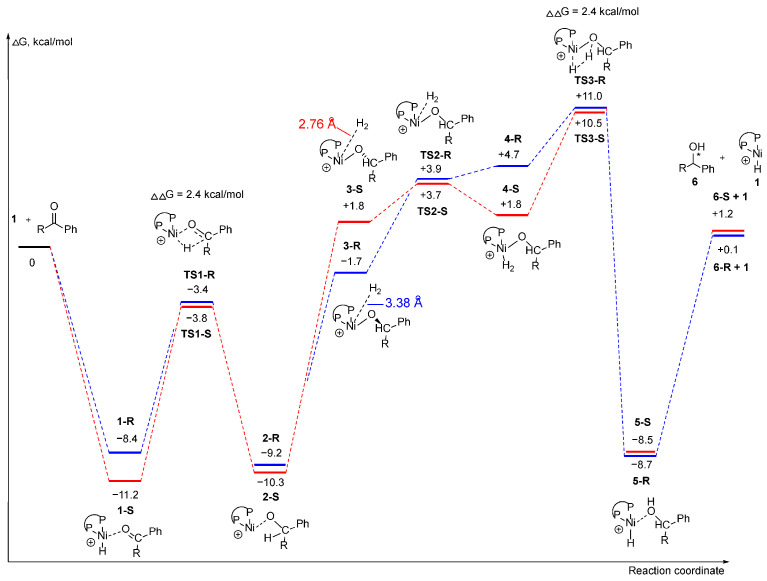 Figure 5
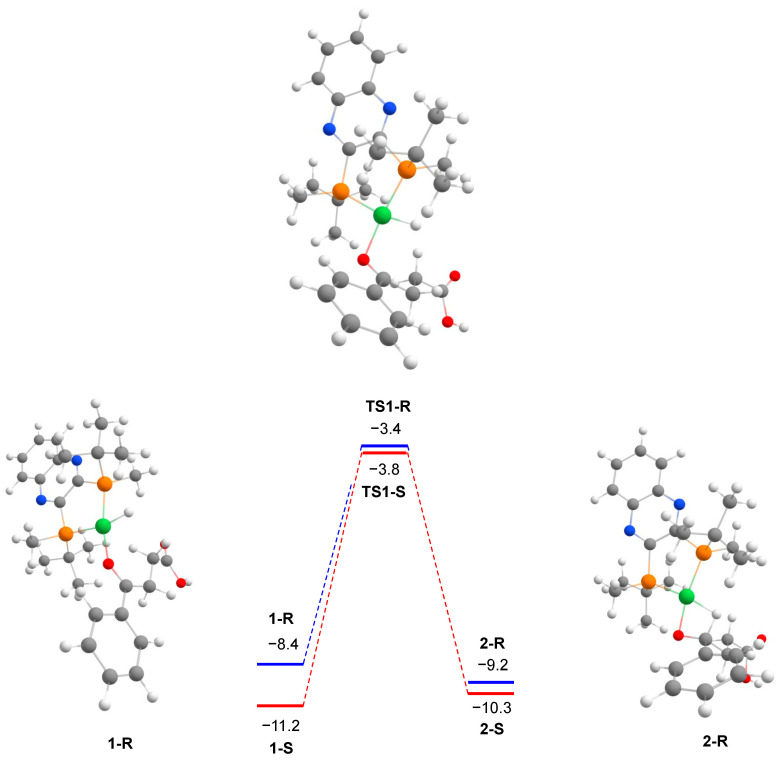 Figure 6
Peer Reviews
No public reviews on file for this paper yet. If you reviewed it on a platform where reviews are public (OpenReview, ICLR, NeurIPS, ICML), you can paste yours below so the community can read it here.
Videos
No videos yet. Explain this paper in a talk, walkthrough, or lecture? Add one.
Taxonomy
TopicsAsymmetric Hydrogenation and Catalysis · Catalysis for Biomass Conversion · Cyclopropane Reaction Mechanisms