Research Progress of Hyperfluorescent Organic Electroluminescent Devices
Yaxin Li, Jiaqi Wang, Chaoteng Pan, Xin Jiang, He Dong, Jin Wang, Gang Zhang

TL;DR
This paper reviews the development of hyperfluorescent OLED materials, which offer high efficiency and color purity for display technology.
Contribution
The paper provides a comprehensive review of hyperfluorescent materials, focusing on their molecular design and luminescence mechanisms.
Findings
Hyperfluorescent materials achieve high efficiency and color purity in OLEDs.
These materials address issues like low color purity and efficiency roll-off seen in TADF materials.
They show great potential for display technology applications.
Abstract
Organic light-emitting diodes (OLEDs) have the advantages of high efficiency and high color purity, which gives them great potential and application prospects in the field of display technology, and thus they have been of wide interest for scholars and industry. Due to their nature, when using the first generation of fluorescent materials, only 25% of the excitons are used, while the rest are wasted, meaning the device efficiency does not exceed 25%. The second generation of phosphorescent materials solves this problem by utilizing 25% singlet excitons while utilizing 75% triplet excitons, achieving 100% internal quantum efficiency. Therefore, a third generation of materials, namely Thermally Activated Delayed Fluorescence (TADF) materials, has been developed, and these are able to use the small singlet–triplet energy gap to allow excitons on the triplet state to upconvert back to the…
Click any figure to enlarge with its caption.
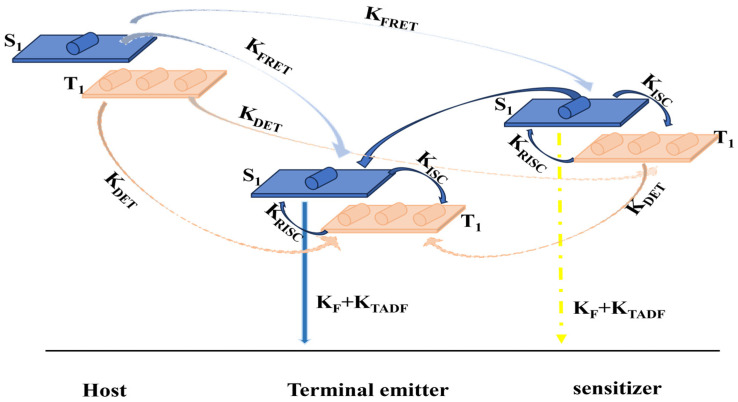 Figure 1
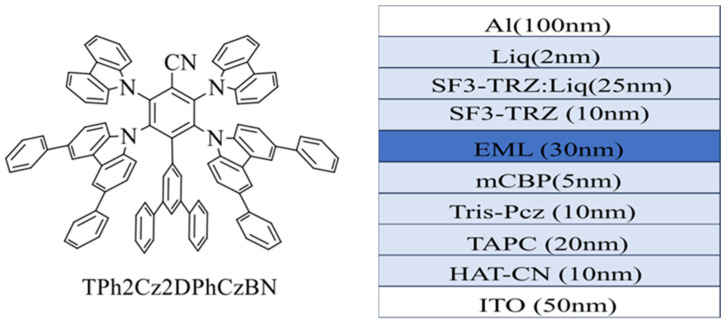 Figure 2
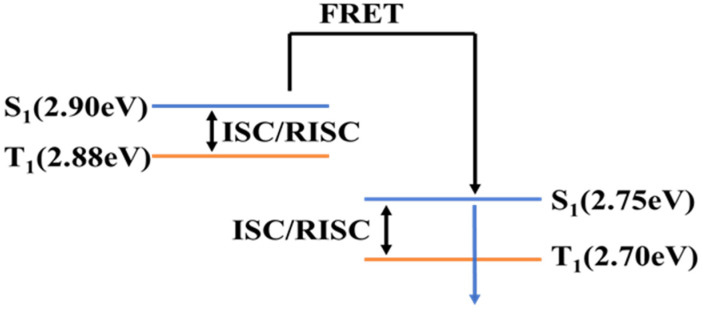 Figure 3
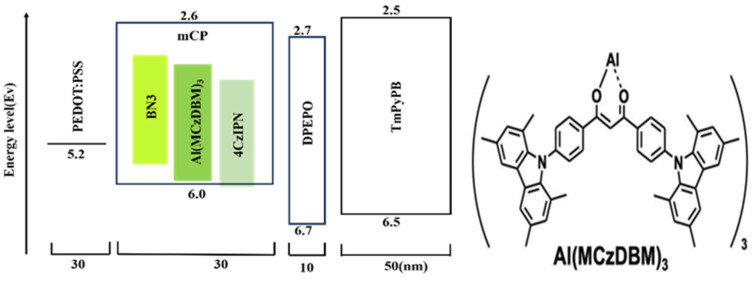 Figure 4
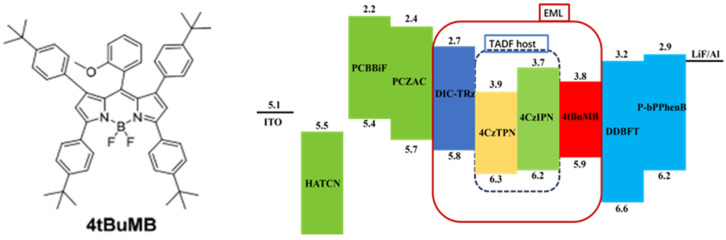 Figure 5
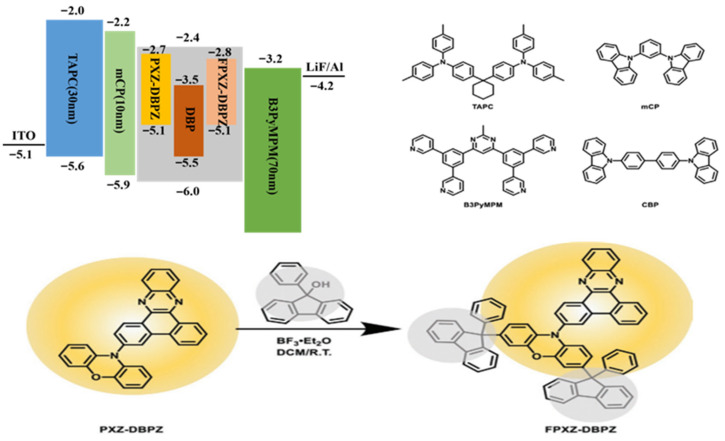 Figure 6
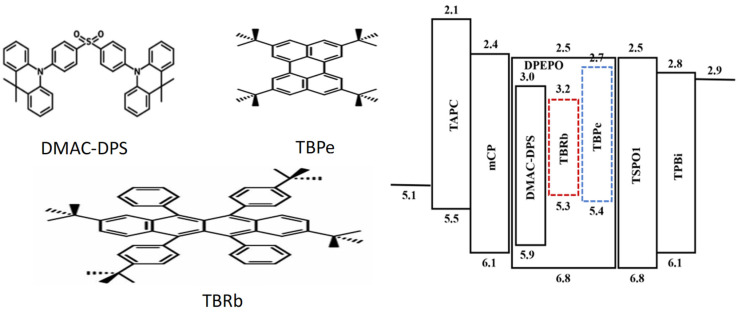 Figure 7
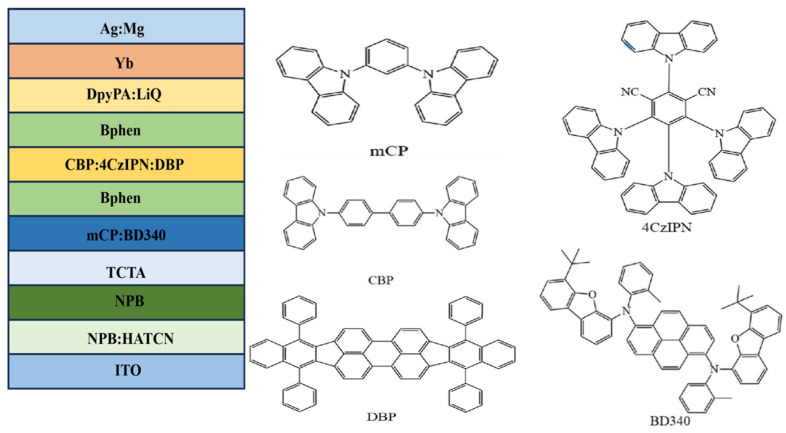 Figure 8
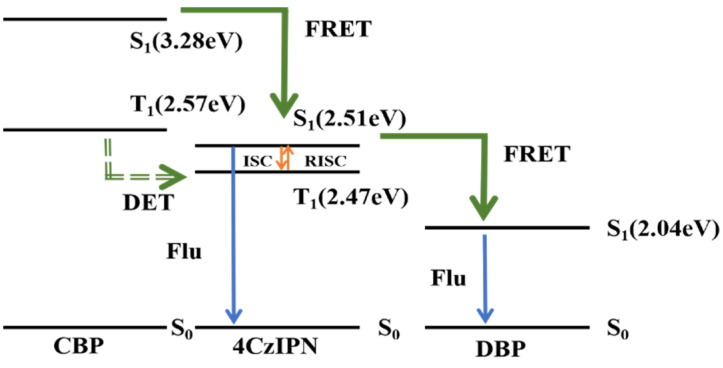 Figure 9
Peer Reviews
No public reviews on file for this paper yet. If you reviewed it on a platform where reviews are public (OpenReview, ICLR, NeurIPS, ICML), you can paste yours below so the community can read it here.
Videos
No videos yet. Explain this paper in a talk, walkthrough, or lecture? Add one.
Taxonomy
TopicsOrganic Light-Emitting Diodes Research · Luminescence and Fluorescent Materials · Lanthanide and Transition Metal Complexes