Human Toxoplasma gondii Seroprevalence in the Canary Islands: Implications for One Health Surveillance and Control
Eligia González-Rodríguez, José Alberto Montoya-Alonso, Kevin M. Santana-Hernández, Elena Carretón, Myriam R. Ventura, Eligia Rodríguez-Ponce

TL;DR
This study finds that 32.3% of people in the Canary Islands have been exposed to Toxoplasma gondii, with higher rates in older adults and western islands, highlighting the need for improved public health strategies.
Contribution
The study provides the first comprehensive assessment of T. gondii seroprevalence in the Canary Islands and identifies key risk factors.
Findings
Seroprevalence of T. gondii was 32.3% in the Canary Islands, with the highest rates in western islands like La Palma.
Age and climate were significant predictors of T. gondii seropositivity, with older adults and temperate cold isoclimates showing higher prevalence.
The decline in seroprevalence compared to historical data suggests improvements in hygiene and public health measures.
Abstract
Toxoplasma gondii is a globally significant foodborne parasite, yet epidemiological data in Spain are limited. This study provides the first comprehensive assessment of human T. gondii seroprevalence across the Canary Islands and identifies key risk factors. A total of 1223 serum samples were tested for anti-T. gondii IgG antibodies using ELISA. Demographic and geographic data were recorded. Overall seroprevalence was 32.3%, with no significant differences between sexes. Geographic variation was notable: the highest seroprevalence occurred in the western islands (La Palma 52.4%) and the lowest in the eastern islands (Gran Canaria 17.6%). Seropositivity increased progressively with age, ranging from 0% in children (0–15 years) to 51.3% in individuals over 60 years. Climatic factors also influenced exposure, with the temperate cold isoclimate associated with higher seroprevalence and arid…
Genes, proteins, chemicals, diseases, species, mutations and cell lines named across the full text — each resolved to its canonical identifier and authoritative record.
Click any figure to enlarge with its caption.
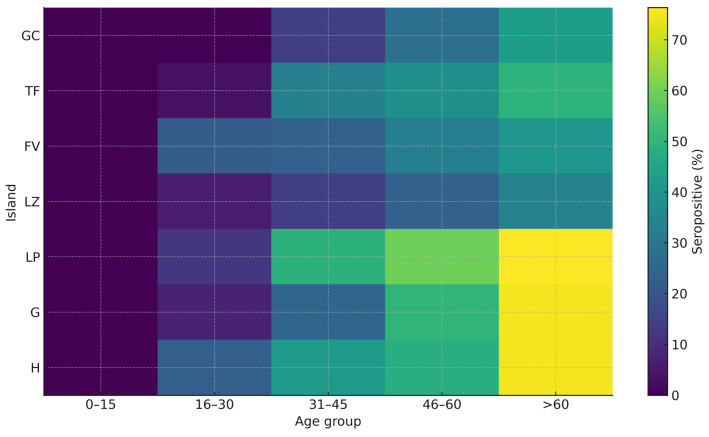 Figure 1
Peer Reviews
No public reviews on file for this paper yet. If you reviewed it on a platform where reviews are public (OpenReview, ICLR, NeurIPS, ICML), you can paste yours below so the community can read it here.
Videos
No videos yet. Explain this paper in a talk, walkthrough, or lecture? Add one.
Taxonomy
TopicsToxoplasma gondii Research Studies · Parasitic Infections and Diagnostics · Parasitic infections in humans and animals