Fermented Plant-Based Foods and Postbiotics for Glycemic Control—Microbial Biotransformation of Phytochemicals
Emilia Cevallos-Fernández, Elena Beltrán-Sinchiguano, Belén Jácome, Tatiana Quintana, Nadya Rivera

TL;DR
This review explores how fermented plant-based foods may help control blood sugar through microbial changes to phytochemicals and postbiotic effects.
Contribution
The paper systematically maps microbial biotransformations and postbiotic signatures in plant-based ferments to glycemic and metabolic outcomes.
Findings
Fermented foods generate bioactive compounds like γ-PGA and phenolic acids that inhibit starch digestion and improve gut-liver signaling.
Animal studies show improved glucose tolerance and insulin sensitivity with fermented diets, but human effects are modest and context-dependent.
Natto, sourdough breads, and specific kombucha formulations show strongest early glycemic attenuation in people with impaired glucose regulation.
Abstract
Plant-based fermented foods are increasingly promoted for glycemic control, yet their mechanisms and clinical impact remain incompletely defined. This narrative review synthesizes mechanistic, preclinical, and human data for key matrices—kimchi and other fermented vegetables, tempeh/miso/natto, and related legume ferments, kombucha and fermented teas, plant-based kefir, and cereal/pulse sourdoughs. Across these systems, microbial β-glucosidases, esterases, tannases, and phenolic-acid decarboxylases remodel polyphenols toward more bioaccessible aglycones and phenolic acids, while lactic and acetic fermentations generate organic acids, exopolysaccharides, bacterial cellulose, γ-polyglutamic acid, γ-aminobutyric acid, and bioactive peptides. We map these postbiotic signatures onto proximal mechanisms—α-amylase/α-glucosidase inhibition, viscosity-driven slowing of starch digestion, gastric…
Genes, proteins, chemicals, diseases, species, mutations and cell lines named across the full text — each resolved to its canonical identifier and authoritative record.
Click any figure to enlarge with its caption.
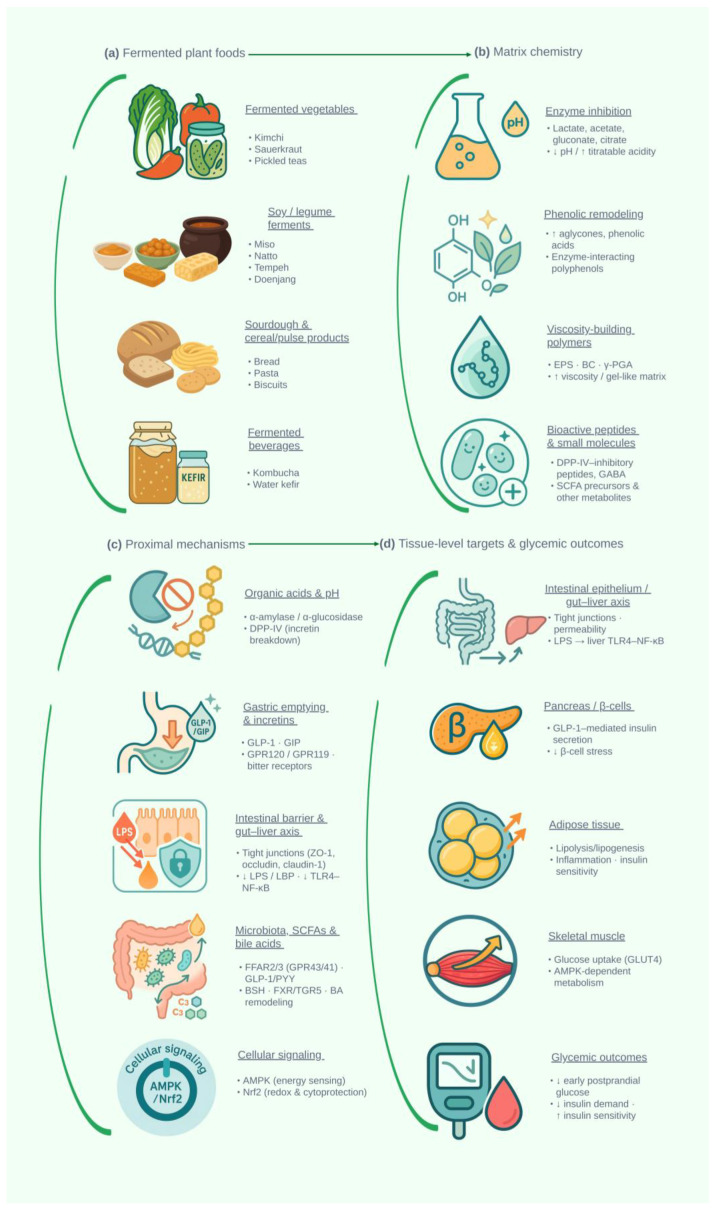 Figure 1
Peer Reviews
No public reviews on file for this paper yet. If you reviewed it on a platform where reviews are public (OpenReview, ICLR, NeurIPS, ICML), you can paste yours below so the community can read it here.
Videos
No videos yet. Explain this paper in a talk, walkthrough, or lecture? Add one.
Taxonomy
TopicsTea Polyphenols and Effects · GABA and Rice Research · Biopolymer Synthesis and Applications