Personalized Mortality Risk Stratification in ALD- and MASLD-Related Hepatocellular Carcinoma Using a Machine Learning Approach
Miguel Suárez, Sergio Gil-Rojas, Pablo Martínez-Blanco, Ana M. Torres, Natalia Martínez-García, Miguel Torralba, Jorge Mateo

TL;DR
This study uses machine learning to predict mortality risk in patients with liver cancer caused by alcohol or metabolic disease, finding that liver function and inflammation markers are more useful than tumor markers.
Contribution
A machine learning approach for personalized mortality risk stratification in ALD- and MASLD-related HCC, identifying key prognostic factors.
Findings
Random Forest outperformed other ML algorithms with an AUC of 0.91 and high precision and F1 scores.
Serum albumin, CRP/albumin ratio, BCLC stage, and ALBI score were the most relevant mortality predictors.
MELD 3.0 showed better predictive value than other MELD variants, while AFP had limited utility.
Abstract
Background/Objectives: The epidemiology of hepatocellular carcinoma (HCC) is shifting, with alcohol-associated liver disease (ALD) and metabolic dysfunction-associated steatotic liver disease (MASLD) becoming leading causes in developed countries. This study aimed to identify the main prognostic factors for mortality at diagnosis in HCC patients with ALD and MASLD using machine learning (ML) algorithms. Random Forest (RF) was proposed as reference method. Methods: A multicenter, retrospective cohort of 91 patients diagnosed with HCC due to ALD or MASLD between 2008 and 2023 was analyzed. Demographic, clinical, and biochemical variables were collected. Several ML algorithms were implemented: RF, Support Vector Machine, Decision Tree, Gaussian Naïve Bayes, and K-Nearest Neighbors. Bayesian optimization was applied for hyperparameter tuning. Model performance was evaluated using standard…
Genes, proteins, chemicals, diseases, species, mutations and cell lines named across the full text — each resolved to its canonical identifier and authoritative record.
Click any figure to enlarge with its caption.
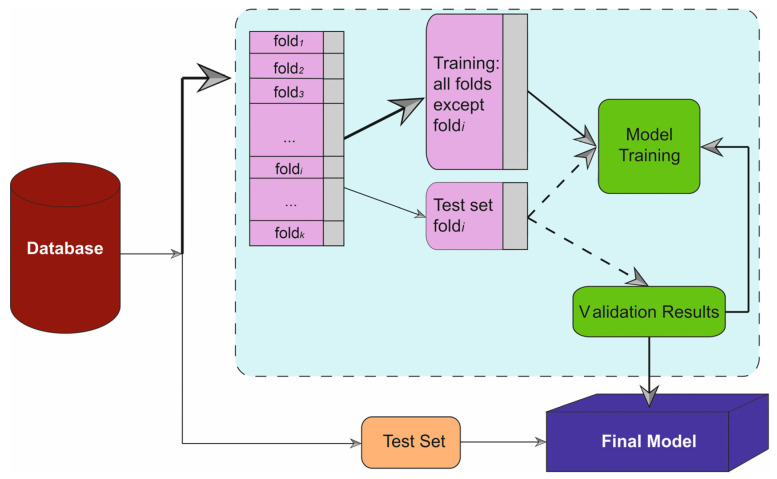 Figure 1
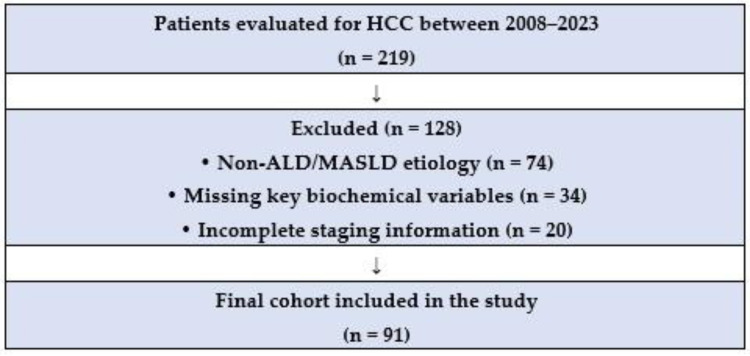 Figure 2
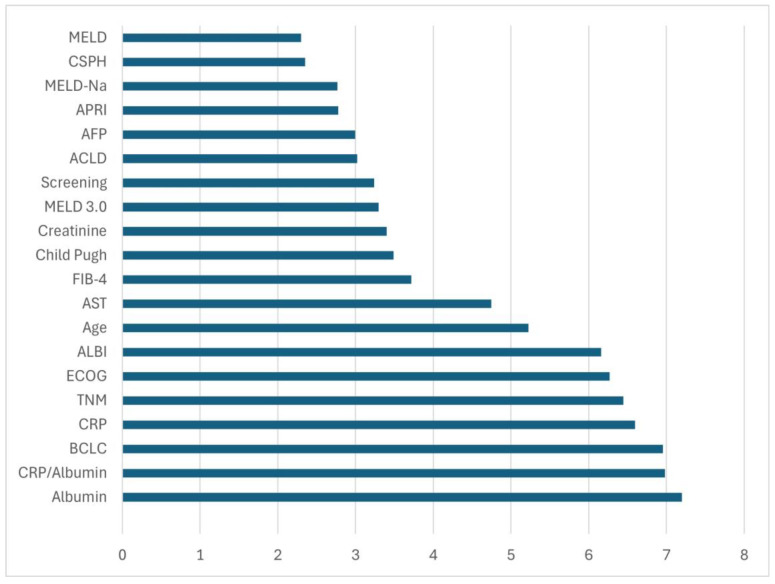 Figure 3
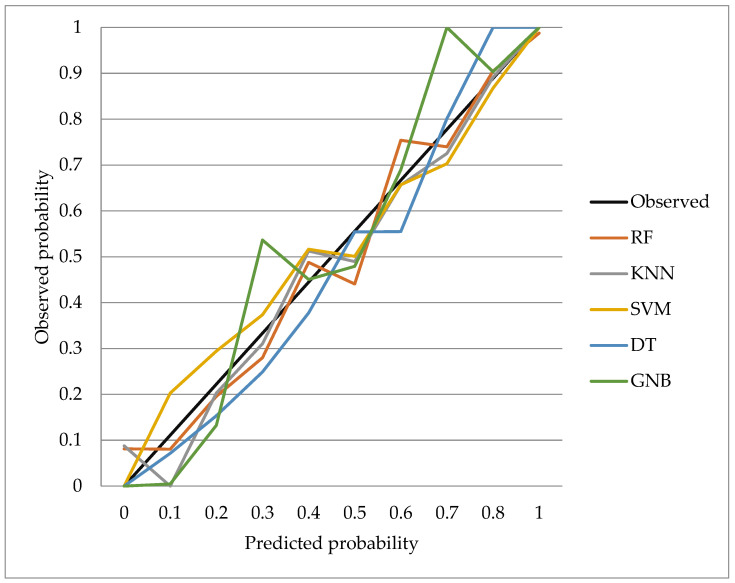 Figure 4
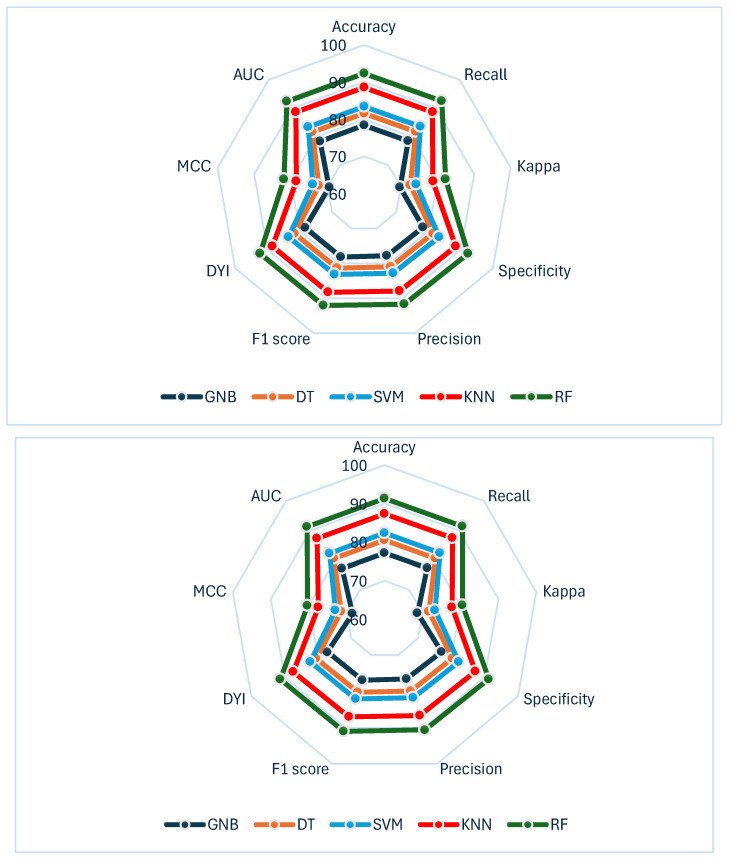 Figure 5
Peer Reviews
No public reviews on file for this paper yet. If you reviewed it on a platform where reviews are public (OpenReview, ICLR, NeurIPS, ICML), you can paste yours below so the community can read it here.
Videos
No videos yet. Explain this paper in a talk, walkthrough, or lecture? Add one.
Taxonomy
TopicsLiver Disease Diagnosis and Treatment · Hepatocellular Carcinoma Treatment and Prognosis · Artificial Intelligence in Healthcare