Prevalence of Fungemia in People with HIV: A Systematic Review and Meta-Analysis
Asta Maria Blom Nielsen, Kristiana Alexandrova Nikolova, Tea Nynne Sanders, Ask Bock, Moises Alberto Suarez-Zdunek, Susanne Dam Nielsen

TL;DR
This study finds that fungal blood infections remain common in HIV patients, especially in Asia, even after the introduction of modern treatments.
Contribution
The study is the first to systematically review and analyze the prevalence of fungemia in HIV patients after 1996.
Findings
The overall pooled prevalence of fungemia in people with HIV was 3.3%.
Talaromyces marneffei was the most common fungal pathogen, mainly in Asia.
Fungemia prevalence was higher before 2015 compared to after, though the difference was not statistically significant.
Abstract
Prior to the introduction of antiretroviral therapy (ART), people with HIV (PWH) had high risk of fungemia. No systematic review has assessed the prevalence of fungemia in PWH after the introduction of combination ART in 1996. The primary objective of this systematic review was to determine the prevalence of fungemia in adult PWH after 1996. Furthermore, we aimed to compare the prevalence of fungemia in different ART time periods to determine geographic differences and fungal pathogen distribution. A systematic literature search was performed on 7 March 2025 across six databases and the study quality was assessed using the Newcastle–Ottawa scale. Prevalence estimates were extracted, and a meta-analysis was performed using a random effects model. Twelve studies comprising 27,729 PWH were included. The overall pooled prevalence in PWH was 3.3% (95% CI: 1.53; 4.96%, I2 = 98.9%). The most…
Genes, proteins, chemicals, diseases, species, mutations and cell lines named across the full text — each resolved to its canonical identifier and authoritative record.
Click any figure to enlarge with its caption.
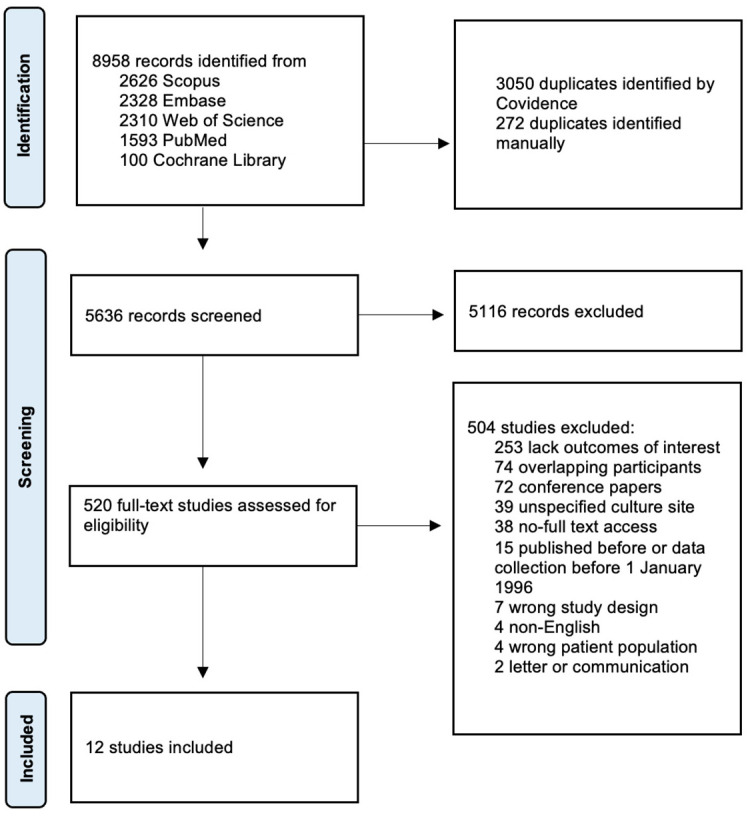 Figure 1
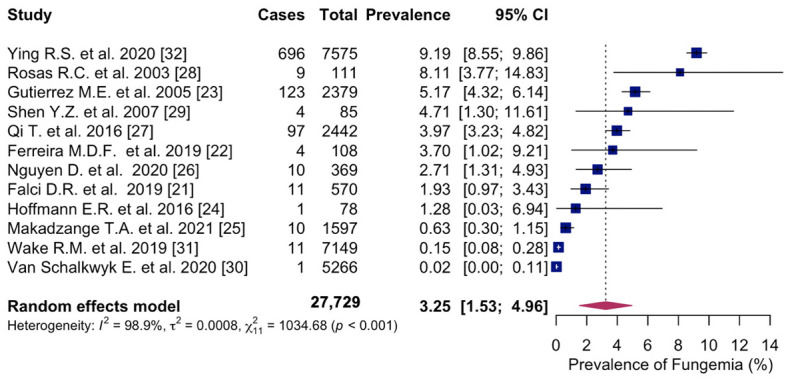 Figure 2
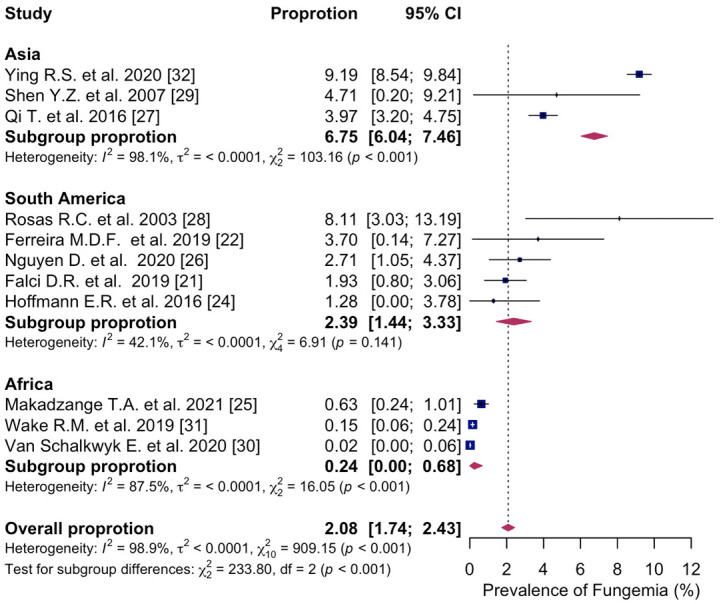 Figure 3
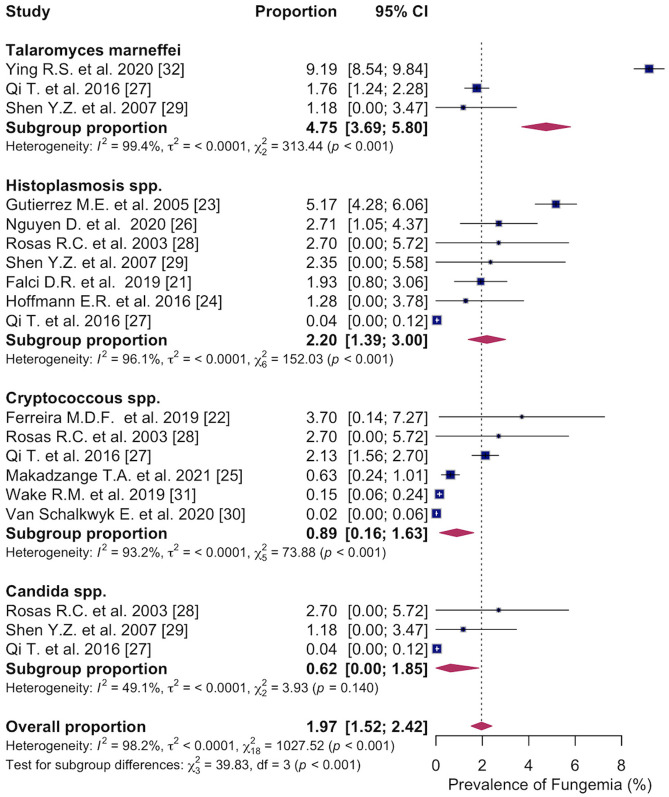 Figure 4
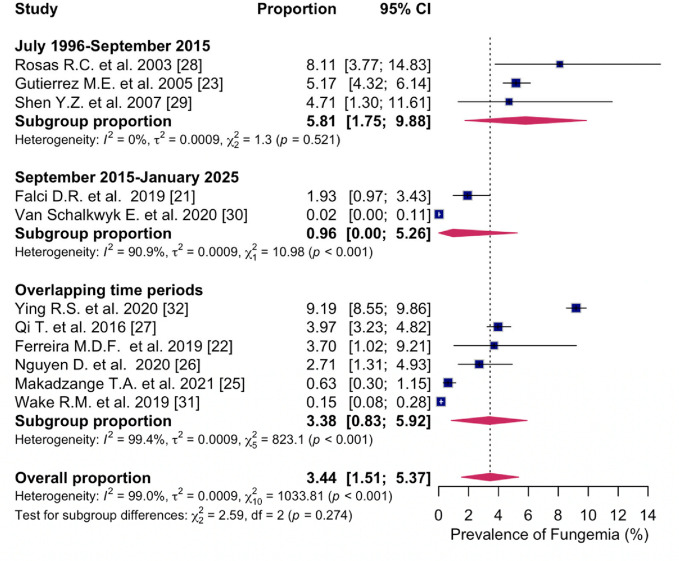 Figure 5
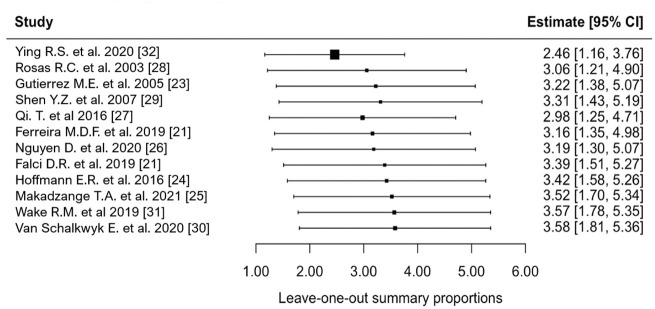 Figure 6
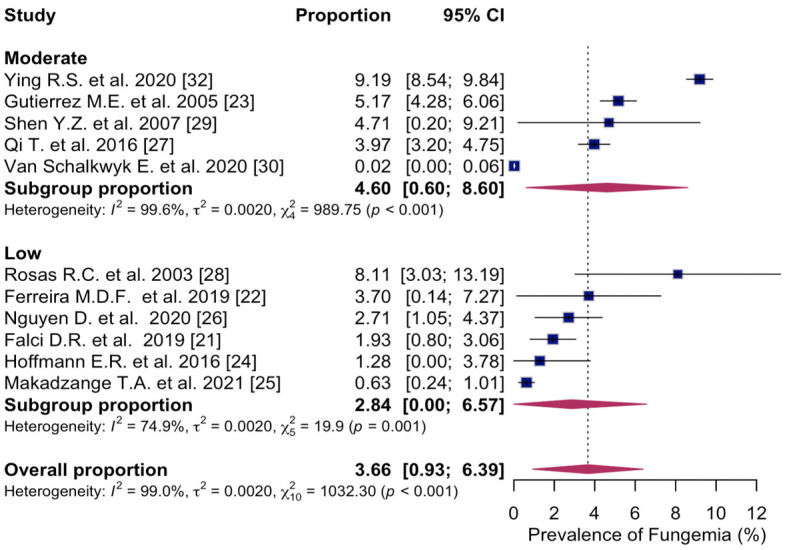 Figure 7
 Figure 8
 Figure 9
 Figure 10
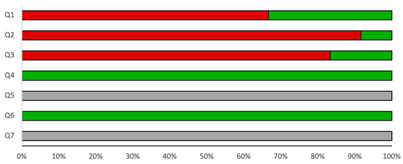 Figure 11
Peer Reviews
No public reviews on file for this paper yet. If you reviewed it on a platform where reviews are public (OpenReview, ICLR, NeurIPS, ICML), you can paste yours below so the community can read it here.
Videos
No videos yet. Explain this paper in a talk, walkthrough, or lecture? Add one.
Taxonomy
TopicsAntifungal resistance and susceptibility · Fungal Infections and Studies · Nail Diseases and Treatments