The Effect of Short-Term and High-Intensity Functional Circuit Training on Plasma Lipidome Profiles of People Living with and Without HIV
Marcos Yukio Yoshinaga, Flávio Gomez Faria, Adriano de Britto Chaves-Filho, Sayuri Miyamoto, Tania Cristina Pithon-Curi, Giselle Cristina Bueno, Bruno Ferrari Silva, Sidney Barnabé Peres, Solange Marta Franzoi de Moraes

TL;DR
This study shows that short-term high-intensity exercise can improve lipid profiles in people with and without HIV, potentially reducing metabolic risks.
Contribution
The study identifies specific lipidomic changes in people with HIV following exercise, offering new insights into metabolic responses.
Findings
Exercise training equalized adiponectin and phosphatidylcholine levels in people with HIV.
Control subjects showed reduced triglycerides and ceramides after training.
People with HIV had increased diglycerides and acylcarnitines, suggesting metabolic improvements.
Abstract
Background/Objectives: Both HIV infection and antiretroviral therapy contribute to dyslipidemia and abnormal body fat distribution in people living with HIV (PLWH). Exercise training is an effective intervention to protect against these metabolic changes. However, little is known about the mechanisms underlying the impact of exercise training on lipid metabolism in PLWH. This study aimed to comparatively evaluate the effect of high-intensity functional circuit training on the plasma lipidome of PLWH and HIV-negative subjects (control). Methods: PLWH (n = 13) and control (n = 14) were submitted to 8 weeks of exercise training. Body composition, anthropometric, and biochemical parameters were measured. Plasma was obtained in a fasting state for lipidomic analysis. Results: Anthropometric and biochemical parameters revealed lower levels of leptin, HDL-C, body fat %, and BMI combined with…
Genes, proteins, chemicals, diseases, species, mutations and cell lines named across the full text — each resolved to its canonical identifier and authoritative record.
Click any figure to enlarge with its caption.
 Figure 1
 Figure 2
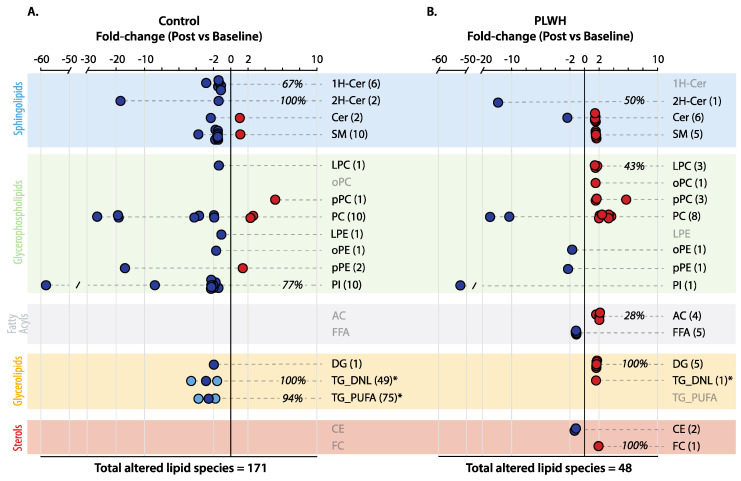 Figure 3
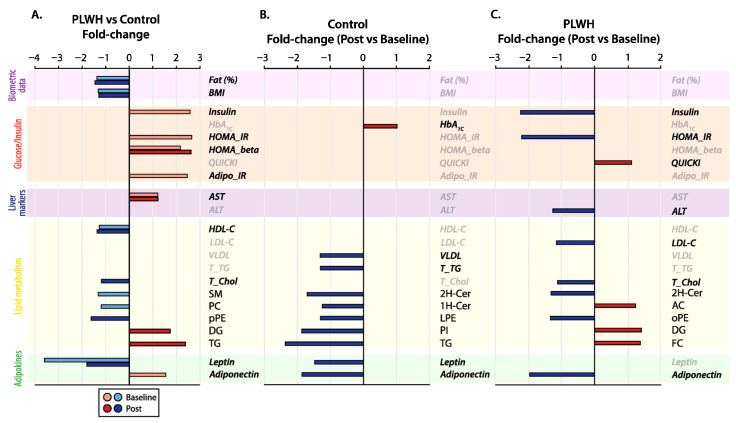 Figure 4
Peer Reviews
No public reviews on file for this paper yet. If you reviewed it on a platform where reviews are public (OpenReview, ICLR, NeurIPS, ICML), you can paste yours below so the community can read it here.
Videos
No videos yet. Explain this paper in a talk, walkthrough, or lecture? Add one.
Taxonomy
TopicsHIV-related health complications and treatments · Exercise and Physiological Responses · Biochemical Acid Research Studies