Can Bacterial Manipulation Deliver Reef-Scale Thermal Enhancement of Corals?
Madeleine J. H. van Oppen, Talisa Doering, Luanny Martins Fernandes

TL;DR
Scientists are exploring if beneficial bacteria can help corals survive rising ocean temperatures, but more research is needed to confirm long-term effectiveness.
Contribution
This paper reviews current bacterial manipulation research and suggests ways to improve experimental methods for assessing coral thermal resilience.
Findings
Early studies show some thermal enhancement via beneficial bacteria inoculation.
Current research lacks sufficient data on bacterial integration and stability in coral microbiomes.
Few studies have tested a wide range of bacterial traits or functions for host enhancement.
Abstract
A rapid decline of coral reefs is taking place around the world, with climate warming being the biggest driver behind this deterioration. Efforts to increase coral climate resilience via bioengineering methods have thus become urgent, and there is hope that such interventions can help corals and coral reefs survive until a time when no further climate warming occurs and perhaps a future of climate cooling is imaginable. The manipulation of coral-associated bacterial communities is among the less advanced interventions currently being explored. Nevertheless, early findings provide confidence that some level of thermal enhancement can be achieved via the inoculation of corals with beneficial bacteria. The small number of studies available, however, is limited in terms of the traits used to select candidate bacteria and their ability to ascribe host enhancement to specific bacterial taxa…
Click any figure to enlarge with its caption.
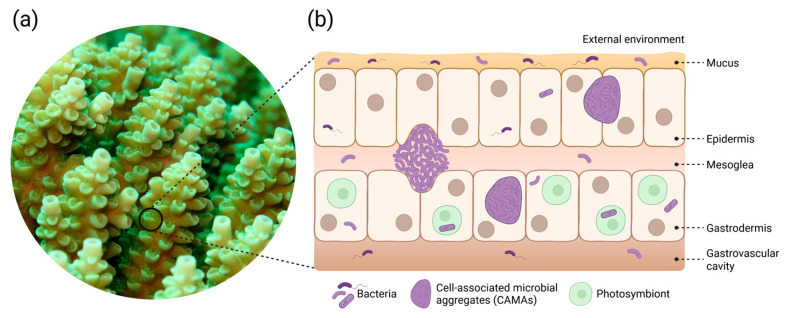 Figure 1
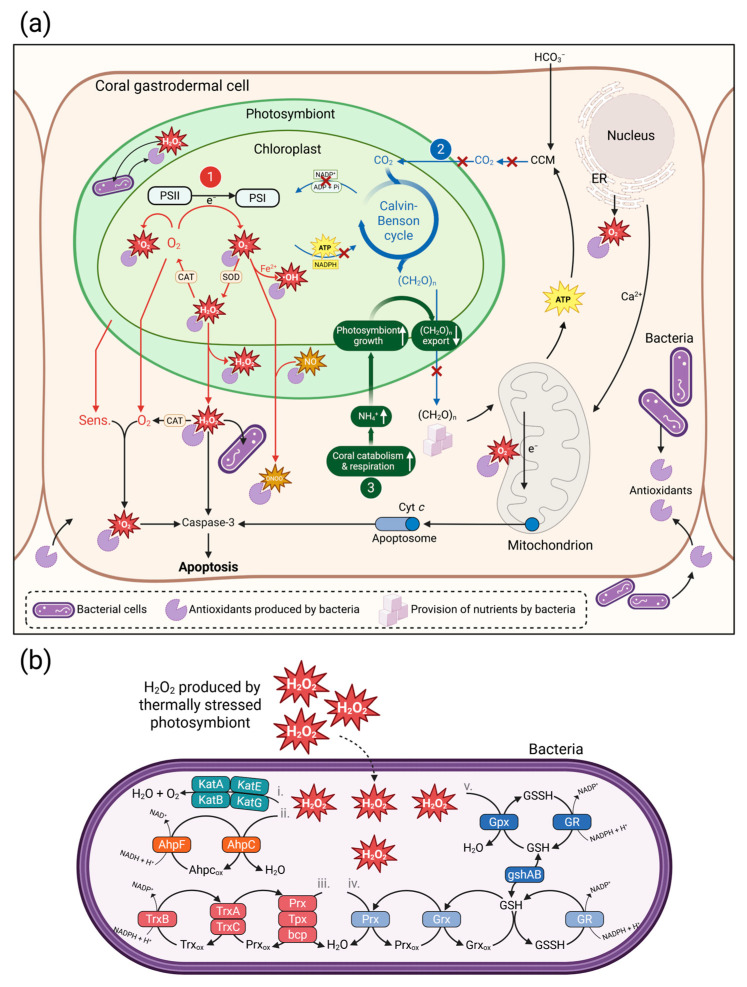 Figure 2
Peer Reviews
No public reviews on file for this paper yet. If you reviewed it on a platform where reviews are public (OpenReview, ICLR, NeurIPS, ICML), you can paste yours below so the community can read it here.
Videos
No videos yet. Explain this paper in a talk, walkthrough, or lecture? Add one.
Taxonomy
TopicsCoral and Marine Ecosystems Studies · Building materials and conservation · Microbial Community Ecology and Physiology