Click Chemistry-Enabled Parallel Synthesis of N-Acyl Sulfonamides and Their Evaluation as Carbonic Anhydrase Inhibitors
Oleksii V. Gavrylenko, Bohdan V. Vashchenko, Vasyl Naumchyk, Bohdan S. Sosunovych, Oleksii Chuk, Oleksii Hrabovskyi, Olga Kuchuk, Alla Pogribna, Sergiy O. Nikitin, Anzhelika I. Konovets, Volodymyr S. Brovarets, Sergey A. Zozulya, Dmytro S. Radchenko, Oleksandr O. Grygorenko

TL;DR
Researchers created a library of N-acyl sulfonamides using click chemistry and found some compounds that inhibit carbonic anhydrase.
Contribution
A high-success-rate method for synthesizing N-acyl sulfonamides and identifying potent carbonic anhydrase inhibitors.
Findings
A 262-member compound library was synthesized with up to 85% success rate and 61% yield.
Several low micromolar carbonic anhydrase inhibitors were identified from the library.
Docking and molecular dynamics confirmed interactions between hits and the enzyme.
Abstract
A synthetically accessible library of N-acyl sulfonamides was constructed using a combination of copper(I)-catalyzed azide–alkyne cycloaddition (CuAAC) and N-acylation of primary sulfonamides. The proposed two-step reaction sequence had a high experimentally confirmed synthetic success rate (up to 85%) and gave reasonable product yields (up to 61%). As a result of the validation process, a 262-member compound library (out of >70K accessible combinations) was prepared. Biological profiling of the synthesized library by differential scanning fluorimetry and enzymatic assays identified several low micromolar inhibitors of human carbonic anhydrase. The interaction of the discovered hits with the biological target was studied by docking and molecular dynamics.
Genes, proteins, chemicals, diseases, species, mutations and cell lines named across the full text — each resolved to its canonical identifier and authoritative record.
Click any figure to enlarge with its caption.
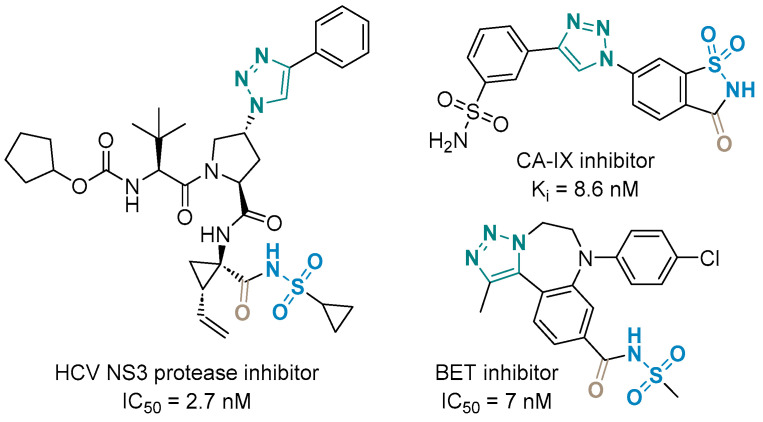 Figure 1
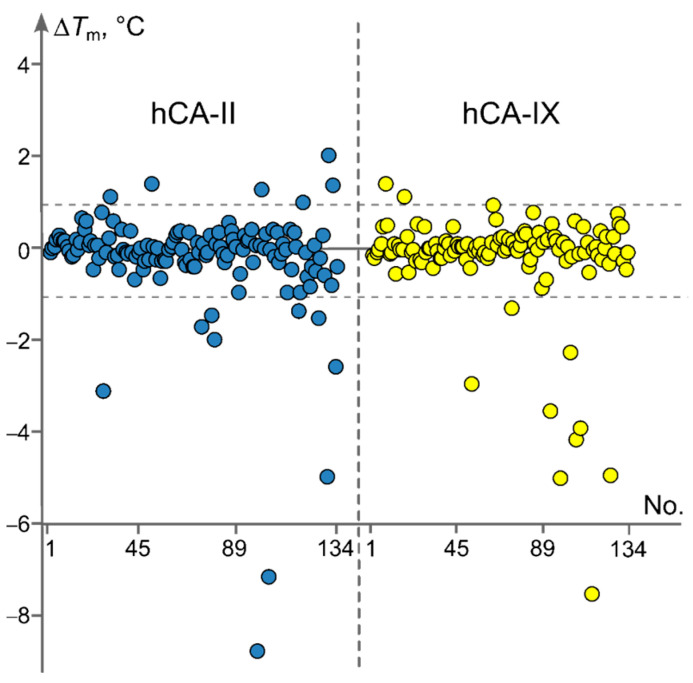 Figure 2
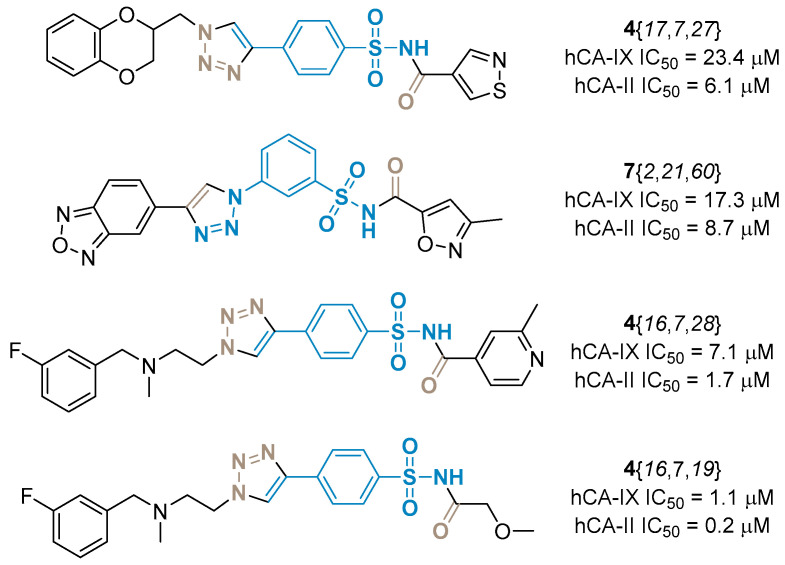 Figure 3
 Figure 4
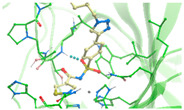 Figure 5
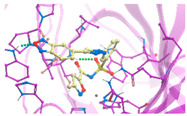 Figure 6
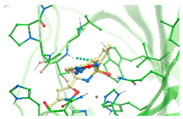 Figure 7
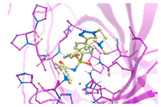 Figure 8
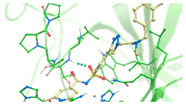 Figure 9
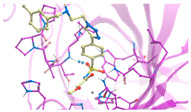 Figure 10
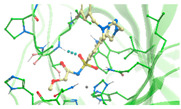 Figure 11
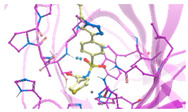 Figure 12
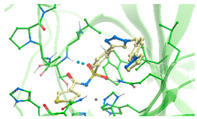 Figure 13
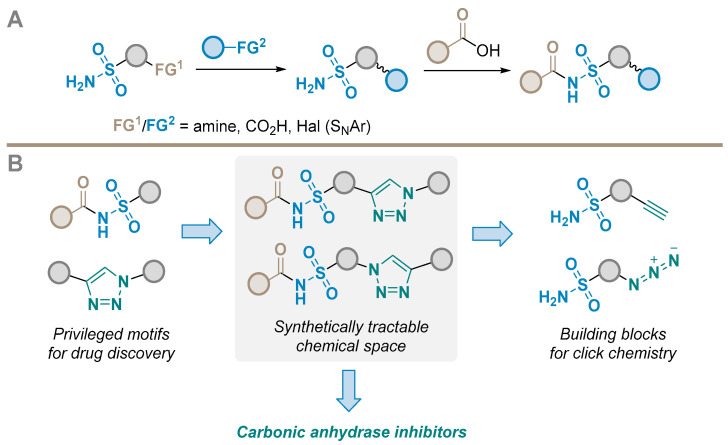 Figure 14
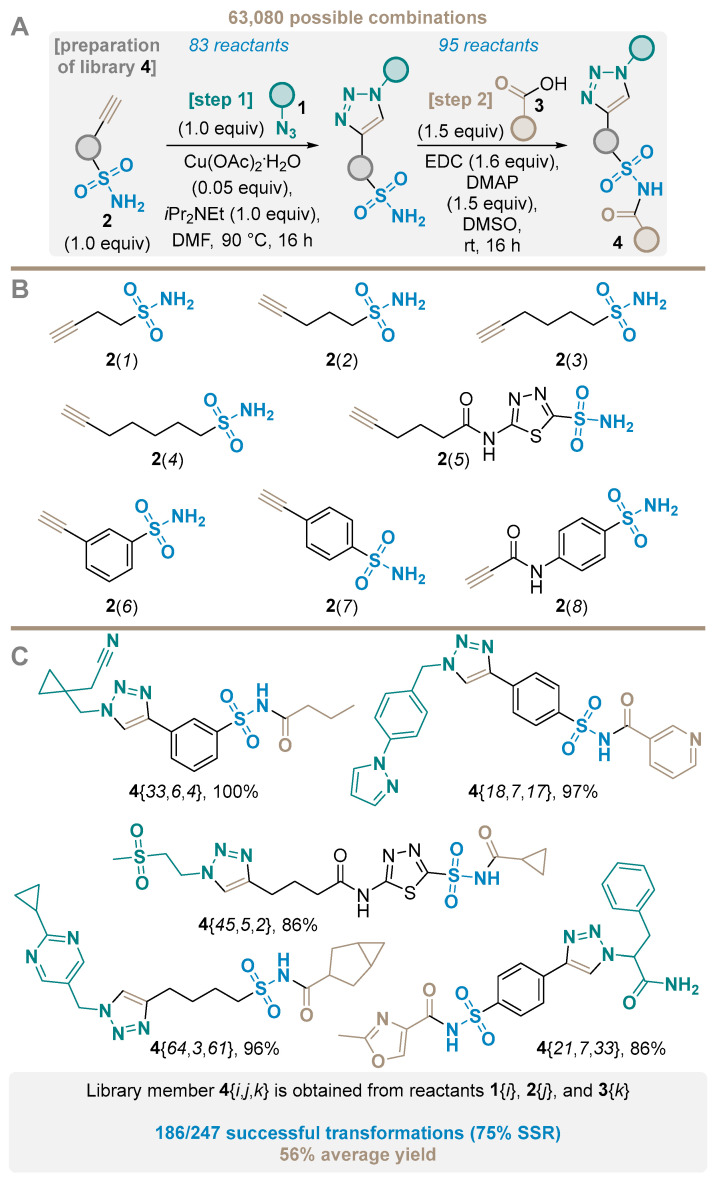 Figure 15
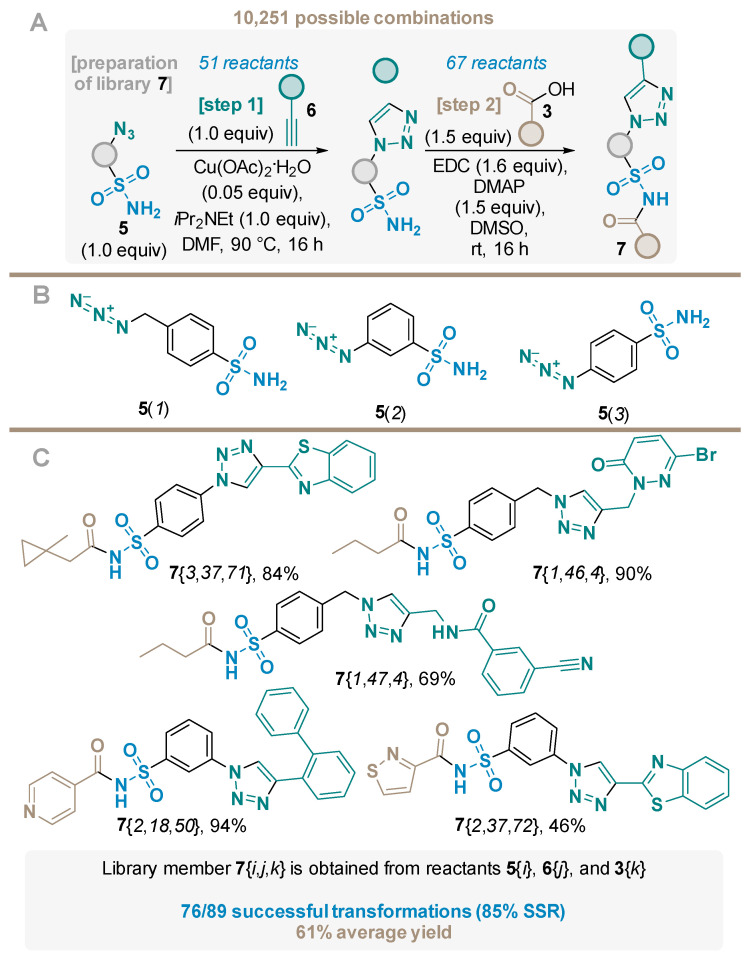 Figure 16
Peer Reviews
No public reviews on file for this paper yet. If you reviewed it on a platform where reviews are public (OpenReview, ICLR, NeurIPS, ICML), you can paste yours below so the community can read it here.
Videos
No videos yet. Explain this paper in a talk, walkthrough, or lecture? Add one.
Taxonomy
TopicsEnzyme function and inhibition · Click Chemistry and Applications · Synthesis and Catalytic Reactions