Bacteriophage Therapy Against Klebsiella Pneumoniae
Weijia Ding, Yicheng Wen, Liang Chen, Hong Du

TL;DR
This paper reviews how bacteriophages could be used as an alternative to antibiotics for treating drug-resistant Klebsiella pneumoniae infections.
Contribution
The paper provides a comprehensive review of recent advances and challenges in phage therapy for K. pneumoniae.
Findings
Phage cocktails and combination therapies show promise in treating K. pneumoniae.
Phage-derived proteins are emerging as potential therapeutic agents.
Optimization strategies and innovations are needed to overcome current challenges in phage therapy.
Abstract
Antibiotic resistance is arguably one of the greatest threats to global health today. The worldwide emergence of multidrug-resistant and hypervirulent Klebsiella pneumoniae underscores the urgent need for alternative treatments. Bacteriophages (phages) are considered one of the most promising alternatives to address this crisis. In this review, we summarize current knowledge of phage–host interactions and highlight recent advances in phage therapy against K. pneumoniae, including phage cocktails, antibiotic combination therapy, and treatments based on phage-derived proteins. Despite their tremendous therapeutic potential, significant challenges remain. We therefore also discuss strategies to optimize phage research and recent innovations in the field.
Genes, proteins, chemicals, diseases, species, mutations and cell lines named across the full text — each resolved to its canonical identifier and authoritative record.
Click any figure to enlarge with its caption.
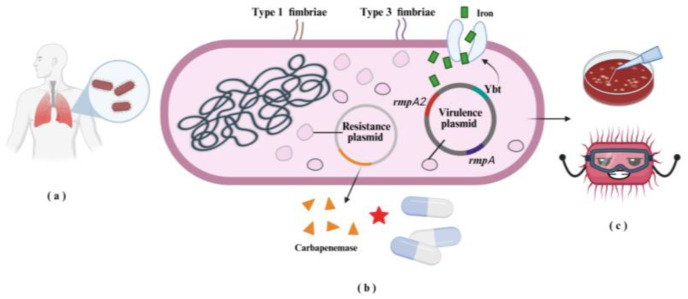 Figure 1
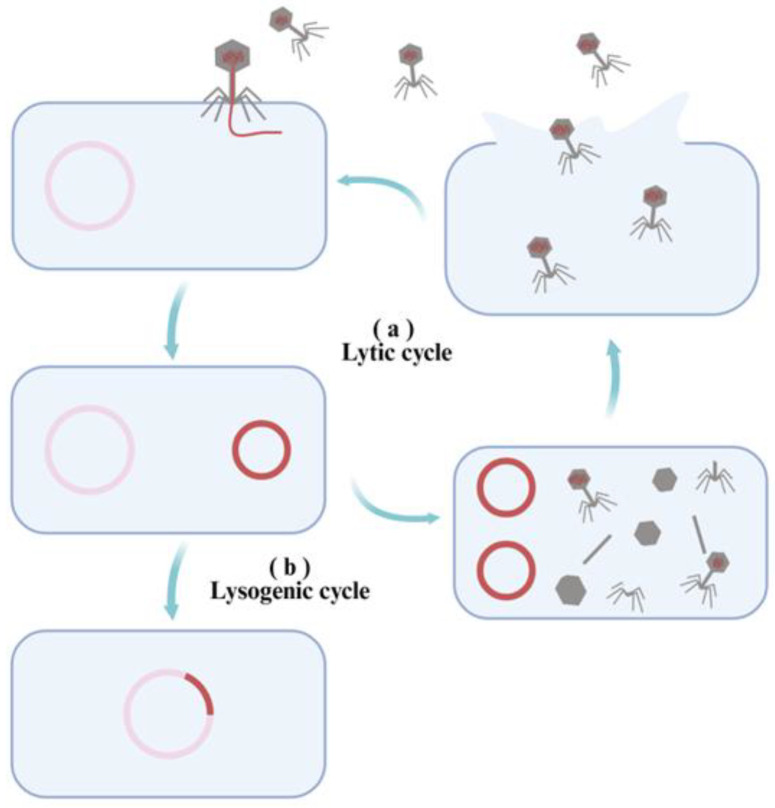 Figure 2
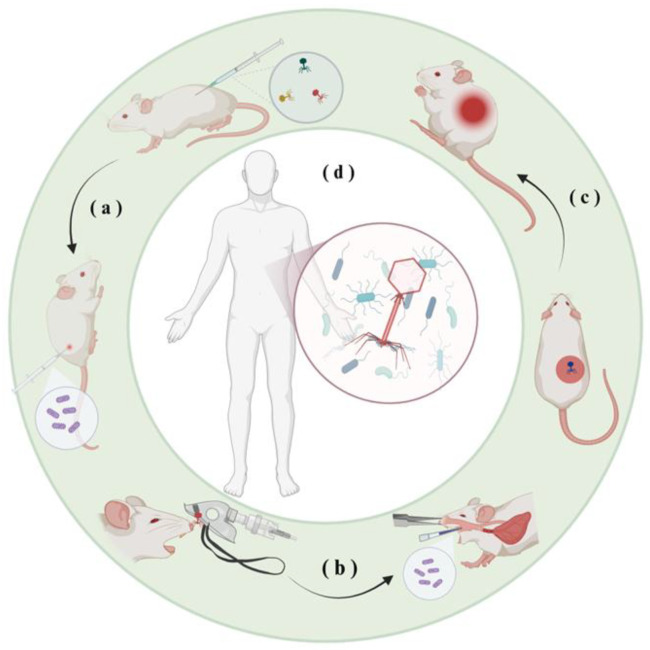 Figure 3
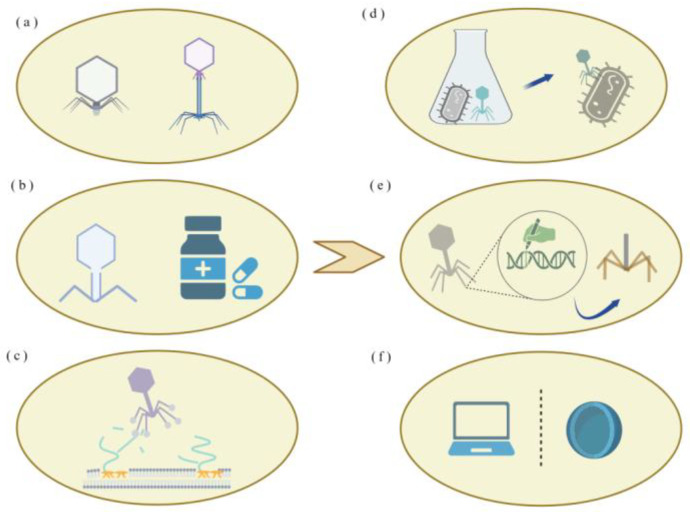 Figure 4
Peer Reviews
No public reviews on file for this paper yet. If you reviewed it on a platform where reviews are public (OpenReview, ICLR, NeurIPS, ICML), you can paste yours below so the community can read it here.
Videos
No videos yet. Explain this paper in a talk, walkthrough, or lecture? Add one.
Taxonomy
TopicsBacteriophages and microbial interactions · Monoclonal and Polyclonal Antibodies Research · Cancer Research and Treatments