Optical and Microdialysis Monitoring of Succinate Prodrug Treatment in a Rotenone-Induced Model of Mitochondrial Dysfunction in Swine
Alistair Lewis, Rodrigo M. Forti, Tiffany S. Ko, Eskil Elmér, Meagan J. McManus, Arjun G. Yodh, Todd J. Kilbaugh, Wesley B. Baker

TL;DR
This study tests a new drug and optical tools to monitor brain metabolism in pigs with mitochondrial dysfunction, showing promising results.
Contribution
The study demonstrates the potential of a succinate prodrug and optical monitoring in treating mitochondrial dysfunction in large animals.
Findings
NV354 treatment prevented rising lactate levels in pigs with mitochondrial dysfunction.
Optical metrics like oxCCO and OEF showed changes linked to metabolic improvements from NV354.
Diffuse optical techniques detected metabolic changes induced by rotenone and NV354.
Abstract
Background/Objectives: Mitochondrial dysfunction is a major cause of brain injury in patients with primary mitochondrial disease. New mitochondrial therapeutics and non-invasive tools for efficacy monitoring are urgently needed. To these ends, succinate prodrug NV354 (methyl 3-[(2-acetylaminoethylthio)carbonyl]propionate) and diffuse optical techniques are promising. In this proof-of-concept study, we characterize NV354’s effects on microdialysis metrics of cerebral metabolism in a swine model of mitochondrial dysfunction and assess the associations of diffuse optical metrics with mitochondrial dysfunction and metabolic improvement. Methods: One-month-old swine received a four-hour co-infusion of rotenone with either the succinate prodrug NV354 (n = 5) or placebo (n = 5). Rotenone is a mitochondrial complex I inhibitor. Before and during co-infusion, cerebral metabolism was probed with…
Genes, proteins, chemicals, diseases, species, mutations and cell lines named across the full text — each resolved to its canonical identifier and authoritative record.
Click any figure to enlarge with its caption.
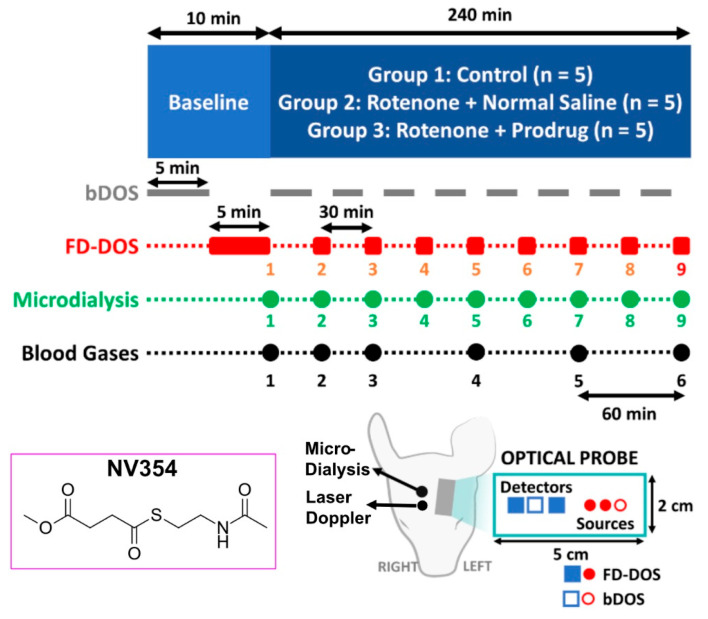 Figure 1
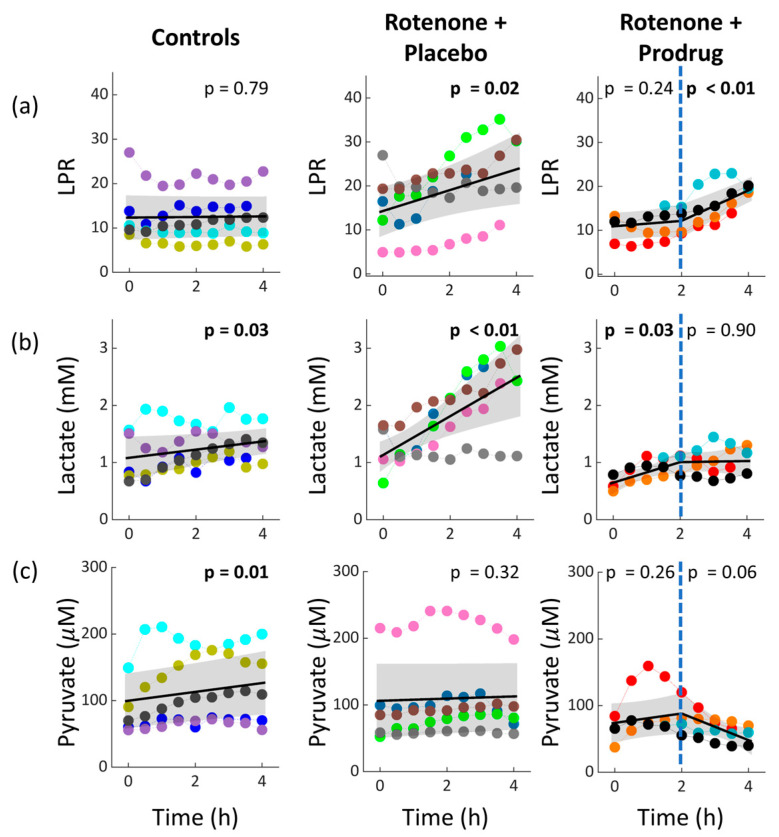 Figure 2
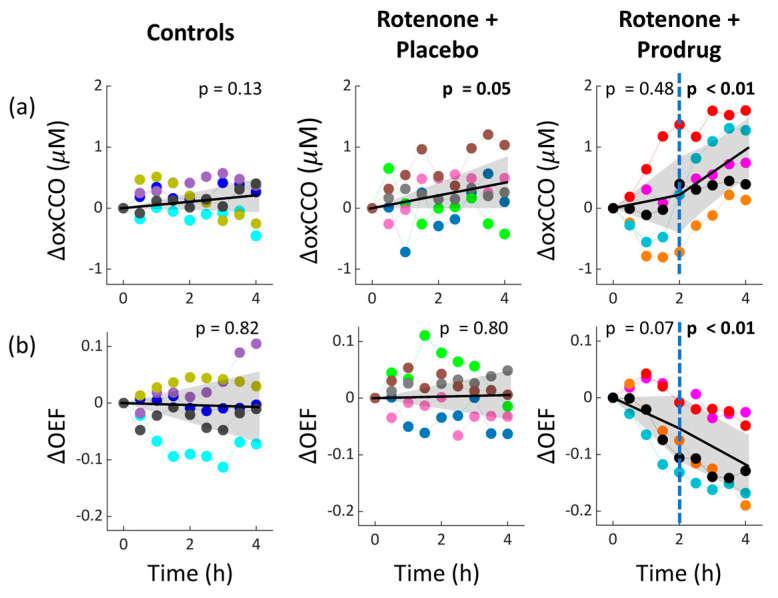 Figure 3
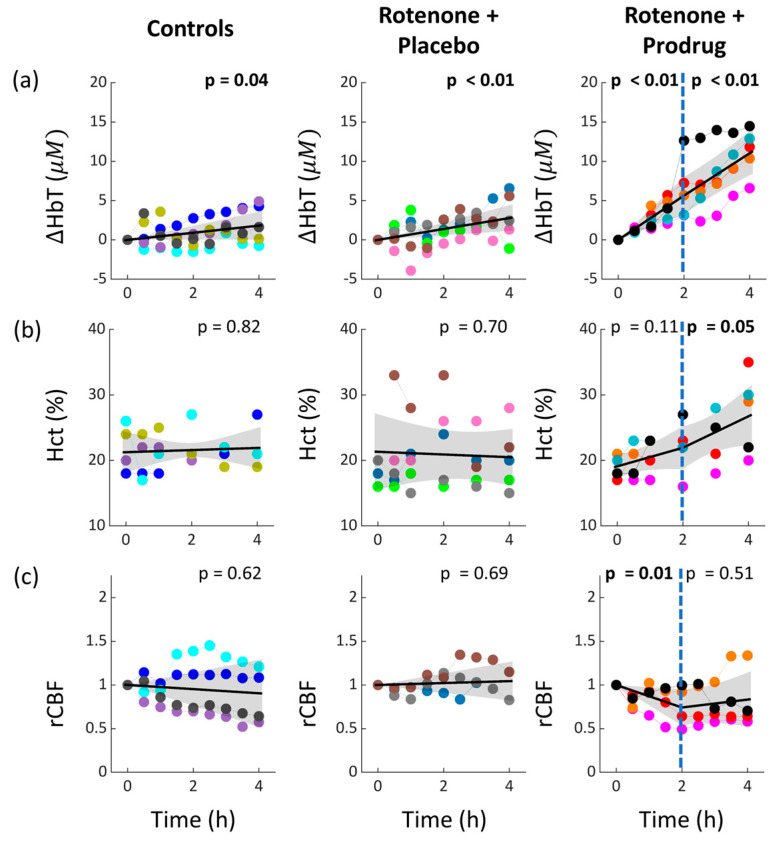 Figure 4
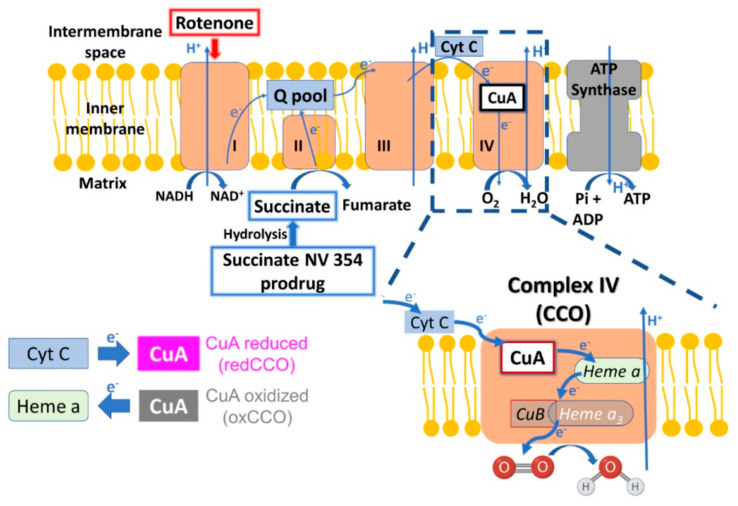 Figure 5
Peer Reviews
No public reviews on file for this paper yet. If you reviewed it on a platform where reviews are public (OpenReview, ICLR, NeurIPS, ICML), you can paste yours below so the community can read it here.
Videos
No videos yet. Explain this paper in a talk, walkthrough, or lecture? Add one.
Taxonomy
TopicsMitochondrial Function and Pathology · Metabolism and Genetic Disorders · Adipose Tissue and Metabolism