Screening for Peptides to Bind and Functionally Inhibit SARS-CoV-2 Fusion Peptide Using Mirrored Combinatorial Phage Display and Human Proteomic Phage Display
Ajay Pal, Neeladri Sekhar Roy, Matthew Angeliadis, Priyanka Madhu, Sophie O’Reilly, Indrani Bera, Nathan Francois, Aisling Lynch, Virginie Gautier, Marc Devocelle, David J. O’Connell, Denis C. Shields

TL;DR
Researchers used phage display to find peptides that could bind to a key part of the SARS-CoV-2 virus, but found that these peptides did not strongly inhibit infection, though they helped develop a computational model for future drug design.
Contribution
The study introduces a computational model for pancoronaviral fusion peptide disruptors derived from phage display screening failures.
Findings
Ten D-peptides identified from combinatorial phage display did not inhibit SARS-CoV-2 infection in Vero-E6/TMPRSS2 cells.
Two overlapping 14mer peptides from OTUD1 were identified using a proteomic phage display library.
Molecular dynamics modeling revealed a stable binding mode between OTUD1 peptides and the SARS-CoV-2 fusion peptide.
Abstract
To identify pancoronaviral inhibitors, we sought to identify peptides that bound the evolutionarily conserved SARS-CoV-2 spike fusion peptide (FP). We screened the NEB PhD-7-mer random combinatorial phage display library against FP, synthesised as a D-peptide, to identify peptides from the L-library to be synthesised as proteolytically resistant D peptides. We selected the top ten peptides that were not seen in another published screen with this library, as these were more likely to be specific. All ten D-peptides had no impact on the infection of Vero-E6/TMPRSS2 cells by SARS-CoV-2. Screening of a proteomic-derived phage display library from the disordered regions of human proteins identified two overlapping 14mer peptides from a region of OTUD1. While a synthetic peptide based on their sequences failed to markedly inhibit viral entry, molecular dynamics structural modelling…
Genes, proteins, chemicals, diseases, species, mutations and cell lines named across the full text — each resolved to its canonical identifier and authoritative record.
Click any figure to enlarge with its caption.
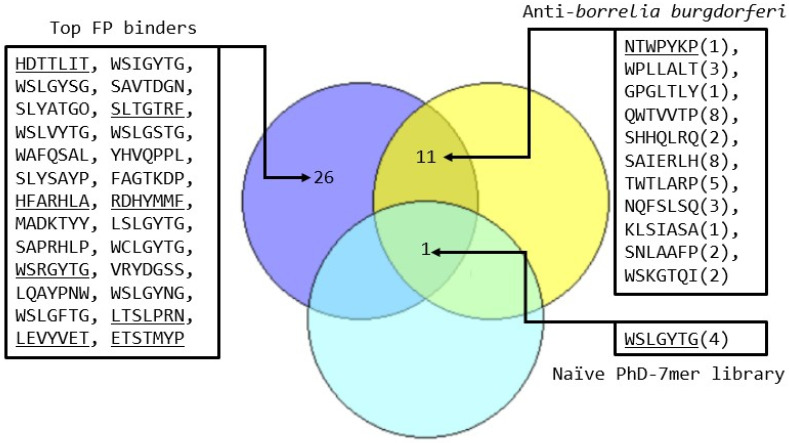 Figure 1
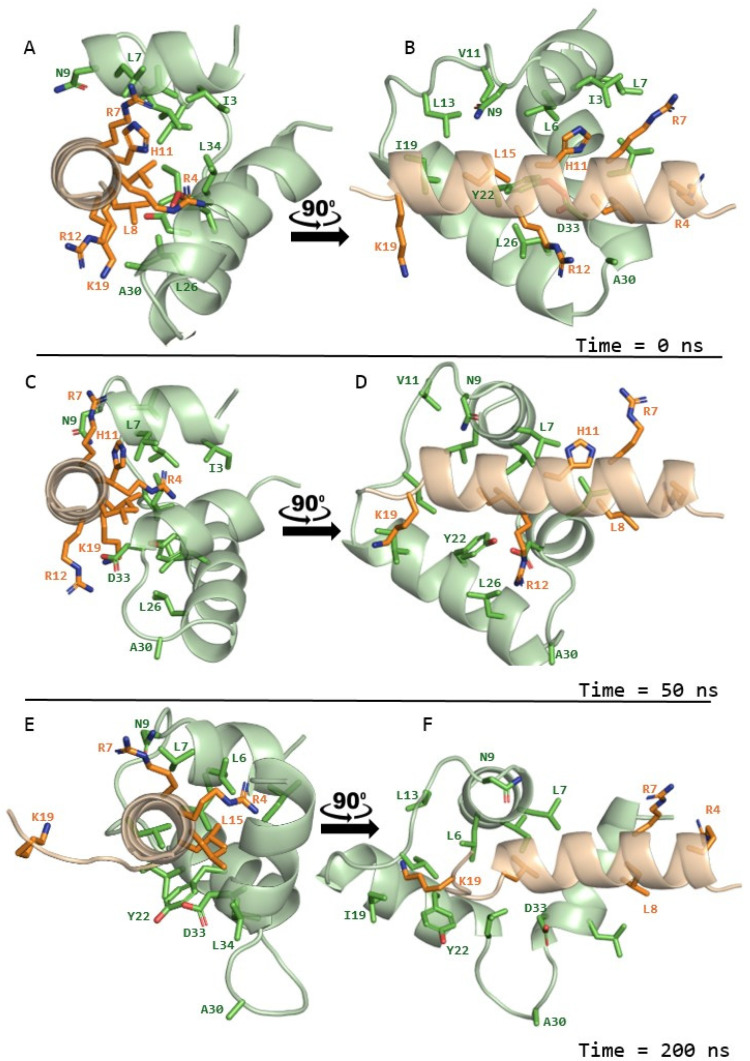 Figure 2
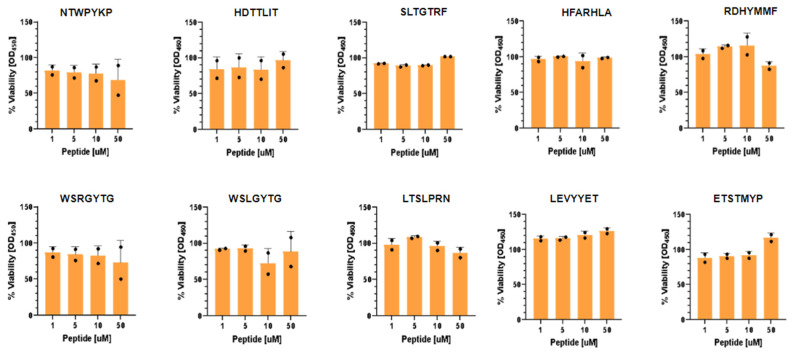 Figure 3
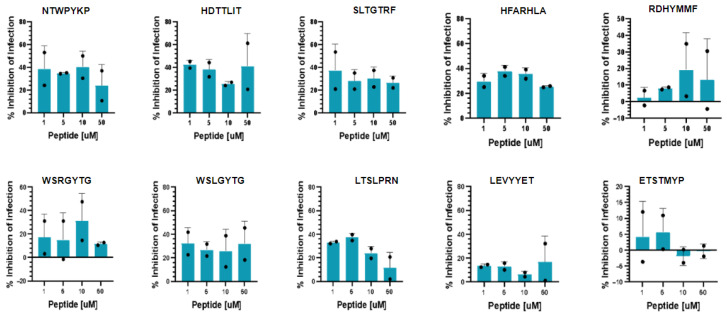 Figure 4
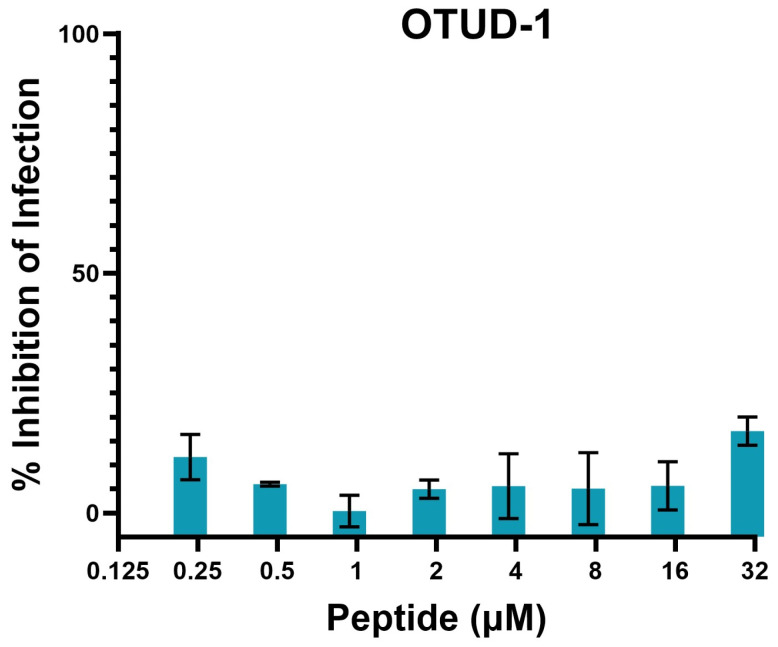 Figure 5
Peer Reviews
No public reviews on file for this paper yet. If you reviewed it on a platform where reviews are public (OpenReview, ICLR, NeurIPS, ICML), you can paste yours below so the community can read it here.
Videos
No videos yet. Explain this paper in a talk, walkthrough, or lecture? Add one.
Taxonomy
Topicsvaccines and immunoinformatics approaches · Monoclonal and Polyclonal Antibodies Research · SARS-CoV-2 and COVID-19 Research