Green Nanoparticles for Enhanced Electrochemical Monitoring of Pharmaceutical Contaminants: Comparative Investigation Between Monometallic and Bimetallic Nanoparticles
Soumaya Nasri, Amani Chrouda, Shazalia Mahmoud Ahmed Ali, Bakheit Mustafa, Manahil Babiker Elamin, Laila M. Alhaidari, Hamdi Ben Halima, Nicole Jafezic-Renault

TL;DR
This study compares green-synthesized monometallic and bimetallic nanoparticles for detecting pharmaceutical pollutants, showing that bimetallic ones perform better.
Contribution
The novelty lies in the green synthesis of bimetallic AuTiO2 nanoparticles for enhanced electrochemical sensing of pharmaceutical contaminants.
Findings
Bimetallic AuTiO2@NPs achieved a lower detection limit of 0.2 ppb for ciprofloxacin compared to monometallic nanoparticles.
The bimetallic sensor showed high recovery rates of 98% in tap water and 103% in wastewater.
Green-synthesized nanoparticles demonstrated strong selectivity and signal intensity for pharmaceutical pollutant detection.
Abstract
Study presents a comparative analytical investigation into the green synthesis of monometallic and bimetallic nanoparticles using Punica granatum (pomegranate) extract, aimed at developing high-performance electrochemical sensors for the detection of ciprofloxacin (CIP) as a representative pharmaceutical pollutant. Three nanoparticle systems were successfully synthesized: monometallic Au@NPs and TiO2@NPs, as well as the bimetallic AuTiO2@NPs. Their structural and physicochemical characteristics were comprehensively analyzed using UV–Vis spectroscopy, FTIR, SEM, TEM, and XRD techniques. The obtained nanoparticles exhibited predominantly spherical morphologies with average particle sizes of approximately 40 ± 5 nm for Au@NPs, 50 ± 7 nm for TiO2@NPs, and 60 ± 6 nm for AuTiO2@NPs. These nanomaterials were subsequently employed to modify electrode surfaces for electrochemical sensing…
Genes, proteins, chemicals, diseases, species, mutations and cell lines named across the full text — each resolved to its canonical identifier and authoritative record.
Click any figure to enlarge with its caption.
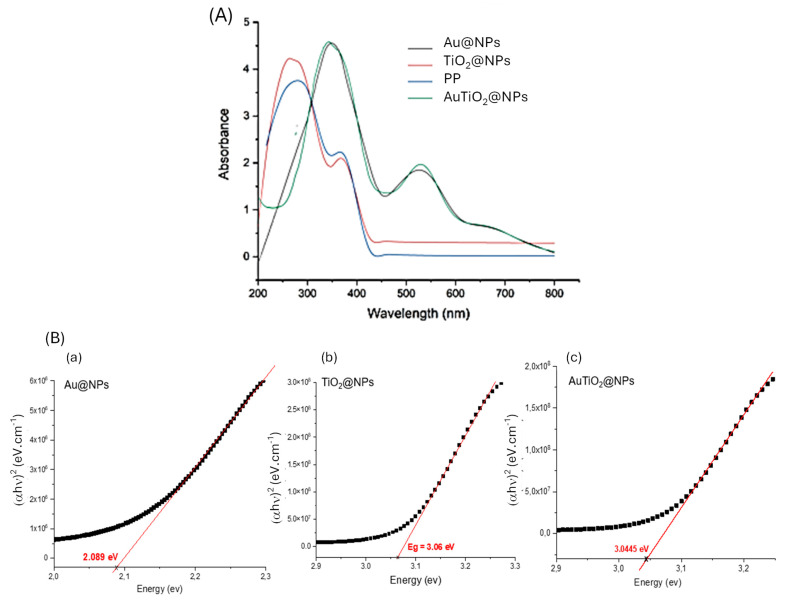 Figure 1
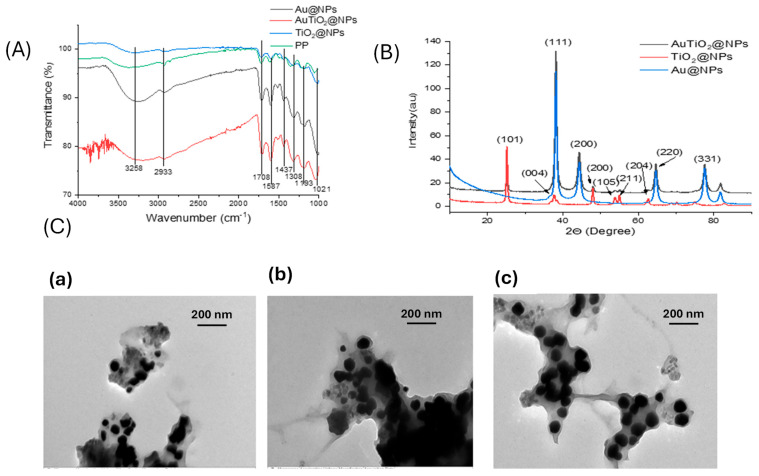 Figure 2
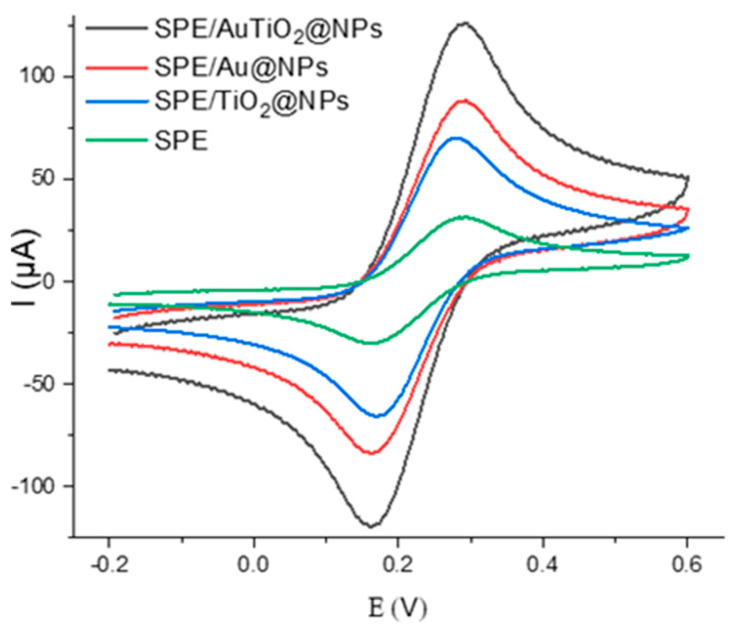 Figure 3
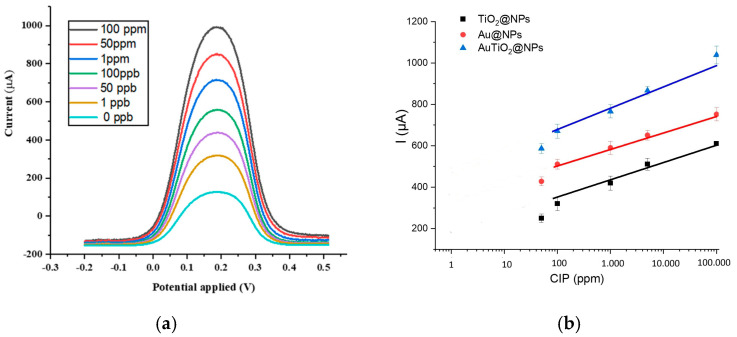 Figure 4
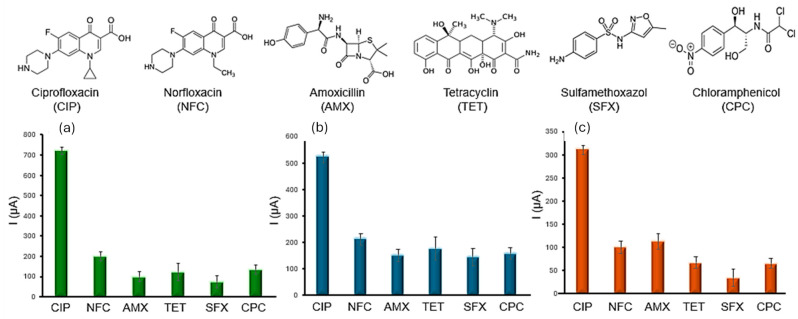 Figure 5
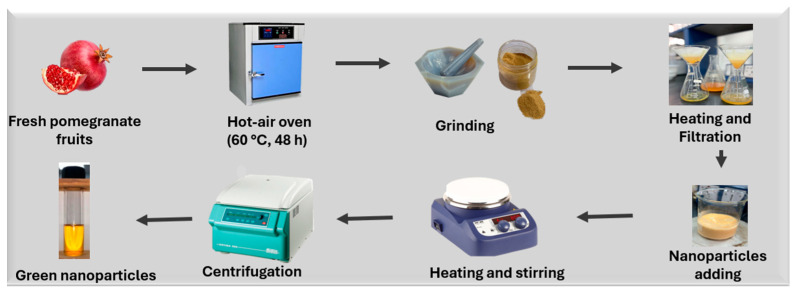 Figure 6
Peer Reviews
No public reviews on file for this paper yet. If you reviewed it on a platform where reviews are public (OpenReview, ICLR, NeurIPS, ICML), you can paste yours below so the community can read it here.
Videos
No videos yet. Explain this paper in a talk, walkthrough, or lecture? Add one.
Taxonomy
TopicsElectrochemical sensors and biosensors · Electrochemical Analysis and Applications · Advanced biosensing and bioanalysis techniques