Autotrophic and Mixotrophic Batch Processes with Clostridium autoethanogenum LAbrini in Stirred Tank Bioreactors with Continuous Gassing
Anne Oppelt, Tran Yen Nhi Nguyen, Yaodan Zhang, Dirk Weuster-Botz

TL;DR
This paper shows how a modified strain of Clostridium autoethanogenum can efficiently convert syngas and sugars into alcohols in bioreactors.
Contribution
The study demonstrates improved autotrophic and mixotrophic performance of a lab-evolved strain of Clostridium autoethanogenum.
Findings
C. autoethanogenum LAbrini grows faster and forms more biomass under autotrophic conditions compared to the wild-type.
Mixotrophic processes with sugars and CO increase alcohol production significantly compared to purely autotrophic processes.
Using L-arabinose and an autotrophic pre-culture leads to the highest alcohol formation of over 13 g L−1.
Abstract
Simultaneous conversion of syngas and sugars is a promising approach to overcome limitations of syngas fermentation. Clostridium autoethanogenum LAbrini, obtained by adaptive laboratory evolution, is known to show improved autotrophic process performance. Under purely autotrophic conditions, C. autoethanogenum LAbrini exhibits substantially faster growth and biomass formation compared to the wild-type in fully controlled, stirred-tank bioreactors with a continuous gas supply. In mixotrophic processes, the pre-culture strategy has a significant impact on the growth and metabolic activity of C. autoethanogenum LAbrini. C. autoethanogenum LAbrini can metabolize sugars (D-fructose, D-xylose, or L-arabinose) and CO simultaneously. All mixotrophic batch processes showed increased growth and product formation compared to the autotrophic process. The mixotrophic batch process with D-fructose…
Genes, proteins, chemicals, diseases, species, mutations and cell lines named across the full text — each resolved to its canonical identifier and authoritative record.
Click any figure to enlarge with its caption.
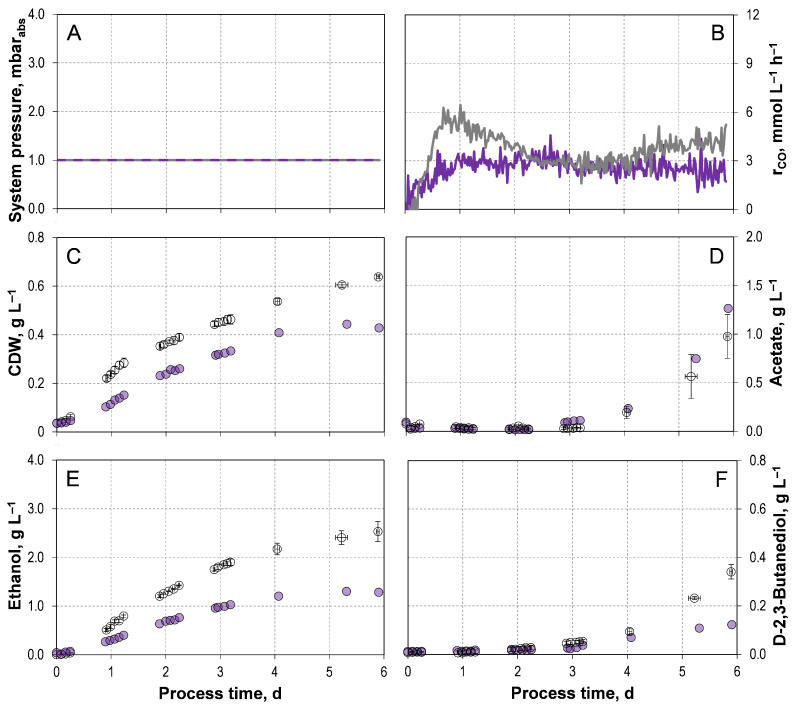 Figure 1
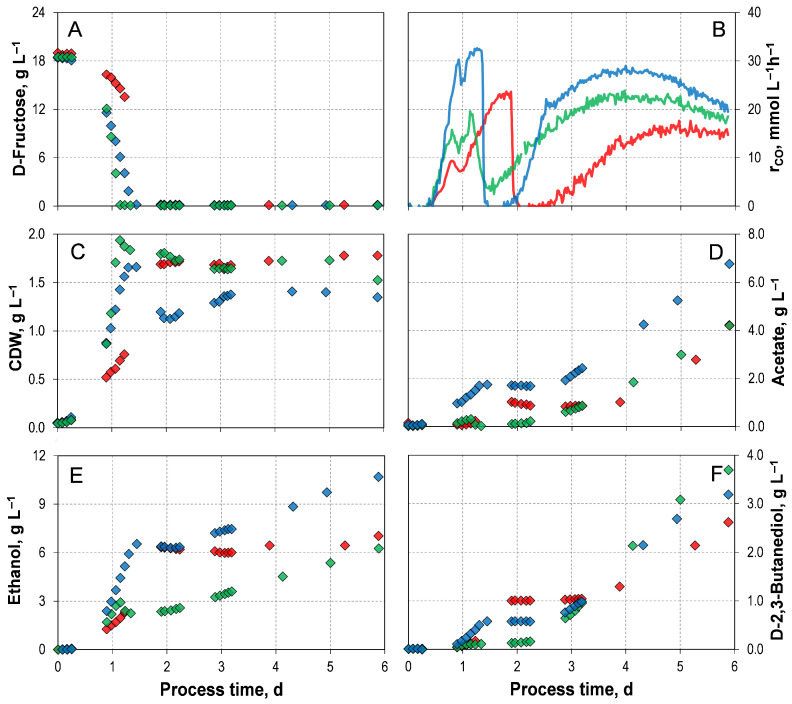 Figure 2
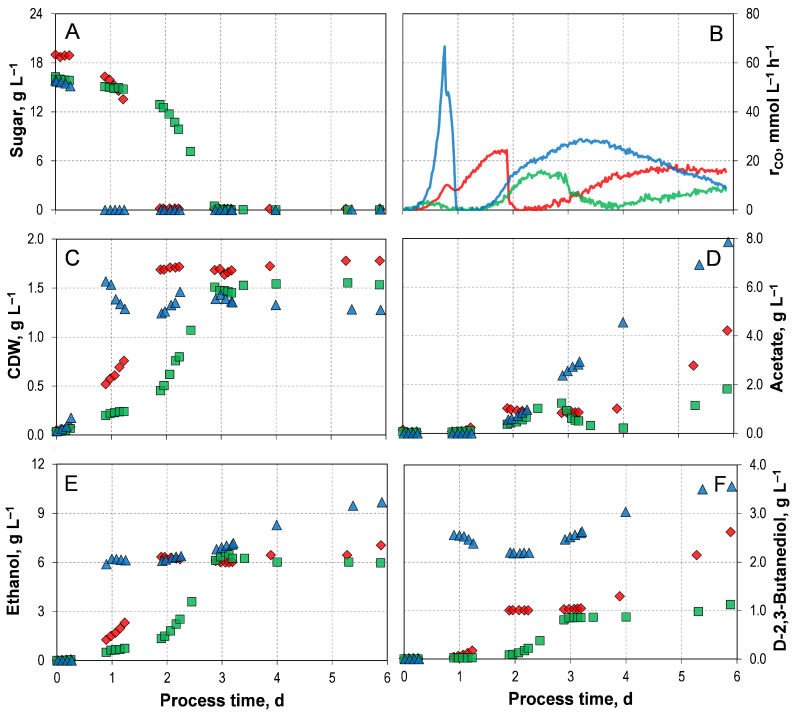 Figure 3
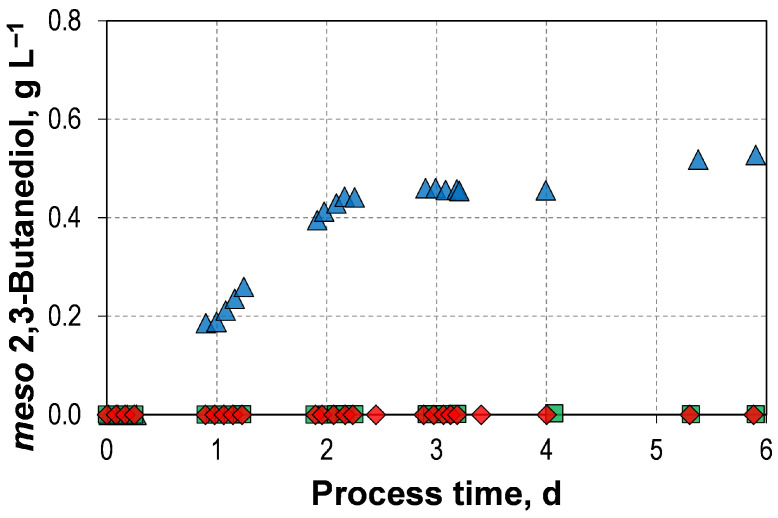 Figure 4
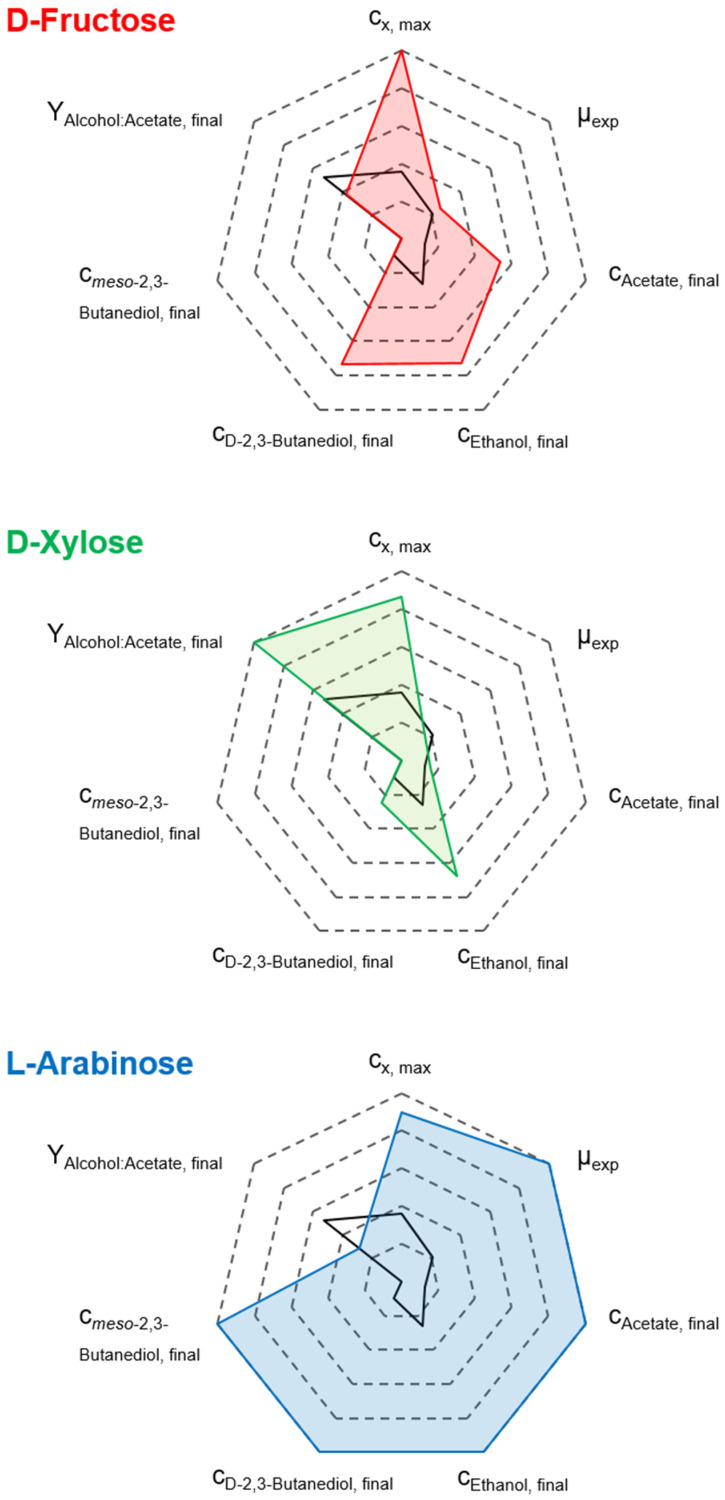 Figure 5
 Figure 6
 Figure 7
 Figure 8
 Figure 9
 Figure 10
 Figure 11
 Figure 12
Peer Reviews
No public reviews on file for this paper yet. If you reviewed it on a platform where reviews are public (OpenReview, ICLR, NeurIPS, ICML), you can paste yours below so the community can read it here.
Videos
No videos yet. Explain this paper in a talk, walkthrough, or lecture? Add one.
Taxonomy
TopicsAnaerobic Digestion and Biogas Production · Microbial Metabolic Engineering and Bioproduction · Microbial metabolism and enzyme function